

While Trump declares himself ruler of Venezuela, sells off their oil to his megadonors, and threatens Greenland ostensibly for resource extraction, it might be easy to miss his plot to pillage precious natural wonders here at home. But make no mistake–even America’s national parks are in peril.
National parks promote the environment, exercise, education, family bonding, and they transcend our differences—John Muir once said, "One touch of nature makes the whole world kin." Thanks to Teddy Roosevelt, who championed these treasures with the Antiquities Act, national parks are (supposed to be) federally protected areas. To the Trump administration, however, these federal protections are an inconvenient roadblock to liquidating and plundering our public lands. Now, they are draining resources and morale from the parks, which may be a deliberate effort to degrade America’s best idea.
First and foremost, Trump is responsible for a dramatic slashing of staffing. Over the past year, the administration fired 4,000 dedicated professionals, or a quarter of its workforce. These rangers once maintained trails, educated visitors, and protected endangered species. Their absence is already being felt across the park system, with longer wait times, fewer services, and less capacity to address environmental threats. Adding insult to injury, the administration has implemented a new performance review system that seems designed to demoralize the remaining staff and make further layoffs easier. By artificially limiting the number of top marks given in evaluations, this policy violates federal regulations and sets the stage for potential "reduction in force" layoffs. It's a move that threatens to crush the spirit of those who have dedicated their careers to preserving our natural heritage, and who are already spread thin, filling the holes left by the mass firings.
In a brazen attempt to rewrite history and downplay environmental concerns, Trump officials have also ordered the removal of signs and displays related to climate change, conservation efforts, and the mistreatment of Native Americans and slaves. This gaslighting and whitewashing of our parks' educational materials flies in the face of the National Park Service's mission to provide accurate information to visitors. Even the simple act of visiting a park has become more complicated and exclusionary. New policies require staff to question visitors about their residency status, leading to longer wait times and potential discrimination. For non-U.S. residents, steep surcharges have been implemented, making our national parks less accessible to international visitors and contradicting the idea that these are spaces for all to enjoy.
The cumulative effect of these changes is clear: a diminished experience for visitors, demoralized staff, and parks that are less able to fulfill their crucial role in conservation and education. This systematic undermining of our national parks system feels suspiciously like a precursor to more drastic measures.
If everyone who visited Yosemite and Yellowstone had a bad time, it would be easier to justify further budget cuts or further exploitation and extraction. This means eliminating restrictions on mining, drilling, and logging, to the detriment of the wildlife habitats. It also means selling off public lands to the highest bidder, who may harvest the parks for resources (drill, baby, drill?). Trump has already signaled his goal by hand-picking Steve Pearce–a multi-millionaire who made his fortune in oil and gas, known as Sell-Off Steve by conservation groups as a result of his ongoing efforts to privatize public lands–to run the Bureau of Land Management, overseeing 245 million acres of public land. These tactics resemble the Big Short–a significant investment strategy where an investor bets that the price of an asset, such as a stock, will decline–and Trump is insider trading with himself. Don’t fall for it.
Luckily, in January, the Senate introduced a three-bill appropriations package that rejected what National Parks Conservation Association President and CEO Theresa Pierno referred to as “the Trump administration’s reckless $1 billion funding cut that would have devastated our parks” (this proposed cut came from the same president who managed to find $74.85 billion in the couch cushions to appropriate to paramilitary thugs, more than ICE spent in the last eight years combined). Still, Congress must do much more to prevent national parks from getting sold off in the future, which could mean, at a minimum, ensuring they remain federal lands.
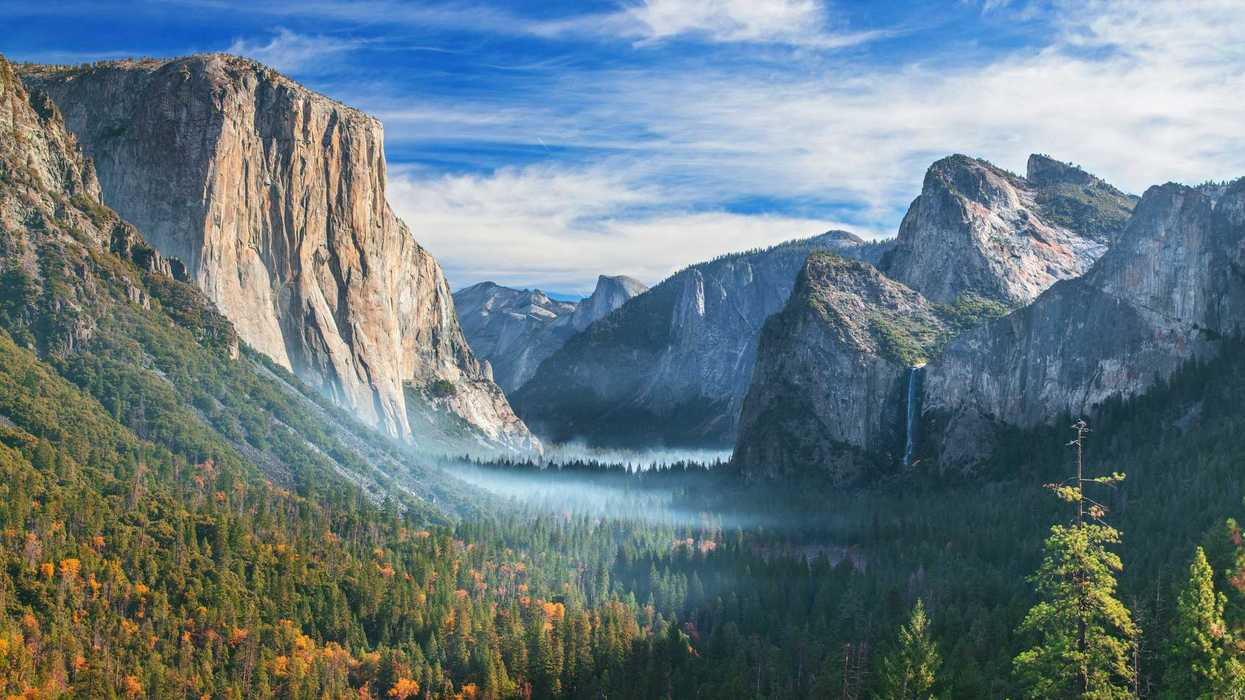
Our national parks are scenic vistas, living classrooms, biodiversity hotspots, and sources of national pride. By preserving nature for future generations, we acknowledge that some places are too precious to be developed or exploited. As citizens, we must contact our representatives, ask them to oppose Pearce’s nomination, fully fund and staff parks, and push back against policies that threaten their integrity. We should also keep visiting our parks, share our positive experiences, and help maintain these spaces when possible. There is no Lorax to fight for our home. Only YOU can prevent the theft of our public lands.Julie Roland was a Naval Officer for ten years, deploying to both the South China Sea and the Persian Gulf as a helicopter pilot before separating in June 2025 as a Lieutenant Commander. She has a law degree from the University of San Diego, a Master of Laws from Columbia University, and is a member of the Truman National Security Project.