



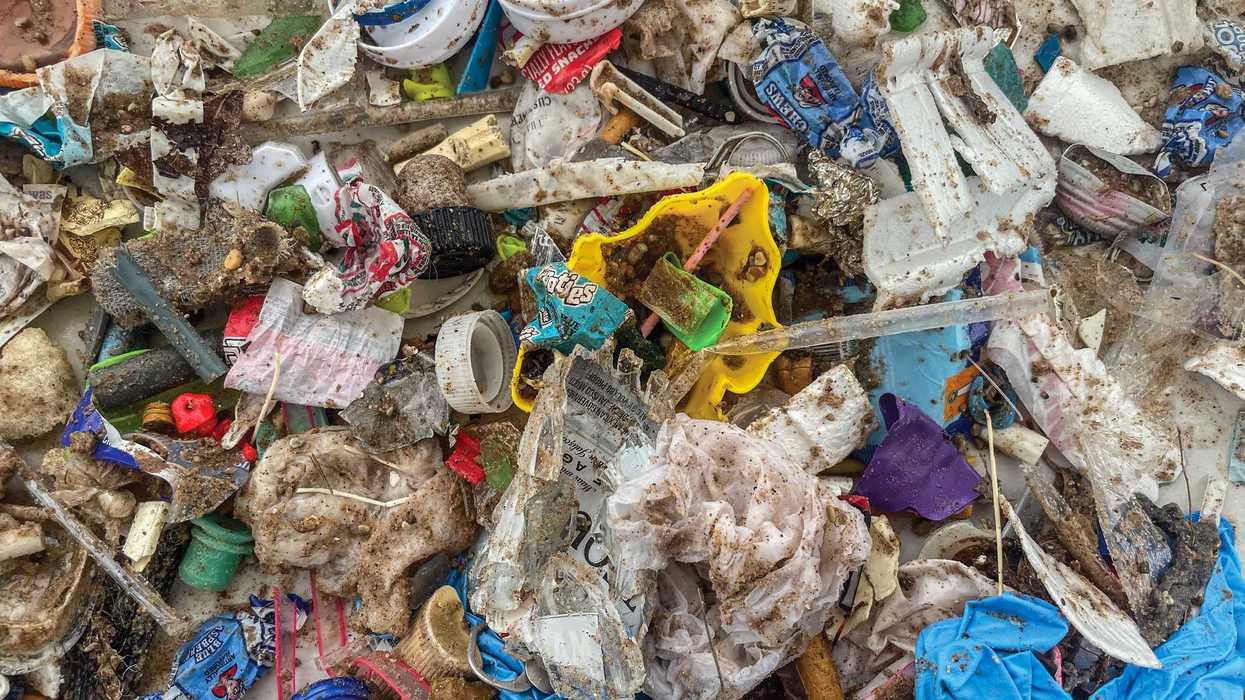

Plastic pollution, so evident along Great Lakes shorelines – is increasingly found in the water and fish. Peer-reviewed studies have detected microplastics—tiny fragments shed from consumer products, industrial waste, and synthetic clothing—in Lake Michigan and the other Great Lakes.
The findings raise urgent questions about what everyday plastic use is sending into the lake and the millions of people who rely on it.
Conventional and advanced water treatment significantly reduce microplastic concentrations before water reaches consumers. Studies show granular media filtration and ultrafiltration can remove over 97% of particles larger than 2 µm, though small amounts remain. A global review found that standard treatment plants typically remove 70–90% of microplastics ≥ 1 µm, indicating that while treatment is highly effective, it does not fully eliminate microplastics from finished drinking water.
Scientists say plastic entering the Great Lakes is increasing, driven by single-use packaging, industrial pellets, tire wear, wastewater, and synthetic fibers released in laundry cycles.
Microplastics persist in treated wastewater, and many lakefront communities, such as Milwaukee and Toronto, discharge it into the lakes. Chicago, which reversed the course of the Chicago River, is the exception - it floods and sends sewer overflows into Lake Michigan.
While researchers are still working to understand the full human health implications, early evidence links microplastics to inflammation, endocrine disruption, and neurological effects. Studies show the particles can cross biological barriers—including the blood-brain barrier—and even the placenta.
Donna Kashian, a professor of biological sciences at Wayne State University, said there is “almost nothing untouched” by microplastics anymore, including drinking water and the air people breathe.
“We’re just at the cusp of learning the impacts of microplastics on human health,” Kashian said. “You consume about a credit card’s worth of microplastics a day. Research now supports and indicates it is causing neurological effects. For people with dementia or Alzheimer's, it can be triggering and make those situations a lot worse. And it's possible there's even a root cause for some effects.”
In aquatic ecosystems, the smallest particles pose the greatest concern. Timothy Hoellein, an aquatic ecologist at Loyola University Chicago who began measuring plastics in Illinois waterways more than a decade ago, said microplastics can pass through the digestive systems of crayfish and fish, causing physical damage and inflammation. If small enough, they can move beyond the gut into other tissues.
“Plastic litter is everywhere. It's increasing. It's very long-lived, so on the scale of our lives, lifetimes, it's a permanent feature of the environment,” Hoellein said. “It has some negative impacts on the organisms and the environment.”
Because microplastics are tiny, widespread, and do not biodegrade for centuries, removal is extremely difficult. That reality has shifted attention toward prevention.
Rebecca Rooney, Canadian co-chair of the International Joint Commission’s Science Advisory Board, helped lead a recent report calling for coordinated, basin-wide monitoring of microplastics in the Great Lakes. The report urges standardized sampling to enable comparisons among studies and recommends designating microplastics as a “contaminant of mutual concern” under the Great Lakes Water Quality Agreement—triggering coordinated U.S.–Canada monitoring and public reporting.
“We are producing more plastic than ever before, and we know that it's getting into our waterways, and we know that it's ending up in our drinking water, that it's posing a threat to fish,” Rooney said. “Some of the highest microplastic concentrations ever found in fish in the world were found in the Great Lakes in Lake Ontario. And so we know that it's getting into our food source. We know that it's not easy to get rid of once it's there. We really need to focus on sort of source control and working in a coordinated way to prevent microplastics getting into the environment in the first place.”
Rooney’s team developed a risk assessment framework based on hundreds of studies examining how microplastics affect species such as clams, fish, and crustaceans. One concentration threshold would protect about 95% of species; a lower benchmark, under 70,% would signal serious ecological concern if exceeded. Separate research suggests that concentrations in parts of the Great Lakes are already high enough to harm animals, including reduced feeding efficiency that can impair growth and reproduction.
Studies show microplastics are already widespread in the Great Lakes at levels that can harm aquatic life. Research found an average of 43,000 plastic particles per km² in surface water, with hotspots like the Detroit River reaching nearly two million particles per km²
A comprehensive review by the University of Toronto and the Winnipeg-based International Institute for Sustainable Development found that nearly 90% of water samples collected over the past decade exceed concentrations linked to potential harm to wildlife. These synthetic particles can physically fill the guts of small organisms, reduce nutrient uptake, and transfer up the food chain, signaling a pressing need for source control and pollution reduction.
For Rooney, the most effective solution is source protection—stopping plastics before they enter the lakes. That includes preventing larger plastics from breaking down into fragments and addressing direct sources such as synthetic clothing fibers shed during washing, which can pass through wastewater treatment plants without proper filtration.
“The most important step is source protection. If we stop plastics from entering the environment in the first place—whether that’s litter that breaks down into microplastics or fibers shed from our clothing during washing—we can significantly reduce what ends up in the Great Lakes,” Rooney said. “Simple actions like installing washing machine filters, managing waste responsibly, and joining local cleanups can make a real difference.”
Advocates argue the issue extends beyond litter. Andrea Densham, senior policy advisor with the Alliance for the Great Lakes, said the region both consumes and produces plastic and petroleum products. Communities near manufacturing facilities face what she calls a “cumulative impact,” exposed to industrial toxins such as styrene - an oily by-product of petroleum and natural gas - as well as plastic production materials and plastic waste.
Plastic is not a single material but a category of polymers combined with chemical additives that give products color, flexibility or heat resistance. Those additives can leach into water or organisms. Production can also release PFAS and pre-production pellets known as “nurdles” into waterways, where they are ingested by fish and birds.
“Microplastics do not biodegrade in timescales that are relevant to us humans and so and they're very difficult to remove, they're very difficult to remediate,” Densham said. “Plastic is actually a really challenging item to recycle, as compared to metal or glass or paper, because of all the additional chemical components.”
Because cleanup is so difficult, policy solutions are gaining traction. Advocates are pushing extended producer responsibility laws that require manufacturers to take responsibility for the waste their products create. Others are calling for bans on certain single-use plastics.
For Rooney, those items are “low-hanging fruit.”
“I mean, that seems to me like a pretty low-hanging fruit—like we don’t really need plastic straws and plastic cups and plastic bags,” Rooney said. “Given how brief the period of time you actually use a straw is versus how long it’s going to last in the environment, it seems silly that people are talking about reversing bans on single-use plastics. These are some of the easiest things we can do to prevent plastics from getting into the environment.”
As scientists continue studying the long-term health impacts, one fact is clear: plastic entering the Great Lakes does not simply disappear. It persists in water, wildlife—and increasingly, in us.
Jack Austin is a journalist covering energy, pollution, public health, and sustainability, with a particular focus on environmental accountability and the communities most affected by ecological harm. He is currently pursuing a master’s at the Medill School of Journalism, specializing in Health and Environmental Reporting.
The Fulcrum is committed to nurturing the next generation of journalists. Learn how by clicking HERE.