
United States Representative Danny Davis announced in July 2025 that he would not be seeking re-election in Illinois’s 7th Congressional District, motivating 13 Democrats and two Republicans to compete for the seat.
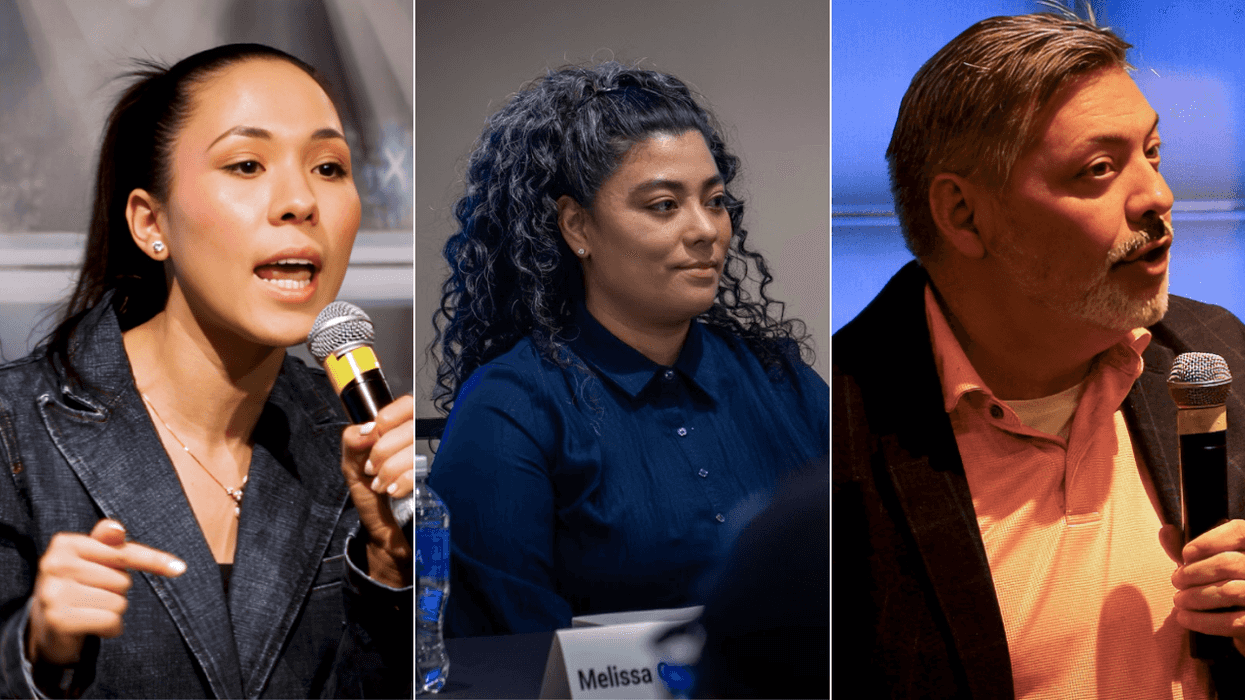
As the Illinois primary on March 17 approaches, three Latino candidates hope to become the Democratic nominee: Anabel Mendoza, Jazmin J. Robinson, and Felix Tello. The district has never had a Latino representative, and former Rep. Cardiss Collins remains the only woman to have served the district.
Home to neighborhoods such as Little Villa, Oak Park and the Loop, IL-7 spans 68.4 square miles and is the same district that former President Abraham Lincoln represented. The population is primarily Black, followed by white, Hispanic and Asian residents, respectively.
The district has experienced elevated and intense ICE activity during what the Trump administration called Operation Midway Blitz last year. Additionally, there is a wide income gap between areas since the district incorporates neighborhoods from the South and West side of Chicago.
The following vignettes give an overview to each candidate in alphabetical order by last name.
Anabel Mendoza
Lifelong resident of Chicago and daughter of Latino immigrants, 28-year-old Anabel Mendoza wants to focus on the working people of IL-7 and build a strong, equitable district that transcends generations.
Seeing her parents work hard and still struggle financially growing up motivated Mendoza to work toward improving her community. She is currently the communications director at United We Dream, a youth-led immigration network focused on immigration rights.
“I have not had to study the affordability crisis to understand it,” said Mendoza. “I’ve lived it.”
Mendoza has three main campaign pillars: Addressing affordability, promoting social and economic justice, and supporting public health and safety.
Two core affordability areas Mendoza said she would address at the federal level would be to raise the federal minimum wage – which has been $7.25 since 2009 – “closer to $30” and prioritize the expansion of federal grants for entrepreneurs from underrepresented communities.
“There are so many brilliant ideas and brilliant people and minds that are right here in the seventh district,” said Mendoza. “We need to be able to bring the resources from our federal government back locally.”
Mendoza supports reparations and the abolishment of Immigration and Customs Enforcement (ICE) as a way to move toward social and economic justice in IL-7. To promote public health and safety, she would focus on ensuring students receive the resources – such as school counselors and access to college-level courses – they need to feel supported, which she said will facilitate their growth and benefit the community.
Mendoza believes that her youth allows her to maintain a solid moral compass, and her years of experience in the immigration rights movement in communications and media relations positions have shown her the needs of her district and how success relies on strategy.
“We have so many diverse communities who call the seventh district home,” said Mendoza “And whoever sits in this seat – and I certainly hope that it’s the people of this district to elect me to represent them – but whoever is the leader of this seventh district needs to be one that unifies through action, not just through words.”
Jazmin J. Robinson
Human resources professional Jazmin J. Robinson, 38, initially planned on only supporting an IL-7 candidate, but decided to run herself after seeing what she considers a lack of strategy on candidate websites.
“In corporate America, we have to have a strategy,” said Robinson. “We have to have a business proposal. We have to show proof of concept. And so I knew I wanted to be involved.”
Robinson’s core policy is the H.E.A.L. Act, which she created using her knowledge of benefits and doing constant research to educate herself on state and federal policies.
The act focuses on free universal healthcare; economically accessible education and child care; access to the government by banning PAC and lobbyist money; and promoting livable wages and growth opportunities for small businesses.
“I understand people just don’t believe in the government and they have apathy,” said Robinson. “I’m gonna need [them] to step out of the way, because there are some of us who are still fighting, and I’m gonna need [them] to just vote. If you can’t fight for it, don’t hate on it, because you’re just helping the one percent by saying it’ll never happen.”
Growing up Mexican-American, Robinson experienced racism but did not let it deter her from being in spaces with people who held different beliefs than her or disrespected her heritage. Believing she should “love thy neighbor,” Robinson is excited about potentially being able to uplift and support IL-7.
Robinson believes her work in HR has given her a great understanding of how to develop and deliver successful strategies to ensure folks receive the benefits and living wages they deserve.
“I think just to have the ability to help more than I am doing right now would be really rewarding,” said Robinson. “And it also would just be an incredible honor to take this seat, because I don’t take that lightly either. People are truly trusting me with their lives and their livelihood, and I would take that responsibility. It would be a huge honor, and I would not disappoint them.”
Felix Tello
Executive engineer Felix Tello, 62, immigrated to the U.S. and naturalized when he was 21, quickly falling “in love with the constitution” afterward. He decided to run for representative after hearing of Davis’ retirement last year.
Tello’s campaign centers on five acts that individually address executive overreach, the economy, immigration reform, autonomy and human rights, and community needs. He also promotes his app, Vote Our Way, as a form of “direct democracy” where registered voters can share how they’d like their representative to vote on congressional bills.
“I’m taking an oath to follow your voice,” said Tello. “It is not my agenda. It is your agenda that I’m following. I’m a representative. I represent you in your agenda. I don’t represent myself in the agenda.”
Tello described how he has seen people get elected to Congress and become influenced by special interest and lobbying groups. He explained that he “cannot be bought” and would represent his constituents. Felix sees candidates who want to ban PACs as “foolish.”
Through meeting with different immigrants in IL-7, Tello said he recognizes that they are scared and tells them what precautions they should take. His Immigration Reform Act criticizes mass deportation, describing how to maintain the economic benefits of immigration while addressing crime.
“I’ve structured it in a way that doesn’t let them cut in line,” said Tello. “And it doesn’t necessarily need to lead to citizenship. I’m quite sure if you talk to most of the Latinos that are undocumented, they would be dumb and happy just to be able to be here legally and be a resident and never have to think about their citizenship.”
During an interview with the Latino News Network, Tello criticized Mendoza and Robinson, who are both Latina.
“They say they’re pro Latinos and stuff,” said Tello. “And, I hate to say this, but they don’t know shit about the Latino community.”
Tello said he understands the path of an immigrant in the U.S. and would represent every community in IL-7 equally.
Three candidates vie to become first Latino Representative for Illinois’ 7th Congressional District was first published on Illinois Latino News (ILLN) and republished with permission.
ILLN is an affiliate of the Latino News Network, a bilingual, bicultural news organization serving Hispanic and Latino communities through a national platform and nine statewide outlets.
McKenna Sweet is a recent University of Washington graduate and current freelance journalist who primarily writes science and community pieces.