

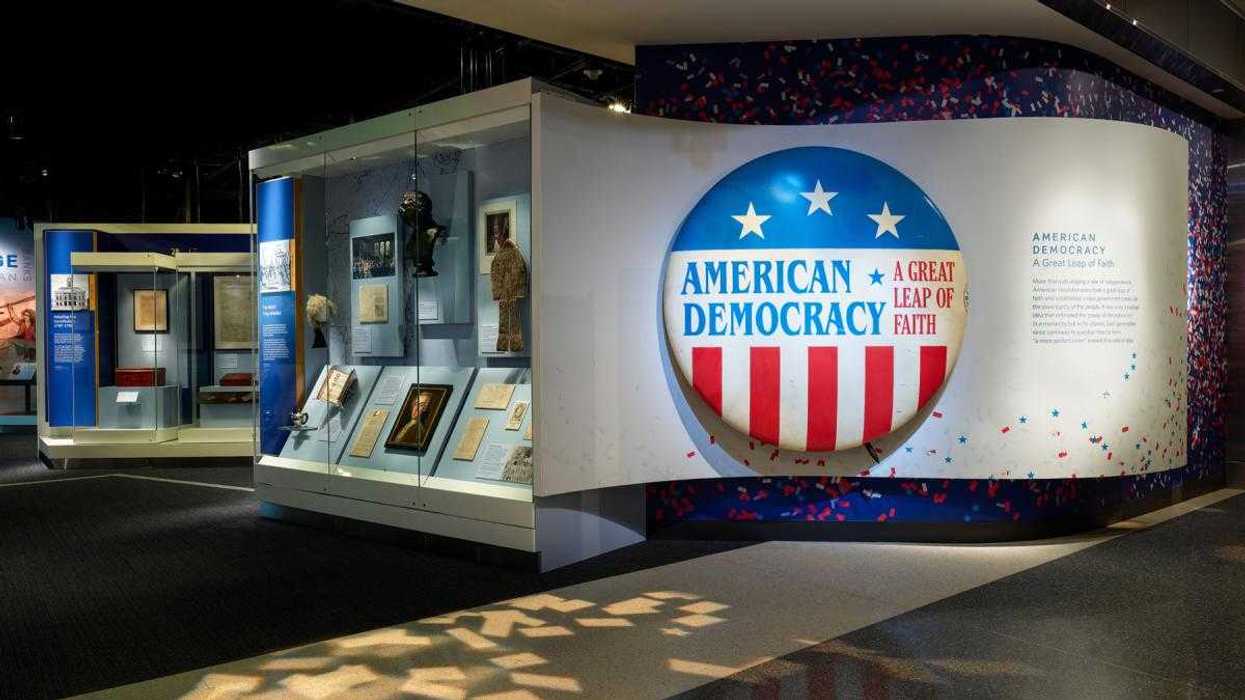

WASHINGTON, D.C. — At the Smithsonian National Museum of American History, the exhibit American Democracy: A Great Leap of Faith traces the nation’s ongoing experiment with citizen participation, debate, and compromise. A central focus is the evolution of voting rights — from the country’s founding to today’s contested landscape.
I recently visited this exhibit as part of The Fulcrum's award-winning docu-series, The 50: Voices of a Nation. My reporting on this ongoing democratic experiment has taken me from the museum's halls to the very places where these battles were fought.
Just this month, I traveled to Selma, Alabama, to trace the legacy of the civil rights movement, following a journey last year to Cheyenne, Wyoming—the historic site of the first U.S. territory and state to grant women equal voting rights when the law was passed there in 1869. Seeing these geographic milestones framed within the Smithsonian exhibit underscores how deeply our geography is bound to our rights.
When the United States was established, it boasted more eligible voters than any nation before it. Yet that group represented only a fraction of the population. The founders envisioned a system where propertied men would rise above self‑interest and vote on behalf of “the people.” Instead, ordinary citizens insisted on voting directly, sparking centuries of reluctant adjustments, contentious struggles, and ongoing negotiations to expand access to the ballot.
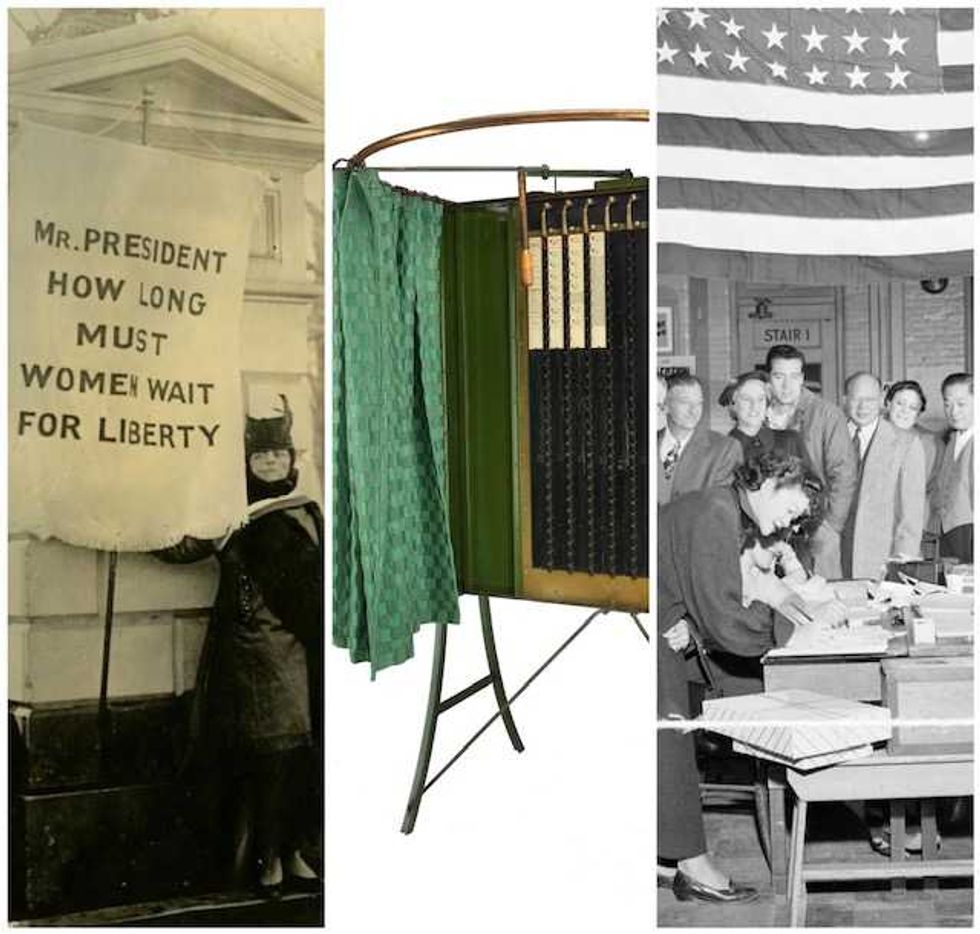
The exhibit features striking artifacts: a 1917 photograph of suffragist Alison Turnbull Hopkins picketing the White House, an 1898 automatic voting machine designed to ensure privacy, and images of Irene Lourdes, a Chinese American preparing to vote in 1952.
More recent displays include immigration rights demonstrators in Arizona in 2006 and the midnight voting tradition in Dixville Notch, New Hampshire.
Curators emphasize that motivations for voting are as varied as Americans themselves. Some cast ballots out of duty, others to change laws or leaders, and many see their first vote as a rite of passage into adulthood and citizenship. “Whatever their reasons, Americans who stand in line at the polls make a personal decision to participate in hopes of bettering their lives and their country,” the exhibit notes.
The timeline of U.S. voting rights is presented through constitutional amendments and landmark legislation. Highlights include:
- The Fifteenth Amendment (1870), prohibiting racial discrimination in voting. While it legally guaranteed the ballot regardless of race, systemic white supremacy and Jim Crow laws—such as rigged literacy tests and poll taxes—effectively nullified this promise across the South for nearly a century.
- The Nineteenth Amendment (1920), guaranteeing women’s suffrage. This milestone capped a nearly century-long struggle that began at the 1848 Seneca Falls Convention. For decades, groups like the National American Woman Suffrage Association fought a state-by-state battle, while militant activists later turned to White House picketing, arrests, and hunger strikes to force federal action.
- The Voting Rights Act (1965), requiring federal oversight in areas with histories of racial discrimination. This landmark legislation was catalyzed by the brutal, hard-fought campaign in Selma, Alabama, where Black residents made up 57% of the population, but less than 1% were registered due to suppression. National outrage over the police violence of "Bloody Sunday" at the Edmund Pettus Bridge and the historic 54-mile march to Montgomery finally forced federal intervention, giving the 15th Amendment its necessary teeth.
- The Twenty‑Sixth Amendment (1971), lowering the voting age to 18.
- The Americans with Disabilities Act (1990), mandating accessible polling places.
- The Help America Vote Act (2002), funding modern voting machines and improved registration systems.
The exhibit also acknowledges setbacks, such as the Supreme Court’s 1875 ruling in Minor v. Happersett—which directly rejected a suffragist's challenge by declaring that the Constitution did not guarantee all citizens the right to vote—and the 1974 decision in Richardson v. Ramirez, allowing states to deny voting rights to convicted felons.
The struggle over ballot access continues to evolve in 2026, shaped by shifting federal policies, technological adjustments, and deep regional variations. While some states have expanded access through automatic registration and multilingual resources, others have heightened security measures.
Key areas of ongoing debate include new state-level mandates requiring physical proof of citizenship (such as a passport or birth certificate) to register, an increase in third-party challenges to voter eligibility, and recent Supreme Court rulings that have altered the legal standards for proving racial discrimination in redistricting.
By weaving together artifacts, personal stories, and legal milestones, American Democracy: A Great Leap of Faith underscores how each expansion of the electorate shifted the balance of power and forced the nation to confront the tension between political reality and the democratic ideal of government “by the people.”
Hugo Balta is the executive editor of The Fulcrum and the publisher of the Latino News Network