
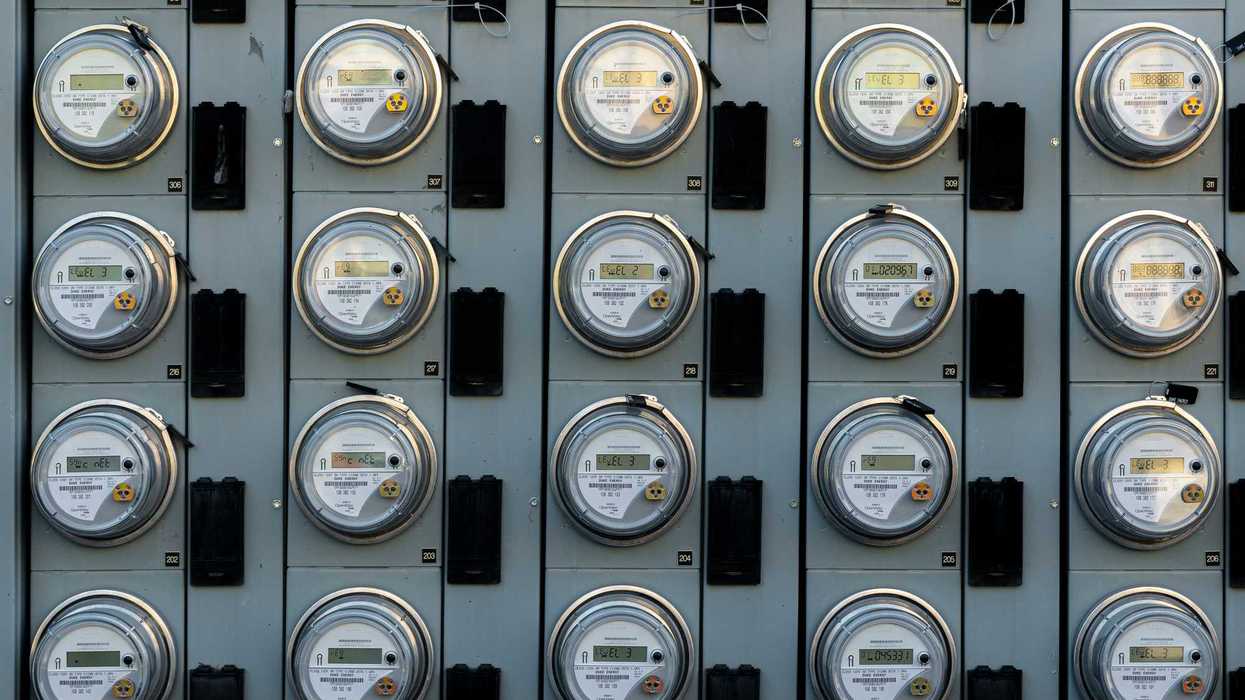
Utilities are boring until the power goes out. US Census data shows that one in three households struggles to pay their energy bills, resulting in millions of electricity shut-offs each year. Poor management by electric companies leads to more outages and wildfires. At the same time, many of us feel that we have little say in energy decisions that affect us. In Utah, the recent approval of a data center twice the size of Manhattan has left residents struggling with the real cost of growing electricity demand—on the environment and on our wallets.
Often overlooked in the conversation about cost is the fact that most of our utility sector is run for profit. There is a better way. I’m a public power organizer in New York’s Hudson Valley, and people like me from St. Petersburg, Florida, to Ann Arbor, Michigan, are fighting to take control of our investor-owned utilities and turn them public. Making electricity not-for-profit and community-owned means lower bills for customers and more say in our shared resources.
Public utilities work as a division of local government. Some utilities are traditionally public, like water. It’s not hard to understand why ensuring equitable, safe, and reliable access to water is not something we want competing with a profit motive. Electricity should be run similarly.
Where public electric utilities exist—the entire state of Nebraska, for example, as well as cities like LA and San Antonio—customers pay lower rates. Over the last three years, the American Economic Liberties Project reports that residential electricity rates for privately owned utilities have increased by 49% more than inflation, while those for publicly owned utilities have increased by 44% less than inflation.
Savings from public utilities come from different sources, such as cutting shareholder profits. There are other benefits of going public, too: Investor-owned utilities often charge customers for lobbyists and lawyers that help them secure high rates. Public utilities can borrow money more cheaply - they have access to municipal bonds – and those savings are passed along to customers, too.
The real advantage of a public electric company, though, is that its incentives are aligned with its customers, not its shareholders. For-profit utilities are rewarded for building the most expensive systems possible, and they often defer cheap maintenance and low-cost efficiency upgrades that would better serve customers and keep us online. We already know that there are several simple, cost-effective ways to improve utility performance: replacing old lines, installing distributed energy resources like batteries and solar panels, and implementing programs to adjust energy use during peak hours. But investing in maintenance means fewer shareholder profits.
The consequences of this deferred maintenance are easy to spot. People with public utilities have 90 fewer minutes without power each year than people with for-profit electric. This year alone, five states—Texas, Louisiana, Alabama, Tennessee, and Mississippi—face the risk of blackouts from storms and heat waves.
The increasing fights over data centers highlight the risk of leaving our electricity decisions in the hands of executives who live far from the territories they serve. In publicly run utilities, community members form a board that oversees the utility, giving them a voice in rates and the sources of our electricity.
Private utilities - and the industry associations representing them- oppose the transition to cheap and clean energy like solar, even when it means customers’ bills could plummet. This is because when energy is cheap, utility companies won’t be able to deliver high returns to shareholders or make money by building more expensive infrastructure.
Some may wonder what’s so bad about utilities making a profit; after all, even small businesses need to earn more than they spend. But electric utilities are state-granted monopolies. You don’t have a choice about whether you are served by PG&E in San Francisco or ConEd in New York. You can’t opt out of an exploitative for-profit electricity company or shop around for better rates or cleaner energy. This makes electric utilities particularly liable to abuse their power.
Private utilities’ profits are soaring while we struggle with our bills, and many investor-owned companies are using their money to try to crush campaigns to take investor-owned utilities public. But it doesn’t have to be that way.
Movements for public power are gathering momentum, pointing the way to cheaper, cleaner energy. People can join these fights where they are already happening and start them elsewhere. Write to your local elected officials, support existing campaigns, and connect with local organizers.
Electricity powers hospitals, schools, and homes. It is a public good, and we should treat it that way.
Shivani Radhakrishnan is an assistant professor of political philosophy at Vassar and a Public Voices Fellow with The OpEd Project in partnership with the Paul and Daisy Soros Foundation.