


Skip to content
Search

Latest Stories

Follow Us:
Top Stories

Composer uses music to connect Latino heritage and environmental justice

News

Composer uses music to connect Latino heritage and environmental justice

Cover Photo: Chris Oquist in Black and White.

Chris Oquist

CHICAGO — Climate change is often measured through scientific reports and statistics. For Chicago-based composer Chris Oquist, it is something audiences can hear.

On Saturday, Oquist performed “Derivas Liminares” as part of the Chicago Art Department’s fourth annual Contra Corriente Festival. The performance benefited the Pilsen Environmental Rights and Reform Organization (PERRO), a nonprofit that advocates for environmental protections in Pilsen, one of Chicago’s largest Latino neighborhoods. Oquist’s performance was one of several events held during the festival, which centers on environmental and racial justice.


For “Derivas Liminares”, Oquist uses a process known as data sonification, converting atmospheric temperature data into sound. While scientists often use the technique to analyze patterns in data, he said he incorporates it into music to tell a story. The composition examines how gradual changes in the climate, society and personal relationships often go unnoticed until they reach a point of no return.

“I think that we’re really not equipped to understand or recognize those long-changing processes the way we do things that we can experience directly,” Oquist said.

“But it’s really crucial that, if we have any hope of controlling the systems that we’ve created and being active participants in the world, that we have to look carefully and deeply and listen intentionally and mindfully.”

That same philosophy influenced Oquist’s decision to support PERRO.

According to Oquist, the organization has advocated against industrial pollution near Benito Juárez Community Academy in Pilsen. He said the group’s work reflects environmental challenges that continue to affect many Latino communities and gives residents a voice in seeking cleaner air and stronger environmental protections.

“There’s super systemic imbalances that make equity harder to pursue,” Oquist said. “I just love that there’s an organization like PERRO that’s working on the ground against crazy odds to try and right some of these wrongs and protect people.”

Environmental justice is only one theme in Oquist’s work.

Born in Puerto Rico to a Colombian mother, he said stories of migration and sacrifice shaped his artistic perspective from an early age. His debut EP, CYCLES / 01, includes a composition inspired by his late grandmother, whose journey from Colombia to Puerto Rico became the foundation for a piece exploring memory across generations. He said those family experiences continue to influence the questions he asks through music.

“My grandmother made a tremendous amount of sacrifices for her family,” Oquist said. “The stories that she would tell me, and that people would tell me of what she had gone through, almost felt like something out of magical realism.”

Oquist continued to say that perspective also shapes how he understands the role of music in Latino communities. He called music “an act of resistance,” saying it has long given artists a way to preserve culture while reclaiming humanity and dignity in the face of injustice.

Chicago-based composer uses music to connect Latino heritage and environmental justice was first published on Illinois Latino News and was republished with permission.

Angeles Ponpa is the Managing Editor of Latino News Network Midwest, overseeing Illinois Latino News, Wisconsin Latino News, and Michigan Latino News. She is based in Illinois.


Read More

Inside the Trump Administration’s 2025 Reversal of Environmental Justice Executive Orders: Analysis and Future Prospects
Bulldozer compacting trash at a large landfill site.
Photo by Daniel Miksha on Unsplash

Inside the Trump Administration’s 2025 Reversal of Environmental Justice Executive Orders: Analysis and Future Prospects

This nonpartisan policy brief, written by an ACE fellow, is republished by The Fulcrum as part of our partnership with the Alliance for Civic Engagement and our NextGen initiative — elevating student voices, strengthening civic education, and helping readers better understand democracy and public policy.

The Evolution of Environmental Justice Policy in the United States

Keep ReadingShow less
A drone view of dry land with trees around and a lake near the center.

After the Central Oregon Irrigation District delivered water to landowners near Redmond, Oregon, in July 2025, what’s left pooled in a silty pond where it eventually drained away or evaporated. The district said it has 24 ponds that catch water at the ends of its system.

Brandon Swanson/OPB

An Oregon Law Lets One Wealthy Region Turn the Desert Green. When Drought Hits, Farmers Pay the Price.

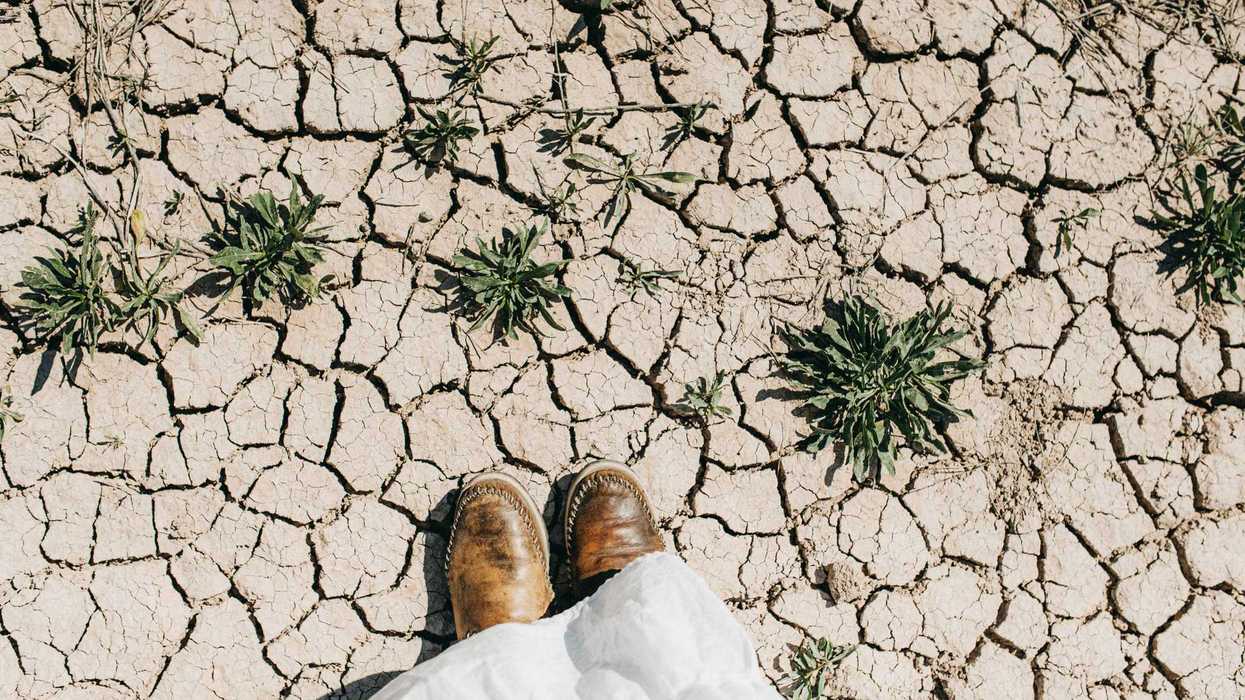
Chris Casad awakens each day before dawn on the Central Oregon property he bought nine years ago, the farm where he once grew tons of potatoes before water shortages forced him to fallow fields and take a job feeding someone else’s cattle on someone else’s land.

At 38, he’s got tractors older than he is. His two kids are under 5. His wife, Cate, has two jobs. They’re staring down a pile of debt from their 85 acres and its unending supply of things in the process of breaking.

Keep ReadingShow less
Latino Workers Need Stronger OSHA Protections

healthcare worker

Latino Workers Need Stronger OSHA Protections

Across California and the U.S., thousands of employees working in sterilization facilities, medical device distribution centers, and other industrial environments are exposed to a chemical that poses significant long-term health risks. Ethylene oxide (EtO) is used to sterilize nearly half of the medical devices in healthcare, making it indispensable. Yet the mounting evidence of its danger to those who handle it can no longer be dismissed.

What makes this especially alarming is that the risk does not stop at the facility fence. In California, emissions from EtO sterilization plants drift into surrounding neighborhoods, reaching schools, childcare centers, and homes. Many of these facilities are located near lower-income communities and communities of color, and as a result, Latino workers and families are often among those most heavily exposed. For these communities, this is not an abstract policy debate. It is a matter of environmental justice, public health, and the basic right to a safe workplace and a safe neighborhood.

Keep ReadingShow less
Plumes of smoke rise over the oil depot tanks hit by joint Israel-U.S.

Plumes of smoke rise over the oil depot tanks hit by joint Israel-U.S. over night in a station north west of the capital on March 8, 2026 in Tehran, Iran. The United States and Israel continued their joint attack on Iran that began on February 28.

Kaveh Kazemi / Getty Images

Russia is Winning the War in Iran. Earth is Losing

As the United States falls behind in the great power competition, climate change is providing economic and military advantages to our geopolitical rivals and destabilizing the world. We are outgunned and outmanned, and global warming will only exacerbate the issue. The war in Iran is now accelerating climate change to a level that will have devastating consequences on the human race and our planet, while ultimately benefiting our adversaries. As President Trump puts off making a deal with Iran, Russia, especially, is in a position to reap the benefits and gain a tactical edge. The Department of Defense (DOD) used to talk a bit about these environmental threats, but most Americans do not understand how dire the situation is. We should be yelling.

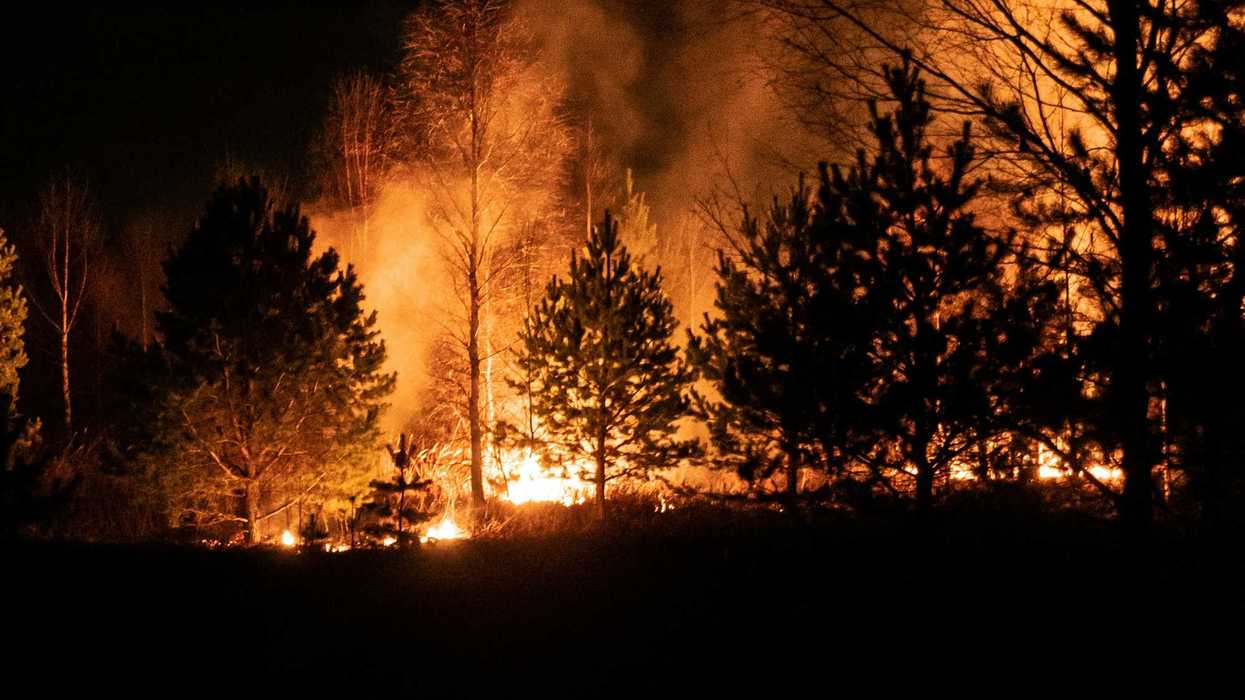
The increasing volatility of climate change pushes our world more rapidly towards global conflict every day. Heat domes, massive fires, and lethal floods all over the world signal “mayday.” The DOD used to call climate change a national security priority, “integrating climate considerations into policies, strategies and partner engagements.” Former Secretary of Defense Lloyd Austin used to say that “no nation can find lasting security without addressing the climate crisis,” one of the only threats that “truly deserve[s] to be called existential.” Natural resources have been a frequent source of armed conflicts for millennia; future conflict will only intensify as these resources are reduced at a rapidly increasing rate.

Keep ReadingShow less