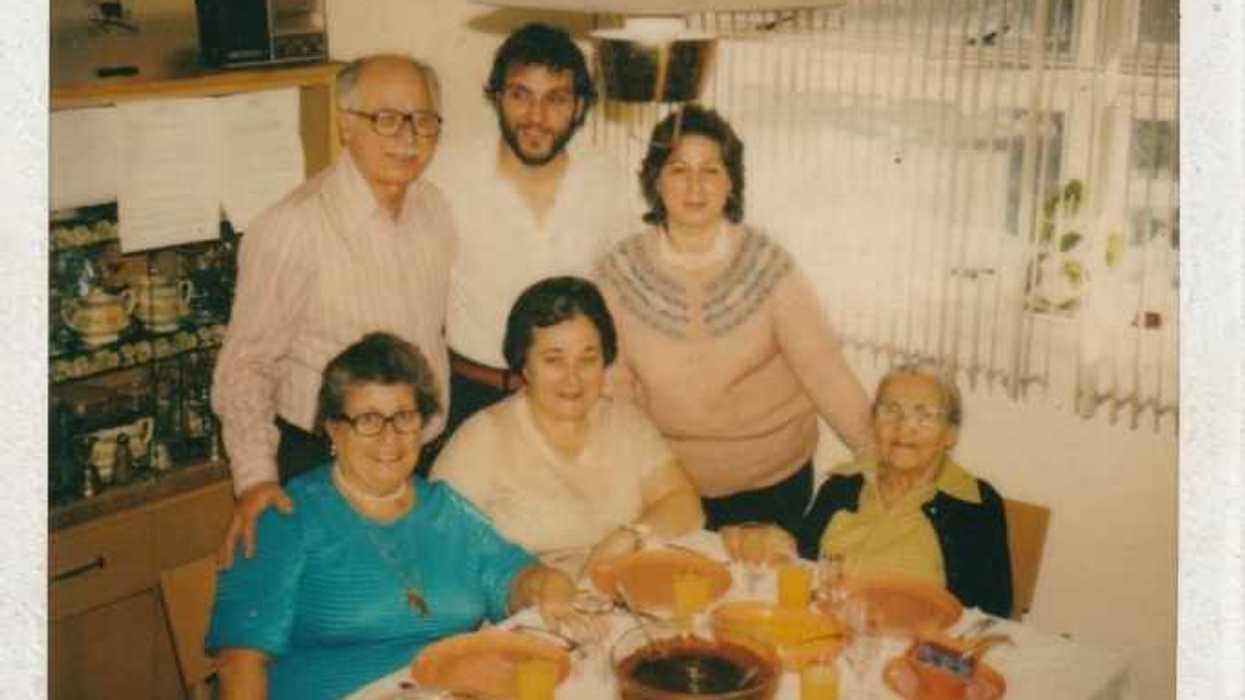

My mother loved to cook. She was most at home in her kitchen. As an Italian, she had grown up savoring a variety of Italian specialties, from lasagna to veal scaloppini to tiramisu. Our family was spoiled by always enjoying flavorful meals together. My father, of Hungarian descent, was a meat-and-potatoes man, but he loved that his wife learned to make goulash for him. Each night, my dad would arrive home from work just before 5 o’clock. He would have a whiskey sour and read the afternoon newspaper (The Philadelphia Bulletin) in his recliner, while we kids finished up our homework or were outside playing catch or “run the bases” with the neighbors’ children. And promptly at 5:30, my mom would ring a bell from the front stoop of our house. We, kids, filed inside to wash our hands and take our places at the kitchen table to break bread together.
Since my tongue cancer diagnosis in 2020 and the subsequent radiation treatments that have taken away my ability to eat solid food or taste anything, I spend a lot of time remembering how powerful food can be in bringing people together. Being a “companion” to someone means, etymologically (from Latin), sharing bread together.
Our country is divided these days as we watch the guardrails that have preserved the checks and balances instituted by the Founding Fathers being cast aside by Donald Trump. He rebels against every limit to his interpretation of his vast executive powers. Many families no longer share meals because of disagreements about our politics. Some families have even adopted the approach that only safe topics are appropriate when they eat together (How about those Yankees? Did you see how bright the full moon was last night?).
Since I can only consume liquid nutrition now, I no longer join friends and family for meals. I drink a banana smoothie every day, even though I can’t taste it. I live alone, so I am drinking this smoothie by myself in a five-minute task that allows me to consume basic nutrients I need to have a modicum of energy to get through the day. Then, I’m back to reading or writing or sleeping or walking.
I miss the connection that comes from sharing meals with others. I think of my time in Chad as a Peace Corps Volunteer. How Chadians in my village would make such a fuss when I accepted to join them in their hut for a meal. Being the only foreigner in that village of 4000 Chadians, the tribes made such a big deal when I ate a chicken with them. Chad is a poor country, and often a single chicken was killed to feed more than a dozen people. But no one complained about how hungry they were after. It was the coming together and spending time together that counted for the Chadians.
Or when I was stationed in Dubai as a Foreign Service Officer. Following the 1979 revolution in Iran, there was no longer an American embassy in Tehran, so Iranians traveled to Dubai to apply for visas to visit the United States. As the visa officer at the American Consulate, I was treated like a king because I held such power. I tried not to let personal relationships sway my visa decisions, but even when I refused to issue a visa, an Iranian family would often invite me to join them for a meal. They were upset with me that I had not granted a visa, and yet we could come together over Fesenjoon, Baba Ghanoush, and Hummus. We could share communion despite our differences.
There are people you know who do not share your view of what is happening to our country as we mark its 250th birthday. Think about asking someone like that to join you for a meal. And rather than arguing about the latest machinations in Washington, invite that person to share a story from their past when they were hungry, and someone offered unexpected kindness. Then, you might share a similar story. And in that sharing of both the meal and the stories, you may find that your bond has deepened beyond whatever is making headlines in the news.
Meals offer a moment of companionship in a world that often seems too dark and unforgiving. What you eat is not so important. What counts is that you break bread together in a common undertaking. Savor the food I can no longer eat. Savor the flavors I can no longer enjoy. If my mom were still alive, she would be heartbroken that I could no longer eat what she prepares. But I know that she would still believe that the kitchen is the most important room in any house. Sharing food can be a way we bridge the divide between us. Happy birthday, America!
Michael Varga is the author of “ Under Chad’s Spell." He was a Foreign Service officer, serving in Dubai, Damascus, Casablanca, and Toronto.