
Skip to content
Search

Latest Stories

Follow Us:
Top Stories

A Love Letter to All Americans

Opinion

A Love Letter to All Americans
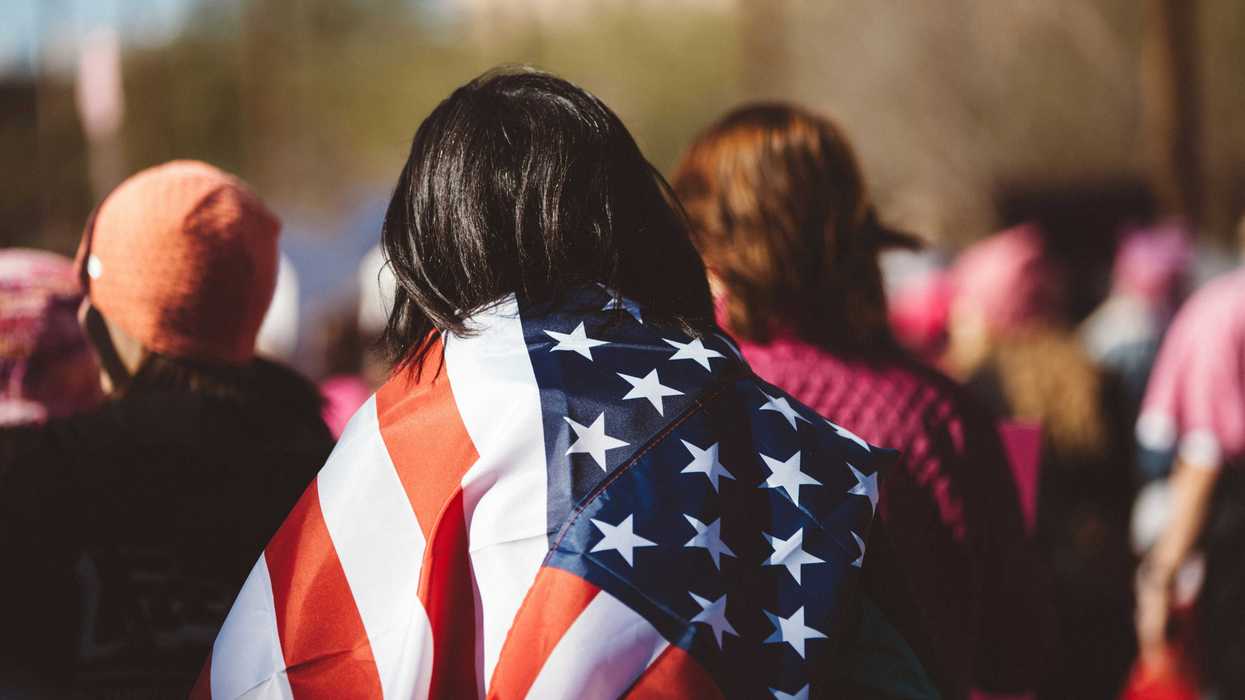
woman with US American flag on her shoulders
Photo by Josh Johnson on Unsplash

My fellow American,

You may feel weary right now about the condition of our country.


So many of us feel exhausted, worn out, riddled with uncertainty, and worried about how we can get out of the mess we’re in. We are disgusted by the division and acrimony, the finger-pointing, and the endless partisanship that dangerously envelops our public lives and is tearing apart our very nation.

If you feel this way, you’re not alone.

As you know, I’ve been traveling the country to speak out about where we are and how we can move forward—together. Wherever I go, people from all walks of life and all political persuasions feel as I suspect you do: We can do better and be better—as individuals, as communities, and as a nation.

If you’re like me, you love this country. Honestly, I love it deeply. I know that’s not always a popular thing to say nowadays.

Yet in marking another July 4th—which was the 250th anniversary of our nation—it can be hard to express such love. Such is the nature of love, right? In all parts of our lives, love is often filled not only with joy, but with ambivalence, conflicting feelings, and even anger. It can make celebrations of our love for others—and for this nation—tenuous, difficult, even foul.

So, what does it mean to love America today?

For me, I think about what “patriotism”—and being a patriot—means. It isn’t about holding a blind allegiance to the country, wrapping ourselves in the flag, and using it as a weapon to denigrate, diminish, or even decimate those who look different from us or hold different views. I flatly reject such patriotism. I believe we all must.

Nor do I subscribe to a view that relentlessly trashes America, a view that is blind in its own ways to the good and goodness that exists throughout our nation, one that believes we must tear down the country in order to rebuild it. This patriotism is a dead end.

Instead, I urge us to embrace—indeed, to enact—a “patriotism of devotion.” Such patriotism is rooted in a deep affection for the nation—a love of the nation—that is so deep that you choose to stick with it through thick and thin, especially when you do not like what it is becoming or the direction it is going.

A patriotism of devotion beckons us to step forward, turn outward toward one another, and get to work—together. In this kind of patriotism, we see ourselves as builders, partners, and creators—even re-creators—in a shared American project where each of us matters, each of us has something to contribute, and each of us is afforded the dignity we deserve.

Retreating, surrendering, or giving up cannot be the answer, even though there may be days when you may feel like doing so. I get it. We all have such days.

Indeed, I am not asking you to pretend that you don’t hold certain feelings amid July 4th and the 250th anniversary of our nation. Nor am I suggesting you should somehow set aside, even suppress, your feelings. They’re yours; you have them. Let’s face it, many of us do.

Rather, I am writing to ask of you something basic but that, amid the current chaos, may feel seemingly out of reach. It is this: We must recommit to building together—or perhaps rebuild the very civic culture of our communities, this nation, and our common lives, so that we might better move toward our shared desire for a more perfect union, amid the real challenges we face.

This should be our American ambition today. To rebuild our country, starting in our local communities. Brick by brick. Block by block. Neighborhood by neighborhood.

We can do this. But we must go together.

Rich Harwood is the president and founder of The Harwood Institute.

Read More

Carefree Friends Enjoying a Sunny Day in the City Park with Playful Dogs

An opinion essay exploring viewpoint diversity, academic freedom, political polarization, and why universities should encourage intellectual diversity to strengthen higher education and American democracy.

QunicaStudio / Getty Images

Viewpoint Diversity at Work and Play

I suspected that my answer to the gentle but surprisingly direct query about my politics would have a bearing on my long-term prospects to be welcomed at the dog park. Picking up on my questioner’s left-of-center sensibilities, I’d hoped my confession about being Strom Thurmond’s illegitimate child would not kill my chances to be welcomed back and deny Sadie, my ten-year-old beagle-dachshund pup, the opportunity to frolic with the other people’s left-leaning canines.

I passed the entrance exam. But I wasn’t surprised to learn that other first-time dog park visitors had not, and quickly concluded that self-deportation was in their best interest.

Keep Reading Show less
The Power of Eating Together

The Varga family in 1986, when Michael Varga (top row, center) returned to the US after a Foreign Service Assignment.

Michael Varga

The Power of Eating Together

My mother loved to cook. She was most at home in her kitchen. As an Italian, she had grown up savoring a variety of Italian specialties, from lasagna to veal scaloppini to tiramisu. Our family was spoiled by always enjoying flavorful meals together. My father, of Hungarian descent, was a meat-and-potatoes man, but he loved that his wife learned to make goulash for him. Each night, my dad would arrive home from work just before 5 o’clock. He would have a whiskey sour and read the afternoon newspaper (The Philadelphia Bulletin) in his recliner, while we kids finished up our homework or were outside playing catch or “run the bases” with the neighbors’ children. And promptly at 5:30, my mom would ring a bell from the front stoop of our house. We, kids, filed inside to wash our hands and take our places at the kitchen table to break bread together.

Since my tongue cancer diagnosis in 2020 and the subsequent radiation treatments that have taken away my ability to eat solid food or taste anything, I spend a lot of time remembering how powerful food can be in bringing people together. Being a “companion” to someone means, etymologically (from Latin), sharing bread together.

Keep Reading Show less
Jonah Goldberg: The right and left need to control the radicals in their own parties

From left, congressional candidate Claire Valdez, congressional candidate Brad Lander, Mayor Zohran Mamdani, and congressional candidate Darializa Avila Chevalier raise their hands during a Get Out the Vote rally at King's Theater on June 18, 2026, in New York.

(Michael M. Santiago/Getty Images/TNS)

Jonah Goldberg: The right and left need to control the radicals in their own parties

It’s starting to sound like we’re in the middle of the Spanish Civil War.

For those of you who forgot, the Spanish Civil War was the great prequel to World War II, in which the combatants were proxies for the Communists and the Fascists. Stalin’s Soviet Union supported the former, Hitler’s Germany aided the latter.

Keep Reading Show less
The Reward — Angela and James: An American Dynasty

Ring–Fitzgerald Homestead, Will County (1987). A house still true to its original form, carrying forward the Rings’ steadiness, aspiration, and good citizenship across five generations.

Photo courtesy by Patrick Fitzgerald.

The Reward — Angela and James: An American Dynasty

They got an early start; the morning light came on fast. The Ring siblings were headed to the Joliet depot with young Angela in tow — the same depot where Lincoln’s funeral train had passed in silence thirty years earlier. Now they were bound for the White City, forty miles northeast. The Columbian Exposition was a turning point for both Angela and America. Buffalo Bill’s Wild West Show, pitched just outside the fairgrounds, rivaled the Exhibition itself.

One photograph captured it all. Taken in a fairground photo booth, the Ring siblings stood in their summer clothes, huddled around eleven-year-old Angela. Their faces were bright and open — a single moment preserved in time. Determined to outshine the 1889 Paris Exhibition and its Eiffel Tower, Chicago answered with George Ferris’s great wheel. At night, the city glowed, outlined in electric white light.

Keep Reading Show less