


As part of a collaboration between The Fulcrum's NextGen initiative and Made By Us, The Fulcrum is publishing Letters to America, a series created through the Youth250 project that invites Gen Z to reflect on the nation’s past, present, and future as the United States approaches its 250th anniversary.
Dear America,
I write to you as our Founding Fathers once wrote to one another. Though such language has long since fallen from ordinary use, I find it fitting as thou approachest thy two hundred and fiftieth year, it is no small thing for a nation to endure so long, nor to survive the many human atrocities and reckonings that have marked its course. Yet perhaps the greatest testament to your endurance is not that you have remained unchanged, but that you have possessed the capacity to change at all.
I write to you as a Black woman, conscious always that when this Republic was first conceived, the blessings of liberty so eloquently proclaimed were not intended for people such as myself. The Constitution spoke of freedom while millions remained in bondage. The language of equality existed beside systems of exclusion and human suffering. And yet, through centuries of struggle, protest, amendment, and sacrifice, the promises once reserved for a narrow few have gradually expanded to encompass more of the American people. It is within this paradox that my patriotism resides.
For I cannot regard America merely as she was. I regard this nation as an unfinished covenant between principles and practice, forever demanding the labor of each succeeding generation. The American experiment has endured because there have always been citizens willing to insist that this country live more honestly in accordance with its own ideals, thereby improving them.
James Baldwin once observed, “I love America more than any other country in the world and, exactly for this reason, I insist on the right to criticize her perpetually.” To criticize one’s country is not to betray it, but to participate in its preservation. Blind reverence has never strengthened a republic. It is the vigilant citizen, the questioning voice, and the dissatisfied reformer who safeguard democracy against complacency.
The Constitution itself bears great meaning to me for this very reason. Though imperfect in its original application, it established principles capable of growth and reinterpretation. Through amendment and civic struggle, generations of Americans transformed constitutional promises into more tangible realities. That I may now participate in public service by lending my voice to the governance of my community is itself evidence of democratic progress. Thus, what must change is America’s willingness to extend its protections more equitably. The nation must invest anew in the welfare of its people, in education, civic participation, economic opportunity, and the restoration of public trust. Democracy cannot survive as a distant abstraction. It must be experienced materially in the daily lives of ordinary citizens. Still, I remain hopeful.
I remain hopeful because the history of the United States is one of correction. Every generation has inherited a nation flawed by injustice yet capable of reform. Those who came before me marched, organized, voted, and sacrificed so that someone like me might one day stand firmly with the “American story”. Their labor compels me toward optimism rather than despair.
And so, as you approach your two hundred and fiftieth year, I hope America continues the difficult task of becoming more fully herself. I hope she grows in wisdom. I hope she measures success not by wealth alone, but by the dignity afforded to her people. Above all, I hope she continues expanding the boundaries of belonging until the promises first written at her founding are experienced as rights secured for all.
For despite every contradiction contained within thy history, I still believe in thy potential.
Best,
Jon’Nae Sylvester, 23, New Orleans, LA









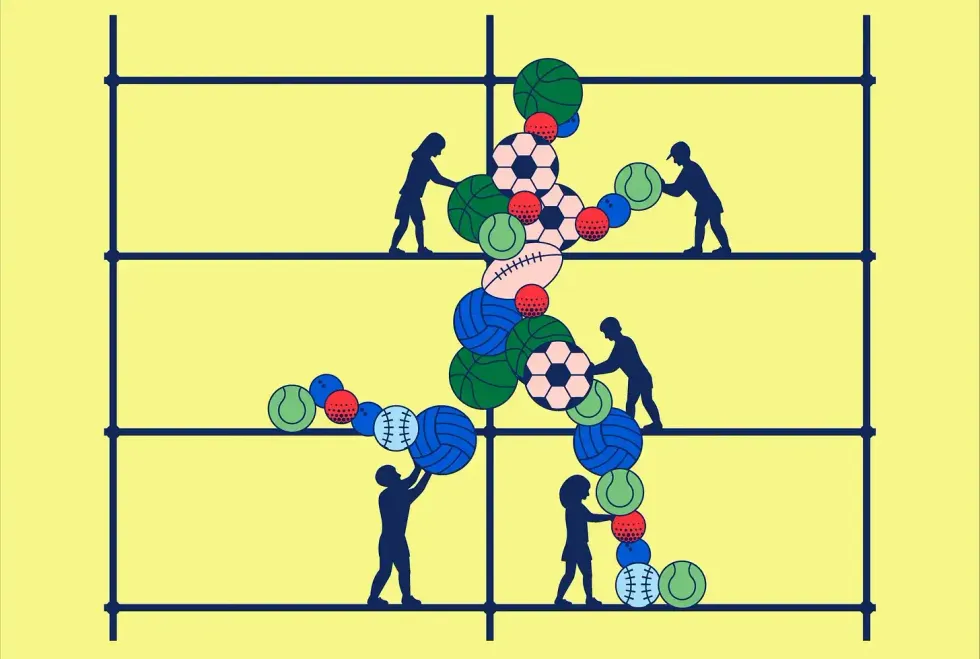 Following our HWF Civic Futures kickoff last week with Eric Liu, our design partners at Public/Official have created a unique visual to capture the “civic scaffolding” spirit of this conversation.
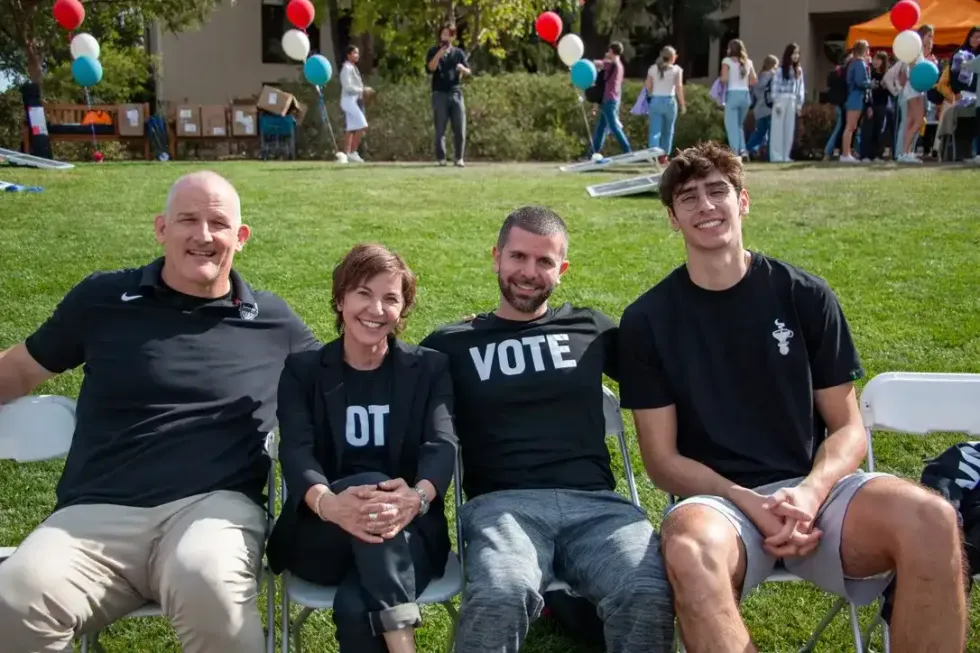 Lisa, Coaches Rev and Matt Elkin, and former Stanford Men’s Basketball star Maxime Raynaud at Stanford’s “All Vote No Play” Democracy Day, 2025