
Dear Speaker Johnson,
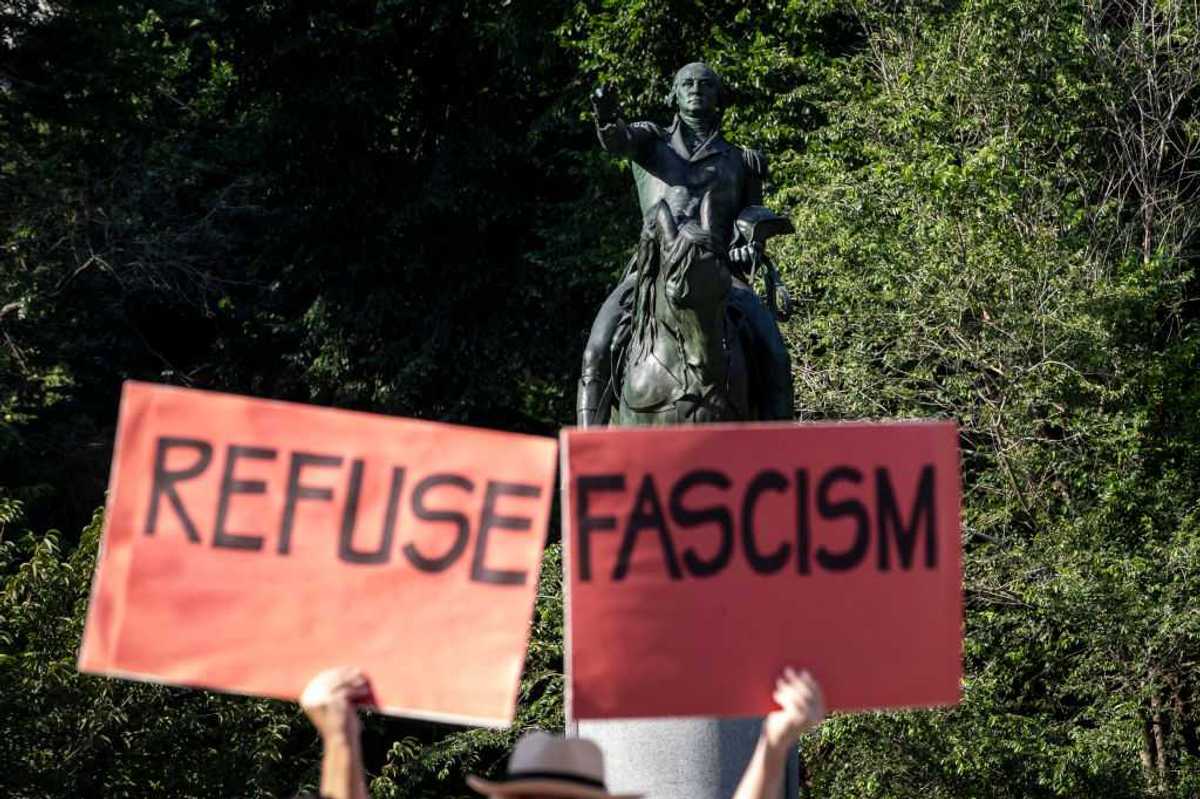
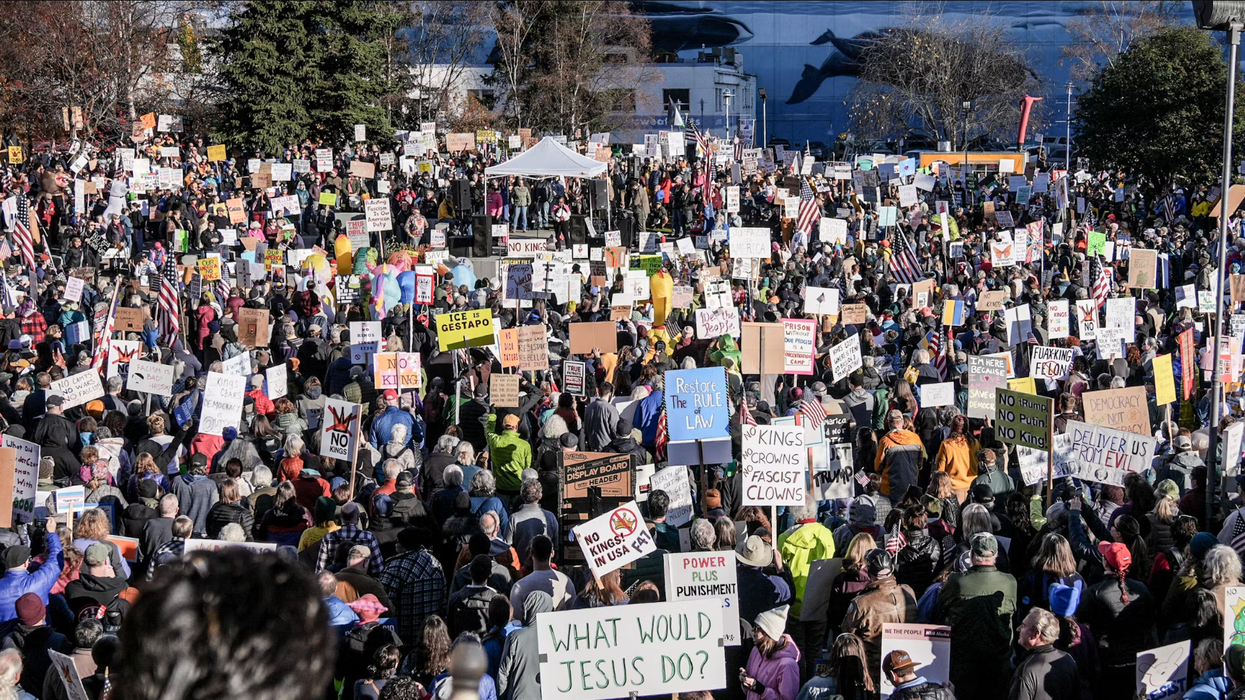
Well, the so-called “Hate America Rally” came and went, and it turns out the only hate anyone could find was the kind directed at it—mostly from you and the Trump regime. You might’ve been disappointed, Mike. No violence. No mass arrests. No Marxist uprising. No hordes of rabid anarchists plotting the downfall of Western civilization. Just ordinary Americans in the streets, marching and singing, reminding their government that we still don’t crown politicians in this country.
Nationwide, as many as eight million people came out, making it one of the largest coordinated protests in modern U.S. history. You wouldn’t know that from your little pre-game speech, though. You climbed onto your rickety soapbox and “warned” the nation about “radical leftists,” “antifa people,” and “pro-Hamas agitators,” which, frankly, reads like you fed a box of scary nouns into a teleprompter and hit shuffle. You tried to paint anyone protesting Trump’s authoritarian habits as extremists with blue hair and Che Guevara flags. Adorable—and about as effective as a wet sparkler on the Fourth of July.
For the record, Mike, I attended the march in Austin, Texas, where more than twenty thousand people filled the streets from the Capitol to Auditorium Shores. So did a lot of my friends — many of them veterans and former Republicans whose loyalty lies with the Constitution, not a party brand or personality cult. We’re fairly boring people, haircut-wise. My hair, for instance, has largely recused itself from the proceedings. When I did have it, it was never blue.
And while I can’t swear there weren’t a few “super-scary anarchist types” hiding somewhere in a crowd that size, I didn’t notice them. They were probably lost behind the thousands of ordinary people thanking police officers, handing out water, and helping strangers beat the heat—clergy, union members, veterans in faded ball caps, families pushing strollers, teachers, nurses, students, even a few dogs in red, white, and blue bandanas. Nobody hating America. If anything, it was the most patriotic thing I’ve seen in years: regular citizens standing up for democracy itself.
I don’t play the veteran card often, Mike, but when someone like you starts slinging fear and trying to convince people they shouldn’t stand next to these so-called “radical, freedom-hating Marxists,” or whatever, I’ll show it. Your goal is obvious: convince us to stay home, keep quiet, and be good little citizens while you and your friends cosplay as patriots on TV. But here’s what you miss: when you mock the protesters, you’re mocking us too.
A lot of combat veterans like me were in those crowds—men and women who’ve worn the uniform, put their lives on the line, and still believe the oath doesn’t expire. You and Trump never served, and that’s fine. Military service isn’t mandatory, and not everyone is cut out for the warrior class anyway. But maybe have the humility not to question the love of country of those who did.
I know plenty of veterans disagree with me, and I don’t pretend to speak for them. Many are my friends and brothers. We may argue and debate, but I’d never disrespect their service by suggesting they “hate America” just because we see things differently. That kind of cheap, desperate move is best left to politicians like you.
That’s the thing, Mike. Disagreement isn’t disloyalty. You talk like you’ve forgotten that somewhere between your oath and your press releases. But that’s not how America works. The First Amendment doesn’t say “free speech, unless it hurts Mike’s or Donny’s feelings.” Your own bio lists law and politics, so maybe skip the purity tests for people exercising the rights you also swore to uphold. October 18 didn’t look like a hateful mob. It looked like a civics lesson someone forgot to brief you on. What you called a “Hate America Rally” was a peaceful, diverse, multigenerational crowd that emphasized nonviolence, de-escalation, and following the law. That’s democracy in action in a free country.
Can we be honest for a minute, Mike? I know truth isn’t exactly your strong suit—or the president’s—but let’s give it a shot. The real reason you demonized these protests is because you’re scared. The turnout alone showed how hollow your rhetoric really is. Millions of ordinary Americans gathering in defense of democracy shatter the illusion that Trump has some kind of national mandate. He doesn’t. In fact, he won the presidency with barely a third of eligible Americans casting a vote for him, while roughly two-thirds either voted against him or didn’t vote at all. That’s a plurality, not a mandate. Most Americans aren’t buying what you’re selling, and those crowds made it painfully obvious.
If you’d looked at the marches across the country, you’d have seen plenty of freedom-loving Americans—veterans, teachers, nurses, and neighbors who still believe in democracy. We brought the American flags, the facts, and the kind of patriotism that doesn’t need permission. You brought the fearmongering and empty talking points. America can decide which one looks more like love of country.
Ever since you took the gavel in 2023, the theatrical outrage has been nonstop. This latest performance is especially flimsy. If your grand strategy is to claim that everyone who disagrees with you and your boss “hates America,” that’s not leadership or governance. It’s not even clever or original. It’s a sad, desperate little tantrum, a last-ditch attempt to steer the narrative.
But we aren’t going anywhere, Speaker Johnson. No matter how many slurs or threats you throw our way, we’ll be in the streets—loud, visible, and peaceful—because that’s what Americans do when we see our country drifting toward something that looks a lot like a totalitarian state. We speak out. We stand on the right side of history. You should take notes.
Anyway, Mike, I just wanted you to know that your little strategy of manufactured outrage and feigned ignorance isn’t working. Trying to turn dissent into disloyalty and paint protest as treason is as transparent as it is tired. The people who love this country will keep raising their voices and calling out the authoritarian bullshit you so eagerly hitched your pathetic little wagon to. Every time you try to shame us into silence, you only remind us why it matters to keep speaking up.
I yield back the remainder of my time.
Nick Allison is a college dropout, combat veteran, and writer based in Austin, Texas. He’s not a journalist or a pundit—just a political independent, unaffiliated with any party, who still believes the Constitution is worth defending. Nick’s essays and poems have appeared in HuffPost, CounterPunch, The Chaos Section, The Shore, Eunoia Review, New Verse News, and elsewhere.