

The business aphorism, “You can’t manage what you don’t measure,” applies to countries as well as corporations. The U.S. has relied since its founding on accurate Census, economic, and health and scientific data to set national policy. As an earlier Fulcrum article described, the Trump administration has put many data sources at risk, and advocates are working to save them. But they’re also asking: As we protect and rebuild the national data ecosystem, how do we make it better than it has been in the past?
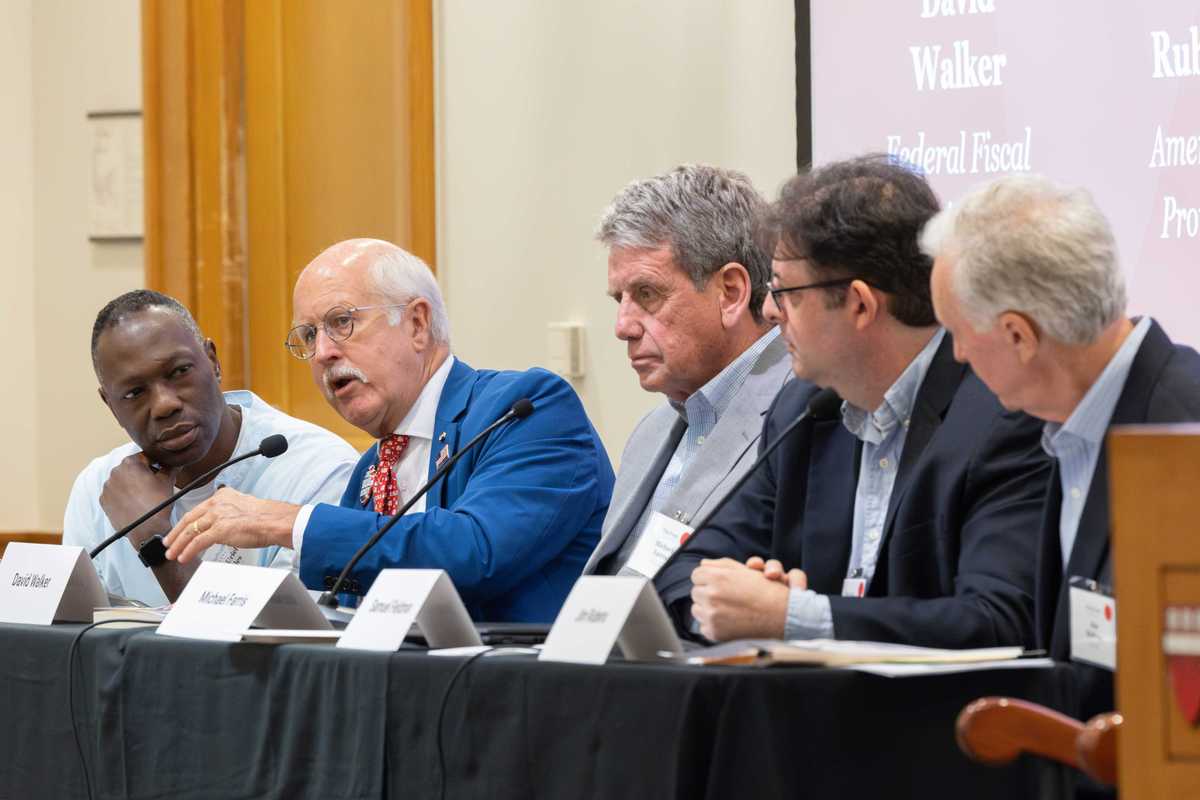
I recently moderated a webinar on Meeting the Challenge of Measurement, co-sponsored by NAPA, CODE, and the Bridge Alliance, with four leaders in the field: Chris Jackson of the research firm SSRS, Beth Jarosz of the Association of Public Data Users, Francesca Perucci of Open Data Watch, and Dr. Stefaan Verhulst of the GovLab. I also interviewed former U.S. Comptroller Gene Ludwig, author of The Mismeasurement of America. Their insights, plus my organization’s recent work with USAFacts, provide three principles for moving forward.
First, the U.S. federal data system is essential and irreplaceable. There is no way to replace core federal data with some combination of research from academic, business, nonprofit, or other sources. The federal government plays two unique roles: setting standards for collecting data across the country in comparable ways and conducting very large-scale projects, such as the U.S. Census and climate, ocean, and Earth observation studies.
Second, federal statistics need improvement. An SSRS study found that about 70 percent of the public believe federal statistics are an important source of information, but just under half tend to trust those statistics. That low number may reflect increasing concern about data being politicized, but it may also show that people aren’t sure the numbers reflect their lived reality.
A growing number of experts now share that concern. Gene Ludwig has launched a nonprofit institute to develop better statistical indicators for unemployment, average wages, and inflation. In all those cases, the official statistics make life for low- and middle-income Americans look better than it is. Reanalyzing the government’s own data shows, for example, that the true unemployment rate may be closer to 25 percent than the official statistic of just over 4 percent. We need to take a fresh look at how we use the data we already collect.
Finally, we should not rely on federal data alone. While federal data collections may be the gold standard, they are often less timely, less localized, or even less relevant than other data. The ongoing decline in response rates to government surveys, along with other methodological issues, is forcing researchers to develop new methods. Approaches including community engagement, digital data analysis, and AI are fueling innovative new information sources.
One major development is the growth of citizen data, which Francesca Perucci describes as data created with meaningful community engagement, control, and some degree of ownership. In the U.S., for example, many communities have gathered local air and water quality data in the interest of environmental justice. Citizen data has become increasingly important worldwide, particularly in countries that lack the resources to develop a robust government statistical system. The UN Collaborative on Citizen Data, which Perucci co-chairs, has developed insights and guidelines that the U.S. could apply as well.
At the same time, there is growing interest in non-traditional data, which leverages the byproducts of society’s digitalization. Data from cell phones, drones, business transactions, and many other sources can be anonymized and statistically analyzed to generate new insights. Stefaan Verhulst, who has been studying this opportunity for years, described how the U.S. can use non-traditional data in a blog post prepared for our webinar. This data can provide new perspectives on economic opportunity, social connectedness, housing, employment, and many other social issues.
These new methods complement other kinds of data sources, including business data, independent survey data, and government administrative data, which continue to demonstrate their value. Combining federal and other kinds of data, as Beth Jarosz put it, can enable us to “triangulate toward the truth.” The result may be a broader, deeper, and more useful understanding of the U.S. and the world we live in.
You can watch the full video of the webinar “Meeting the Challenge of Measurement” on YouTube at:
https://www.youtube.com/watch?v=hz_TogRhigM&t=8s
Joel Gurin is president and founder of the Center for Open Data Enterprise. (CODE)