





Every modern conflict seems to produce the same debate.
Supporters argue that military action achieved its objectives. Critics ask why the enemy still exists. Iran is only the latest example.
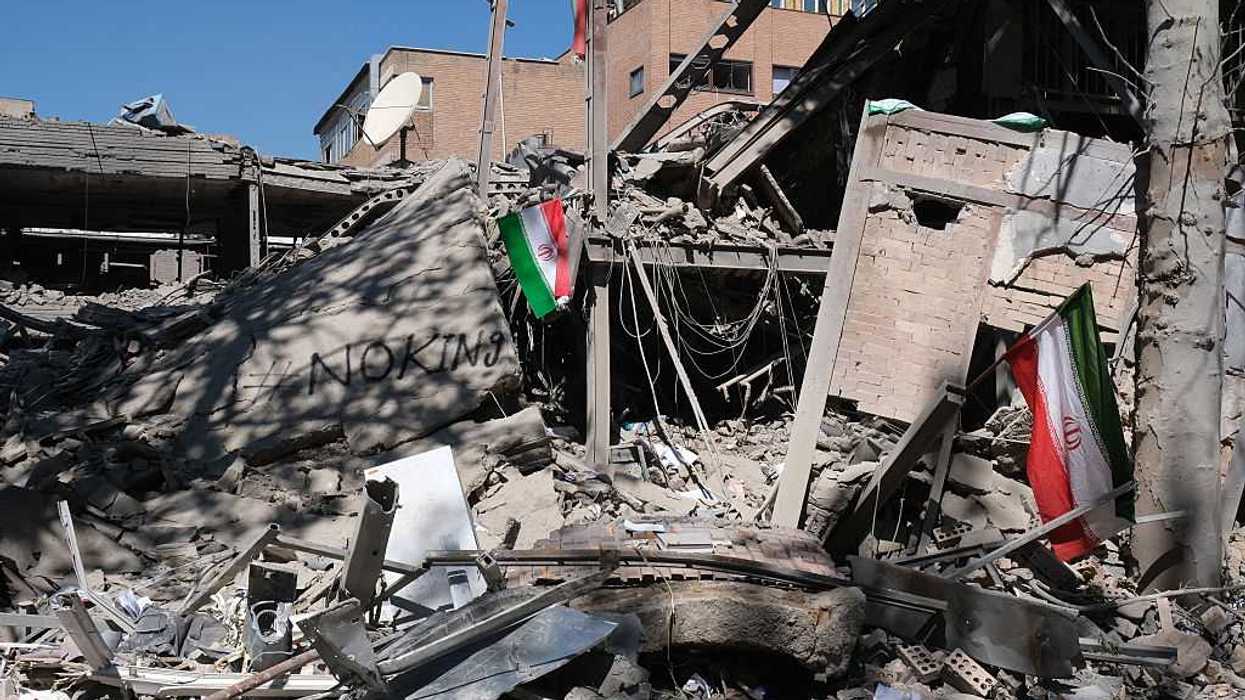
Supporters argued that the recent strikes achieved exactly what they were intended to do. They damaged Iran's nuclear program and restored deterrence. Critics saw something different. Iran's regime remained in power. Its ambitions had not disappeared. If the threat returned in a few years, what had really been accomplished?
Both perspectives are understandable because they begin with different assumptions about what war is supposed to achieve.
For most of history, the answer was straightforward. Wars were fought to defeat an enemy. Armies surrendered, governments collapsed, peace terms were imposed, and eventually the soldiers came home.
World War II became the defining image of that kind of victory. Germany surrendered. Japan surrendered. Both nations were occupied, rebuilt, and ultimately became allies. The war ended because the enemy had been decisively defeated. That is still the picture many Americans carry in their minds whenever military force is discussed.
Yet America has not fought that kind of war in generations.
Yet World War II did more than end one era. It ushered in another. The rise of the Soviet Union as a nuclear superpower transformed the strategic landscape. For the first time, defeating a major adversary outright risked consequences so catastrophic that victory itself could become self-defeating.
The Soviet Union was too large—and too dangerous—to be defeated the way Germany and Japan had been. Nuclear weapons made direct conflict between major powers increasingly unthinkable. Rather than preparing to conquer Moscow, the United States adopted a strategy of containment instead of conquest.
It was a quiet turning point. Military strategy adapted to that new reality. In time, so did the very meaning of victory.
Victory itself was no longer defined primarily by destroying an enemy. Increasingly, it meant preventing an adversary from accomplishing a specific objective.
Seen through that lens, much of the last eighty years becomes easier to understand. Korea was fought to preserve South Korea, not conquer China. The Gulf War ended after Kuwait was liberated rather than continuing to Baghdad. The campaign against ISIS sought to dismantle a terrorist state, not eradicate every extremist movement. Today's debate over Iran centered on degrading its nuclear program and restoring deterrence, not occupying Tehran.
Whether those objectives were wise or sufficient is a legitimate debate. But they were never intended to produce another Berlin or Tokyo.
What changed?
Nuclear weapons explain part of the transformation. Victory against another great power could now come at the price of civilization itself. Total war was no longer simply expensive; it became potentially existential. But technology alone cannot explain why victory changed. Western democracies also became progressively less willing to accept the massive human cost that earlier generations had viewed as unavoidable. Military strategy evolved accordingly, emphasizing limited objectives that could reduce risk while avoiding catastrophic escalation.
For centuries, victory was measured largely by what armies destroyed. Gradually, it also came to be measured by what nations preserved: lives, cities, alliances, and stability. That shift left modern democracies accepting less decisive outcomes in exchange for avoiding immeasurably greater costs.
Perhaps that is why debates over Iran, Afghanistan, Iraq, and so many other conflicts never seem to end. We are often using two different definitions of success without realizing it.
Some citizens continue to ask the oldest question in military history: Did we defeat them?
Others ask a newer one: Did we accomplish the mission?
Neither question is unreasonable. They simply belong to different eras.
Understanding that difference does not tell us whether America made the right decisions in Iran, Afghanistan, or any future conflict. It does something more valuable.
It helps us ask better questions.
Democracies depend on citizens who can judge not only whether military force was used effectively, but whether the objectives themselves were wise, realistic, and worthy of the costs they required.
The last war we understood may have been the last war in which victory, defeat, and peace all meant the same thing.
The arguments surrounding today's wars often reflect less disagreement about military operations than disagreement about what victory should look like in the twenty-first century.
Our challenge is not to recapture that world. It is to understand the one we live in well enough to make wiser decisions about the conflicts still ahead.
Joe Palaggi is a writer and historian whose work explores the historical forces that shape American civic culture, religion, and democratic society. His essays have appeared in The Washington Examiner, The Hill, RealClearPolicy, and The Fulcrum. He writes regularly at joepalaggi.com.













The President Invited Iran to Bomb My Home