

While immigration is a highly divisive issue in Washington, DC, new surveys in 11 competitive states and 28 congressional districts across the country reveal substantial bipartisan common ground among the public on proposals to address the millions of undocumented people living in the US.
These results come from surveys conducted by the Program for Public Consultation (PPC) to nearly 20,000 adults from May 27th to June 25th, as part of its Common Ground in the Battlegrounds? survey series being conducted in the run-up to the November election, as well as in a national survey conducted in February with over 2500 respondents.
One of the largest areas of agreement is that undocumented immigrants who have been convicted of a crime should be deported. A position supported by very large majorities of Democrats (70 to 91%) and Republicans (85 to 98%) across all of the states and districts surveyed. Nationally, a bipartisan majority also favors it (Democrats 79%, Republicans 94%, overall 85%).
But a much bigger question is how to deal with millions of undocumented immigrants without a criminal record who have been here for some years. Do Americans favor deporting them?
Apparently not. The proposal that elicits robust bipartisan support is to offer them a pathway to become legal residents, provided they pay a penalty and any owed taxes (Democrats 75 to 89%, Republicans 55 to 78%, overall 65 to 84%). Nationally, PPC found a bipartisan majority in favor (Democrats 84%, Republicans 69%, overall 77%).
Support for this proposal has also been echoed in other surveys by Gallup, Wall Street Journal, and Reuters/Ipsos.
But don’t many Americans have concerns about giving amnesty?
A 2024 survey by PPC – conducted nationally and in six battleground states – presented arguments for and against offering such a path to legal status, and majorities found arguments that this would amount to amnesty convincing. But larger majorities found convincing arguments that it is simply not feasible to deport more than 10 million immigrants who have been living here for some years and that doing so would be harmful, as it would take away workers who play an important role in the economy.
Even larger bipartisan majorities agreed that people brought to the US illegally as children should be offered a pathway to citizenship (Democrats 80 to 95%, Republicans 60 to 82%, overall 70 to 86%). Nationally, a bipartisan majority is in favor (Democrats 89%, Republicans 76%, overall 83%).
At the same time, Americans want to deter illegal immigration going forward.
Since work is the primary motivator for most immigrants coming here illegally, bipartisan majorities across all of the battleground states and districts support a two-part proposal that would steer immigrants seeking work into a legal pathway.
First, it would require employers to verify new employees’ legal status through E-Verify, thereby making it harder for undocumented immigrants to obtain employment. At the same time, it would substantially increase the number of work visas to meet labor demand, opening a legal channel.
This proposal was supported by over two-thirds of Democrats (75 to 90%) and Republicans (67 to 89%) and overall (76 to 85%). Nationally, a bipartisan majority favors it (Democrats 84%, Republicans 82%, overall 83%).
PPC found bipartisan support for this same package in 2024 – nationally and in six swing states – in a survey that included strongly worded arguments for and against the proposal.
The survey also addressed the problem of many immigrants who have applied for asylum and then wait for years to have their cases heard. Bipartisan majorities favor hiring more immigration court judges to speed up asylum cases (Democrats 72 to 87%, Republicans 66 to 83%, overall 71 to 83%). Nationally, a bipartisan majority is in favor (Democrats 83%, Republicans 73%, overall 76%).
Overall, it is clear that Americans are uncomfortable with the millions of immigrants living and working in the US in an illegal or ambiguous state. And they do not see mass deportation as a solution, beyond those who have been convicted of crimes, as so many have been effectively assimilated into the American economy.
They primarily support proposals that bring them out of the shadows and integrate them through legal channels, while also strengthening enforcement measures to deter future illegal immigration.
Common Ground in the Battlegrounds?
This survey release is the seventh in the Common Ground in the Battlegrounds? survey series being conducted by the Program for Public Consultation (PPC) in the run-up to the November election in 11 competitive states and 28 competitive U.S. House districts.
You can find results for individual states and districts, as well as national results, here.
Bipartisan Support for Legal Status and Immigration Reform was first published on the Latino News Network and republished with permission.
Dr. Steven Kull is the Director of the Program for Public Consultation.
Evan Charles Lewitus is the Associate Director of the Program for Public Consultation.












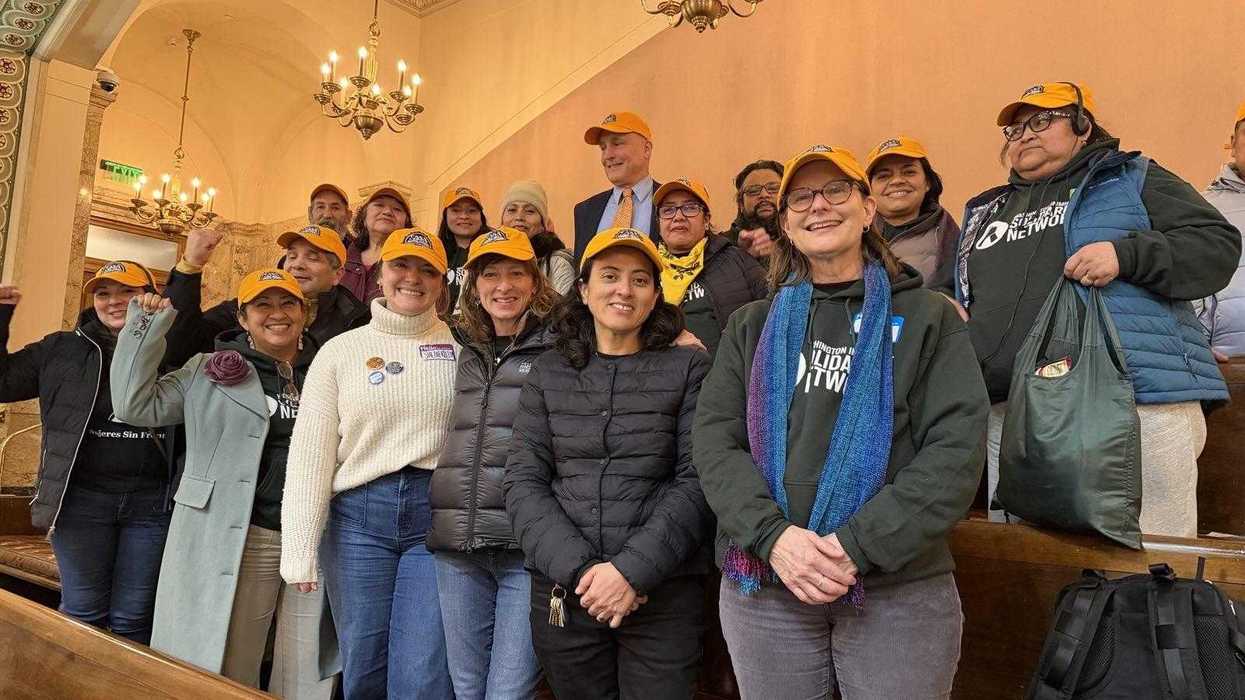
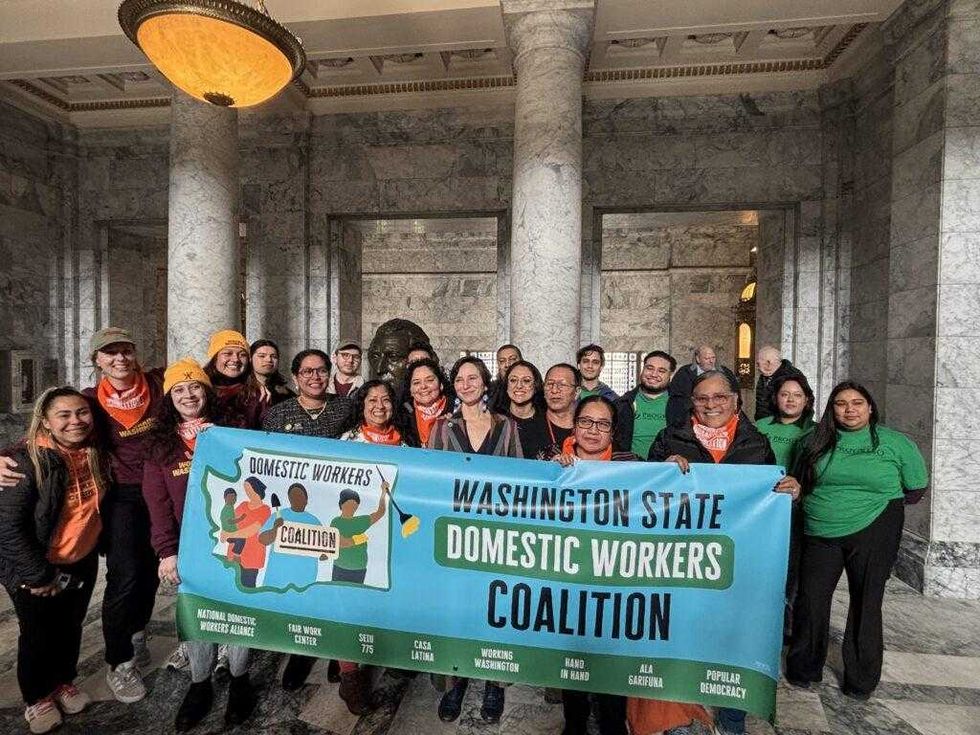 State Sen. Rebecca Saldaña, center, stands with members of the Washington State Domestic Workers Coalition at the state Capitol on Feb. 28, 2026. The Domestic Workers Bill of Rights passed in the House that day, before being signed into law in March. (Photo courtesy of Casa Latina)