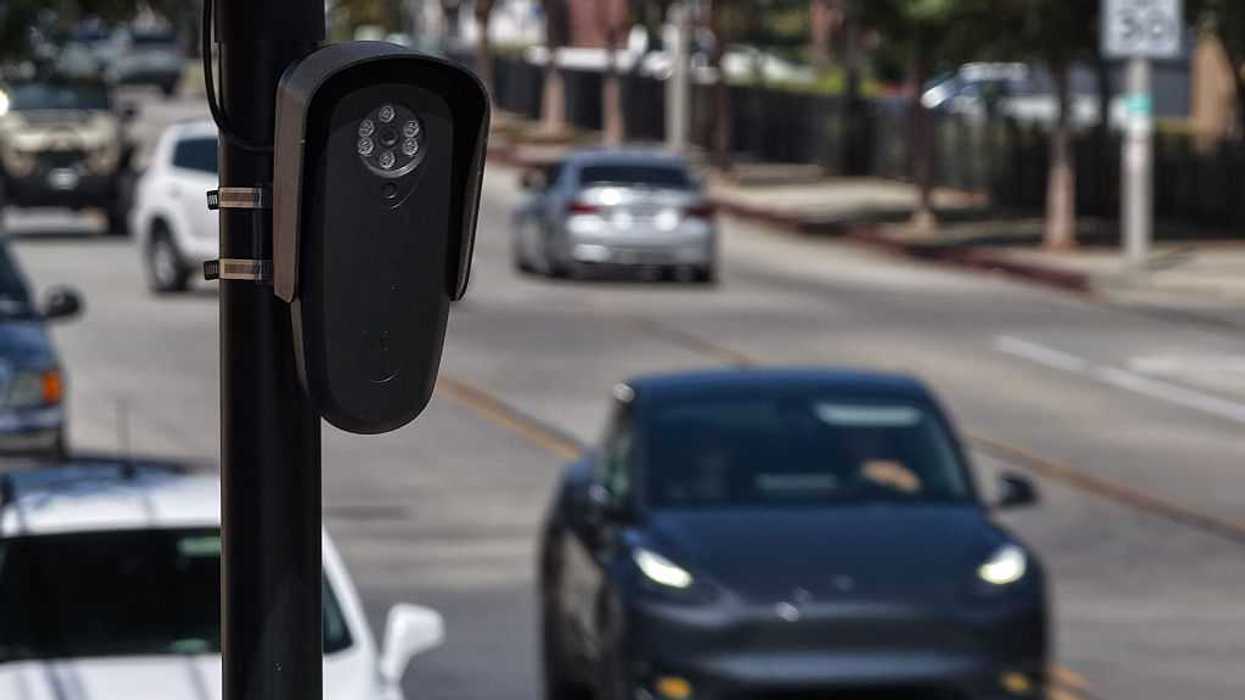

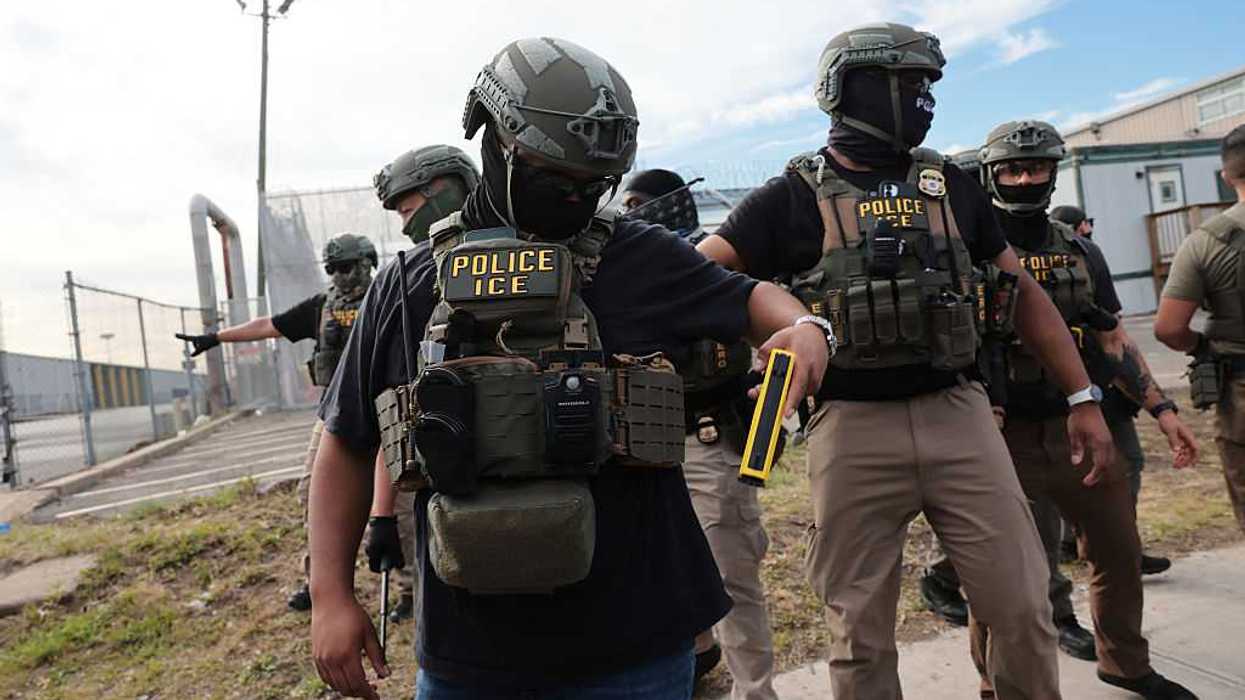

Last week, while the world watched JD Vance fly to Switzerland to negotiate an Iran deal, a quieter document surfaced from inside the Department of Homeland Security that may matter more to the daily lives of Americans than anything that happened at Lake Lucerne. A DHS Privacy Threshold Analysis, obtained and reported by NPR, outlines plans to give approximately 1,300 local police forces access to the same facial recognition technology that federal ICE agents currently use in the field. The app is called the ICE Task Force Module. It allows an officer to photograph any person they stop, run the image against federal databases, and receive an identity match in seconds. Every photograph taken is stored in a DHS system for fifteen years. The document states plainly that this surveillance will sweep up American citizens. The DHS knows this. It is proceeding anyway.
This is not an immigration story. It is a surveillance infrastructure story, and the distinction is the most important thing to understand about what is being built.
The ICE Task Force Module is already in partial operation. Community members in Minnesota and Maine have reported that federal immigration officers photographed their faces and license plates during enforcement operations, and that officers appeared to already know their names and addresses before approaching them. That is what real-time facial recognition plus a fifteen-year database looks like in practice: it means that attending a public event, standing on a sidewalk near an ICE operation, or legally observing an enforcement action can result in a photograph entering a federal file that persists for over a decade.
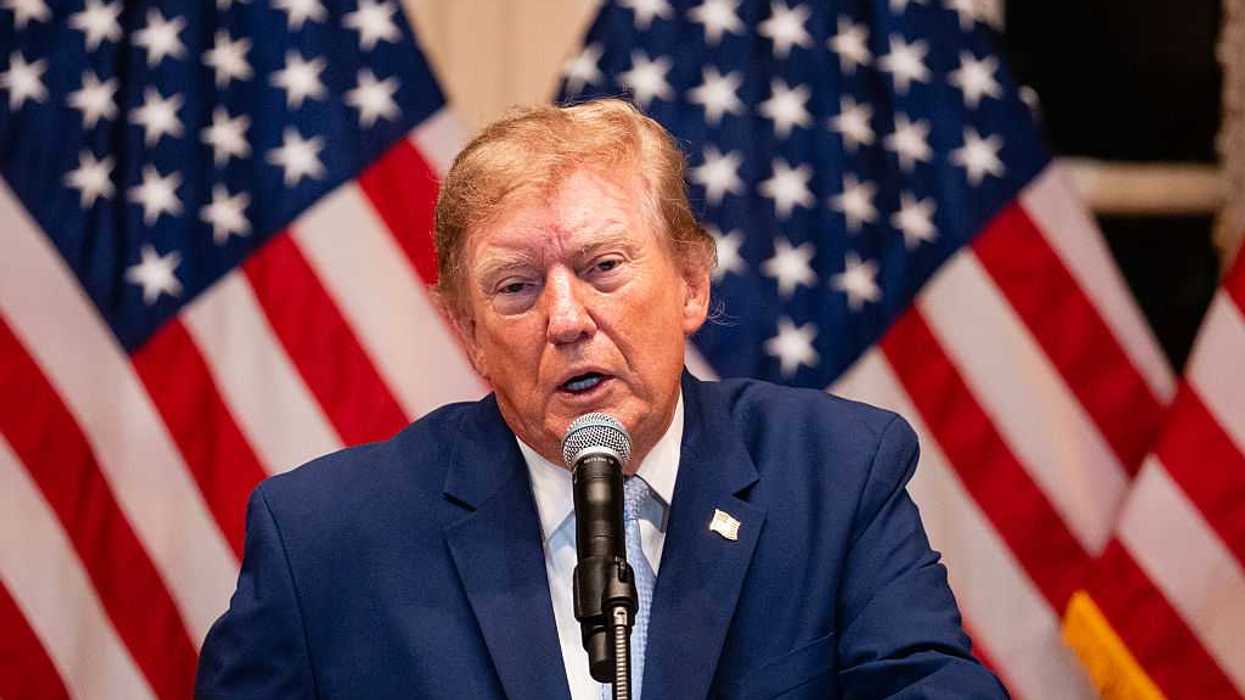
DHS Secretary Markwayne Mullin acknowledged to Congress that the agency has already used facial recognition on protesters, including identifying people who attended protests in Oregon and cross-referencing them with individuals present at protests in Newark. That is not an incidental use of immigration technology. That is the surveillance of political activity, conducted by a federal immigration agency, stored in a database for fifteen years.
The DHS's own document provides the clearest evidence of what the program will do to people who are not its stated targets. The text reads: "It is conceivable that a photo taken by an ICE non-federal law enforcement officer using the TFM mobile application could be that of someone other than a removable individual, including U.S. citizens." The use of the word "conceivable" is the bureaucratic tell. The document is not describing an edge case. It is describing the standard operating reality of any biometric surveillance system deployed on public streets. Facial recognition software makes errors. It makes more errors with darker skin tones. The people most likely to be wrongly identified and detained are the people who were already most exposed to aggressive enforcement.
Patrick Eddington of the Cato Institute put it directly: giving 1,300 police agencies this capability makes face surveillance "ubiquitous on American streets." This is no longer a speculative concern about future technology. It is a description of a program being rolled out now, through a network of local police forces who were never elected to run a federal surveillance operation and who have no independent oversight mechanism for how the photographs they collect are used.
The most important thing about what is being built is that it will not end with this administration. Surveillance infrastructure, once constructed and normalized, almost never contracts. The fifteen-year retention window for photographs taken today means that a database assembled under a deportation mandate in 2026 will still exist, fully searchable, in 2041. A different administration with different priorities will inherit a tool capable of identifying, locating, and tracking millions of Americans whose faces were captured during immigration operations they had nothing to do with.
Congress has the authority to require that biometric data collected in the course of immigration enforcement be purged after a defined period, that its use be restricted to the stated purpose of that enforcement, and that any secondary use, including tracking protest attendance, require a warrant. None of those safeguards currently exist. None appear to be under serious consideration. The database grows, photograph by photograph, fifteen-year retention by fifteen-year retention, while the debate remains focused on Switzerland.
Consider what this looks like on the ground. On March 27, 2026, ICE agents in Huntington Beach surrounded a man next to his vehicle, failed to establish his identity through conventional means, and then attempted to scan his face using facial recognition technology. The man was not suspected of any crime. No warrant had been issued. He was a United States citizen. On December 10, 2025, in Cedar-Riverside, Minneapolis, a 20-year-old American citizen named Mubashir Khalif Hussen was stopped by masked ICE agents walking to lunch. He repeated, "I'm a citizen, I'm a citizen." The agents refused to look at his ID. He was shackled and driven to a federal building before being released. His face is now in a federal database. It will remain there until 2041.
These are not isolated incidents. Facial recognition systems have already misidentified individuals, leading to wrongful arrests and months of detention for people with no connection to any alleged activity. Fifteen known people in the United States have been wrongfully arrested due to facial recognition errors; virtually all of them were Black. The system that generated those errors is now being scaled to 1,300 local police forces and integrated into a fifteen-year federal database.
The political will to stop this exists, but it is not being applied. The technology is being deployed in the noise of a news cycle saturated with Iran, Switzerland, and British politics. By the time the public focuses on what has been built, most of the building will already be done. That is, of course, precisely the point.
Imran Khalid is a physician, geostrategic analyst, and freelance writer.