





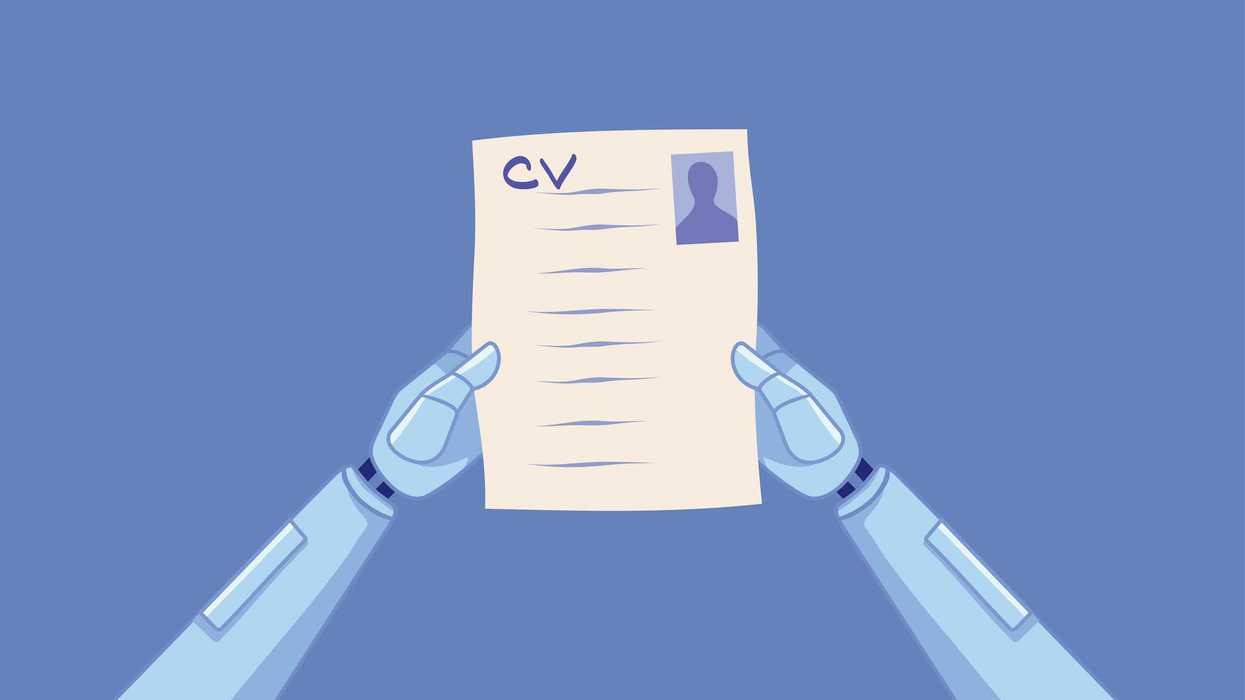
If Allison Baker and Maria Garcia apply for the same job against Matthew Owens or Joe Alvarez, and Matthew or Joe gets the job despite everything else being the same, that would seem to be a typical case of gender discrimination by the employer.
However, the names and scenarios I described were not drawn from a human example, but from AI. ChatGPT generated female candidates who were, on average, 1.6 years younger than their male counterparts and considered them less qualified than male applicants. Given AI’s pervasiveness in hiring decisions, these biases pose a significant concern.
However, AI’s bias is not limited to gender; it extends to other categories, including age: a separate study from Stanford found AI bias against older job applicants. On the opposite end of the age spectrum, in the healthcare field, a study found that pediatric patients face the highest risk of misdiagnosis across medical image foundation models, including adult-trained models that mispredict cardiomegaly (enlarged heart) in young children.
Though healthcare and hiring are majorly influenced by AI, they are hardly the only areas affected. AI has become ingrained in housing, finance, and criminal justice. Built on a foundation of biased data, these systems will undoubtedly continue to produce discriminatory results.
We are increasingly seeing AI discriminate against the very old and the very young simultaneously. In both cases, this stems from biases and underrepresentation in the training data. In image databases used to train machine learning algorithms, women are consistently portrayed as younger than men, especially in higher-status occupations. In pediatric patients, a systematic review of 181 public medical imaging datasets found that children accounted for just under 1% of the data, despite being 30% of the world's population. This jeopardizes these systems' ability to correctly diagnose and treat young patients, putting their lives at risk.
The source of the problem leads to a counterintuitive solution. Traditionally, equality on the basis of a class has meant making decisions without considering it, such as evaluating a job applicant without knowing their race. In human decision-making, this certainly still holds true.
However, to address discrimination from AI, the exact opposite is required: disregarding age would leave the model to the mercy of biases embedded in the training data. There must be an affirmative effort to ensure that all ages are fairly represented in the training data, which by necessity involves considering age.
These shared injuries, while extremely damaging, create a unique opportunity to form an intergenerational political coalition: one that works for both old and young people, rather than helping one at the expense of the other.
The nature of artificial intelligence necessitates new political coalitions. For decades, many political issues have pitted old against young, suggesting that for one group to benefit, the other must pay. However, artificial intelligence defies this framework: it discriminates against those it perceives as too old or too young.
This unprecedented issue calls for the formation of an intergenerational political coalition, where organizations like the AARP join young activists to co-create solutions for responsible AI governance. A robust ecosystem has developed to address other issues in AI equity, chief among them discrimination on the basis of gender and race, yet age discrimination has received little attention.
Such a coalition could yield unprecedented political power. The AARP has 38 million members fighting for those over 50. On the other hand, there are over 31 million Americans ages 18-24, though they are less mobilized into a unified organization. In comparison, AIPAC has 6 million members, the NRA has 5 million, and the AFL-CIO has 15 million.
Thus far, by excessively narrowing their political coalitions, both young and old activists deny themselves the opportunity to meaningfully address the issue they face. If older activists increasingly leverage the resources of the AARP and other organizations, while younger activists make AI age discrimination a voting priority and eventually form their own organizational infrastructure, the result would be the most powerful political coalition in American politics and the best opportunity to proactively address the problems that AI discrimination poses.
Arvind Salem is an Advocacy Associate with the Young People's Alliance.













The President Invited Iran to Bomb My Home