



This nonpartisan policy brief, written by an ACE fellow, is republished by The Fulcrum as part of our partnership with the Alliance for Civic Engagement and our NextGen initiative — elevating student voices, strengthening civic education, and helping readers better understand democracy and public policy.
Key Takeaways
- AI age verification is an emerging technology designed to estimate users’ age. It can be less accurate for certain groups and will likely require ongoing investment to remain effective.
- Those in favor of AI age verification say that it is simply the modern digital equivalent of real world measures that prevent minors from accessing adults-only products and services, such as ID checks and security guards.
- Critics of AI age verification cite technological shortcomings, concerns over data privacy and free speech implications, and the presence of systemic biases as reasons why AI age verification is not a suitable tool to keep minors safe online.
- As of February 2026, 25 U.S. states, the U.K., Australia, and Spain have laws requiring age verification, suggesting a rapidly growing global trend which will have lasting consequences for safety, anonymity, and data privacy on the internet.
Why is AI Age Verification Suddenly Everywhere?
In an article recently published in Tech Policy Press, Meg Leta Jones and Clare Morrel say that, “2026 is poised to be the year age verification changes the internet as we know it.” But how did we get here? What is AI age verification? How does it work? And what does it mean for the future of the internet?
In recent years, largely in response to whistleblower testimony, federal lawmakers have tried to update the U.S. approach to child internet safety through bills such as the Kids Online Safety Act (KOSA) and the App Store Accountability Act, which seek to prevent minors from being exposed to harmful content. Despite bipartisan support, both have failed to become law, in significant part due to concerns that they would amount to censorship, undermining rights to privacy and free speech. This has left states to implement their own legislation.
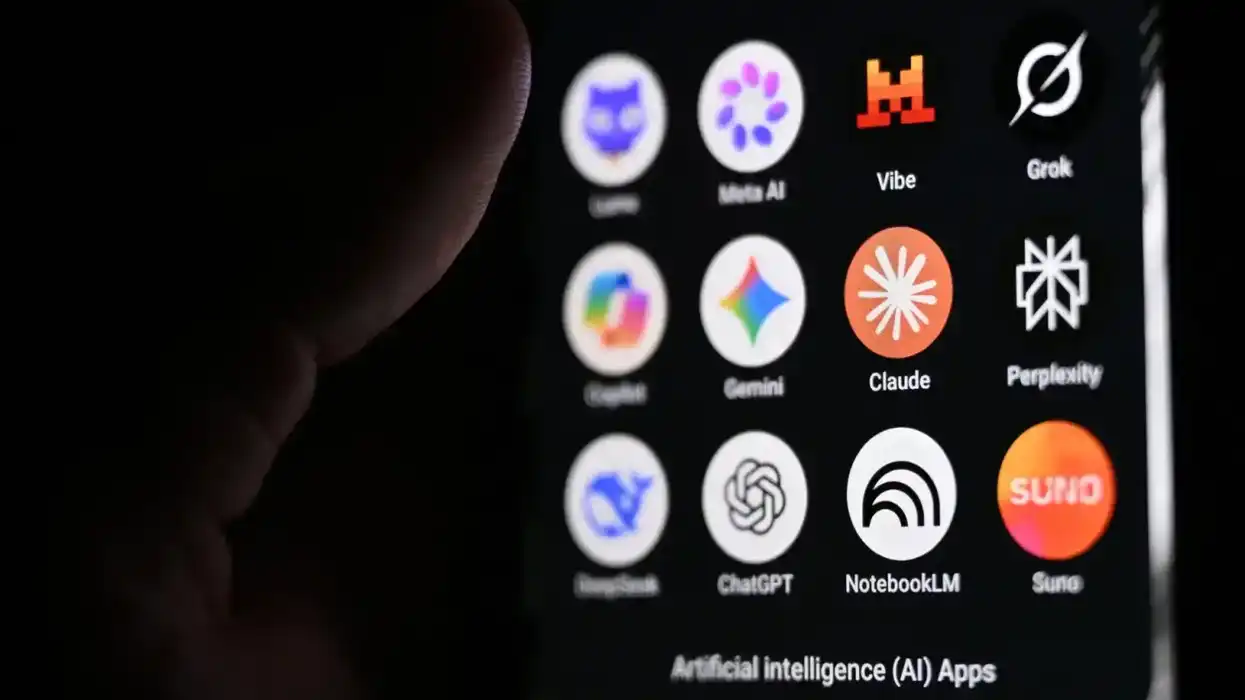
In the U.S., the current influx of age verification legislation began with a Louisiana law, introduced in 2022, which requires age verification though government ID or transactional data to access websites on which more than a third of the content is deemed adult in nature. Early age verification laws followed this trend and were narrowly focused on sites with a substantial amount of mature content, such as dedicated pornography providers, but many states have since passed much broader laws targeting social media platforms and app stores. Now, half of U.S. states as well as several countries including the U.K., Australia, and Spain have age verification laws. Although these laws do not explicitly require that companies use age verification strategies that rely on AI, platforms such as YouTube, Discord, Roblox, TikTok, OpenAI’s ChatGPT, and Apple’s App Store have chosen to do so. Since many of the largest and most popular websites and apps have opted for AI age verification, these methods will be the focus of this brief.
What is AI Age Verification and How Does It Work?
The 2 major types of AI age verification techniques are Facial Age Estimation and Social Graph Age Estimation. With Facial Age Estimation, an AI model analyzes image data of a user’s face to determine their approximate age. . This technique is used by Roblox, which requires users to submit a video of their face or a copy of their ID before they can use chat features. On the other hand, Social Graph Age Estimation analyzes an individuals’ behavioral patterns such as search history, watch history, and watch time. TikTok takes this second approach, using a model that assigns accounts a score between 0 and 1 using a “combination of profile data, content analysis, and behavioral signals” to identify accounts belonging to those under 13. YouTube uses a combination of these methods. First a model analyzes “multiple behavioral factors, including what kind of videos the user searches for, the categories of videos they watch, and how long the account has been active.” If the model falsely determines that a user is underage, they then have the option to upload a photo for facial analysis. Other options include verification via credit card or ID.
What Problems is AI Age Verification Trying to Solve?
In 2026, it is undeniable that the internet has become a key facet of most Americans’ daily lives, and that includes children and teens. From 2011 to 2023, the percentage of teens with smartphones rose from 23 to 95 percent. Meanwhile, from 2015 to 2023, the percent of teens who said they were online almost constantly nearly doubled, going from 24 to 46 percent. This shift has not come without consequences.
For example, reporting shows that the majority of children now encounter pornography by the age of 13 with most saying they did so on social media Additionally, while the research is inconclusive, internal studies by social media platforms have shown that their usage can be detrimental to minors’ mental health. These factors could be part of the reason that, according to The Heritage Foundation, “Roughly 70 percent of parents say parenting is more difficult today than 20 years ago and that technology and social media are the top two reasons for increased difficulty.”
Notably, children themselves are also unhappy with their online experiences. A workshop run by Public Knowledge found that despite being aware of the fact that their feeds are being precisely tuned by algorithms designed to keep them engaged as long as possible, minors consistently described a pattern of losing unintended time to the endless scroll of social media in a way that impeded with their ability to complete necessary tasks. Furthermore, they reported the desire for “a fundamental shift in how platforms, apps, and websites behave – changes that encourage [them] to better regulate their own behavior.”
Those in favor of AI age verification see it as a means to keep minors safe from explicit content and exploitative algorithms. They argue that far from being overreach, it is simply the high-tech solution necessary to meet our high-tech moment, playing the same role as the ID checks or security guards that keep minors from entering a casino or buying cigarettes offline.
What Problems Does AI Age Verification Create?
Opponents of AI age verification cite 3 major categories of concerns: technological shortcomings, free speech and data privacy issues, and systemic biases. AI age verification is accurate for the majority of users. This may create the impression that the technology behind it is well established and has no notable issues, but the reality is that AI age verification is technologically immature and struggles in ways that are particularly relevant to its role in enforcing internet safety standards for minors. Reuters analysis of an AI age verification trial connected to Australia’s social media ban for individuals under 16, describes “high accuracy for people over 19” but for those “up to three years on either side of the cut-off…system uncertainty is higher.” It also notes that, “users aged 16 had an 8.5% chance of being estimated as underage.”
Additionally, most AI age verification systems are easily circumvented through the use of a VPN, a technology which is well-known and commonly used by young people, including teens. It is possible that these technological problems will be resolved in the future. However, the future brings its own challenge in the form of model drift. Model drift causes AI models to become less accurate with time as the input they are evaluating from the real world becomes less like their training data.
Beyond technical limitations AI age verification also raises free speech and speech concerns. The ability to be anonymous is an important part of maintaining the right to free speech. This is especially true for people like journalists and abuse survivors. If large sections of the internet require that someone submit their face or ID to participate, digital anonymity as we know it could disappear. There is also the possibility that platforms may begin broadly removing content in response to the spread of age verification laws. As the Open Technology Institute puts it, “if an online operator believes it cannot verify the ages of users with certainty, it may be inclined to censor or restrict what content is available for all users—or even suspend services within a state entirely—to avoid legal action and liability.” This would have a chilling effect on free speech. These concerns are a key reason why, in the U.S., many age verification laws are facing legal challenges on vagueness and First Amendment grounds, with some being overturned.
There is also the matter of data privacy. When models make mistakes, users have to submit sensitive personal documents to correct them, which makes this information vulnerable to hackers. For example, Discord’s AI age verification partner was breached, exposing “government ID photos of about 70,000 global users,” and the resultant user backlash has been so intense that Discord is now delaying the global rollout of their age verification system from March to the latter half of 2026. As AI age verification becomes more widespread, this problem is likely to get worse because, as the Electronic Frontier Foundation notes, “the more places personal data passes through, the higher the chances of it being misused or stolen.”
At the intersection of technological limitations and data privacy concerns, is the problem of systemic biases. These biases mean that marginalized groups are more likely to be misclassified by age verification and to face additional barriers complying with them. Forbes and The Guardian (figure 1) report that age verification models are significantly less accurate at classifying racial and ethnic minorities as well as women. This is well supported by existing research. LGBTQ individuals and people with disabilities, particularly the 100 million worldwide with facial differences, are also more likely to be misclassified due to their underrepresentation in training data.

Figure 1: AI Age Estimation Inaccuracies by Race
Furthermore, many members of minority groups will find themselves unable to correct a classification mistake as a result of lacking the necessary documents. For example, according to the Electronic Frontier Foundation, 18% of Black Americans do not have a driver’s license, 43% of transgender Americans lack documentation with the right name or gender, and people with disabilities are more likely to have expired IDs. This creates a two-sided problem. On one hand, many members of marginalized groups will be incorrectly misclassified without a way to fix it, while those who can (and choose to) submit additional personal information will disproportionately bear the burden of any data breaches.
Where Will AI Age Verification Go From Here?
AI age verification is a rapidly evolving emerging technology, as such predicting the future is difficult. Depending on how it holds up in the courts, it could quietly fade away, losing out to a better, more accurate, less invasive method of keeping kids safe online. It could also expand, as Forbes suggests, to night clubs and concert venues, no longer simply imitating real world protection mechanisms, but replacing them. It remains to be seen if, in 10 years’ time AI age verification will be looked at as a slapdash means of addressing deeper structural problems with the modern internet that having negative consequences not only for minors, but all users trying to maintain agency over their attention, or as the beginning of a truly digital first approach to child safety that permanently reshapes online communication and commerce.
Frequently Asked Questions
- Is AI age verification legal?
The legal fate of AI age verification is complex and currently unknown. Many age verification laws are facing challenges in court, with some being overturned for being overly broad and threatening First Amendment rights.
- Does my state have an age verification law?
An up to date list of U.S. States with age verification laws can be found: here.
- Will AI age verification only impact children?
No, AI age verification will impact everyone who uses platforms that implement it including adults, particularly those who are close to the selected age threshold and more likely to be misclassified as a minor.
Keeping Kids Safe Online?: Understanding the Debate Over AI Age Verification was first published by ACE and republished with permission.
Shane Johnson is a recent graduate of the University of Cincinnati.












The President Invited Iran to Bomb My Home