


While America is suffering a mental health crisis, the good news is that tens of millions of people are getting help. In 2023, 60 million adults reported having sought counseling or treatment in the previous year, and the numbers continue to rise.
Psychotherapy works because of what’s known as the therapeutic frame, a set of boundaries that create safety and structure for patients and clinicians. Sessions last 50 minutes. Fees are agreed upon prior to the start of treatment. The therapist remains neutral, shares little of their personal life, and holds confidentiality sacred.
The bad news is that the future of mental health is increasingly being built around the idea that those boundaries are obstacles. Online therapy platforms promise unlimited access. AI chatbots serve up emotional support. New software records sessions and generates clinical notes.
Each innovation claiming to improve therapy by making it faster or easier is dismantling the very framework that makes it effective. The people shaping the future of mental health often understand venture capital better than they understand the human psyche.
Take BetterHelp, for example. The world’s largest online therapy platform spent $76.9 million on podcast ads in 2021, nearly triple the next largest advertiser in any category. It is a subscription service that uses online questionnaires and algorithms to automate the process of matching patients with therapists. Its closest competitor, Talkspace, does the same. Then patients and therapists interact online via video, audio, or live chat.
While these online platforms advertise accessibility and seem like a good way to get more people into mental health care, they come with a dangerous downside.
The consensus amongst seasoned clinicians is that 20 to 25 clients per week is the sustainable upper bound for a full-time therapist. Therapists at some of these major direct-to-consumer platforms routinely report carrying 40 or more, with new clients assigned to therapists without their consent and with no path to refer anyone to other clinicians.
A clinician juggling 45 clients doesn't have the bandwidth to give each their full attention. Clients might walk away believing therapy doesn't work, a potentially deadly conclusion for the one in 20 American adults who reported seriously considering suicide in the past year.
And when a patient finds a therapist through one of these platforms, the platform owns the relationship. For instance, if a therapist leaves BetterHelp, they can’t take a client with them, putting an abrupt end to whatever progress may have been made.
The online therapy platforms also sell features like 24/7 messaging and unlimited therapist access, which sound good in ads but undermine another crucial part of the therapeutic frame: containment. The therapy hour is designed as a holding space, a consistent environment where the therapist and client can safely explore and process complex emotions. When the container leaks and communication flows freely outside the session, the clarity and safety of that sacred space dissolve.
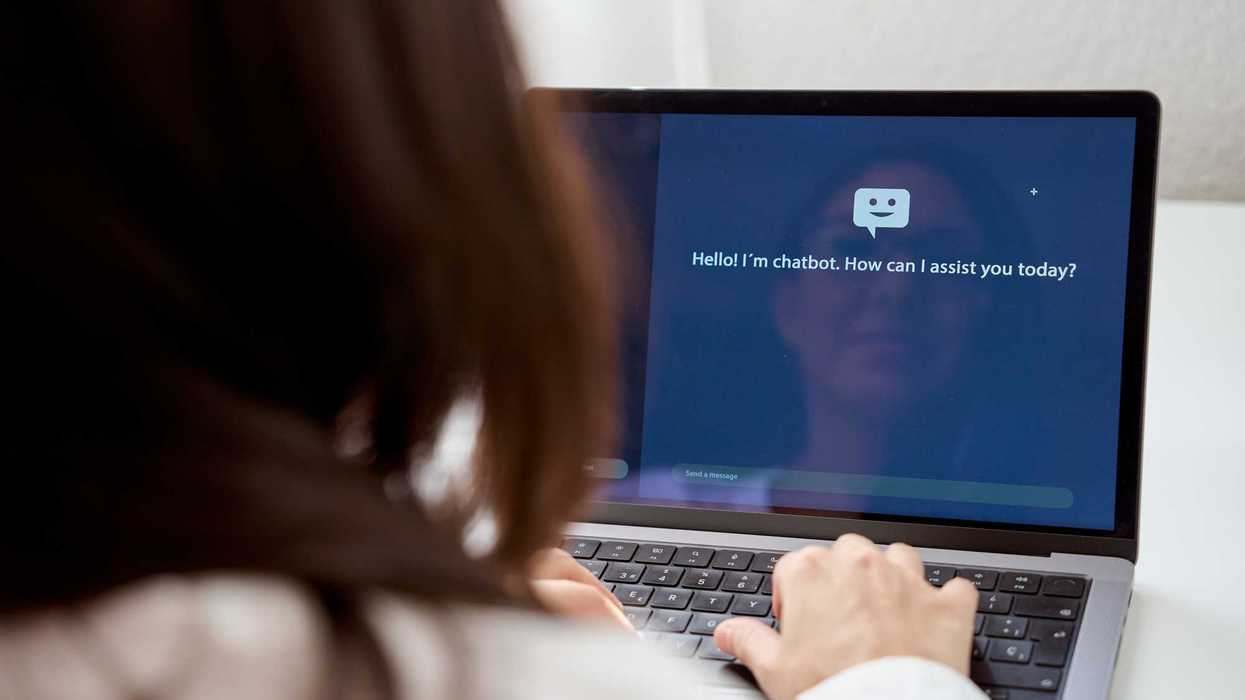
At the same time, more than half of U.S. adults say they would feel comfortable discussing personal mental health issues with an AI chatbot, bypassing the desire for a licensed mental health professional altogether. A new study shows nearly one in five young adults is turning to AI chatbots for emotional support, with two-thirds of them not telling anyone they’re doing it.
Unfortunately, comfort and convenience aren’t the same as safety, and chatbots built on large language models like ChatGPT are no substitute for licensed mental health professionals.
Taking the personal touch out of therapy already is proving to have significant consequences.
Lawmakers in states like Illinois, Utah, and Nevada are recognizing the risks of turning therapy over to machines, restricting how AI companies can operate in the mental health space. And class action lawsuits and FTC settlements against large online therapy companies expose that they have engaged in everything from selling patients’ sensitive data to third-party platforms for targeted advertising purposes to matching patients with unlicensed or inappropriate therapists.
Therapists themselves are facing growing pressure to integrate AI into their practices too. New software can record therapy sessions and use AI to generate progress notes automatically. While this probably could save therapists administrative time, we have remarkably little evidence about what AI recording does to the therapeutic process. Clients can agree to being recorded and still hold back without realizing it, the same way most of us speak differently when we know someone else is listening. Before these tools become routine, we should understand how they affect the conversations they're meant to preserve.
Technology absolutely has a place in mental health. It can help connect people with care, improve scheduling and billing, and make treatment more accessible. But when we hand over the intimate, human work of therapy to AI or prioritize efficiency over depth, we risk losing what makes therapy transformative.
Therapy’s power lies in its slowness, its privacy, and its humanity, and those qualities can’t be coded into an algorithm or outsourced to AI. If we continue to treat psychotherapy as another system to optimize, we will optimize away the very things that make it work.
A licensed psychotherapist, Paul Fugelsang is the founder and executive director of Open Path Psychotherapy Collective, which has helped more than 160,000 clients in need access affordable care through a network of 36,000 therapists across the U.S. and Canada.
Megan Cornish, LICSW, is a licensed clinical social worker, clinician advocate, and consultant to behavioral health companies.