


Trump’s efforts to sow seeds of doubt in the election process have had an unintended yet predictable effect on the 2026 midterms: many Republican voters no longer trust mail-in voting.
When City Councilmember Nithya Raman surged from behind in the Los Angeles mayoral primary as late mail-in ballots were counted, some members of the GOP pointed to a broken election system. In reality, they were watching California elections function exactly as designed — slow, scrupulous, but secure.
By law, California election officials have 30 days to count ballots and certify the results. Early polling projected a win for Republican reality TV star Spencer Pratt in the Los Angeles mayoral race, but that was several days before the collection of late mail-in ballots postmarked on or before Election Day. Since then, the election tides turned, and a blue wave of mail-in ballots carried Raman to a second-place finish.
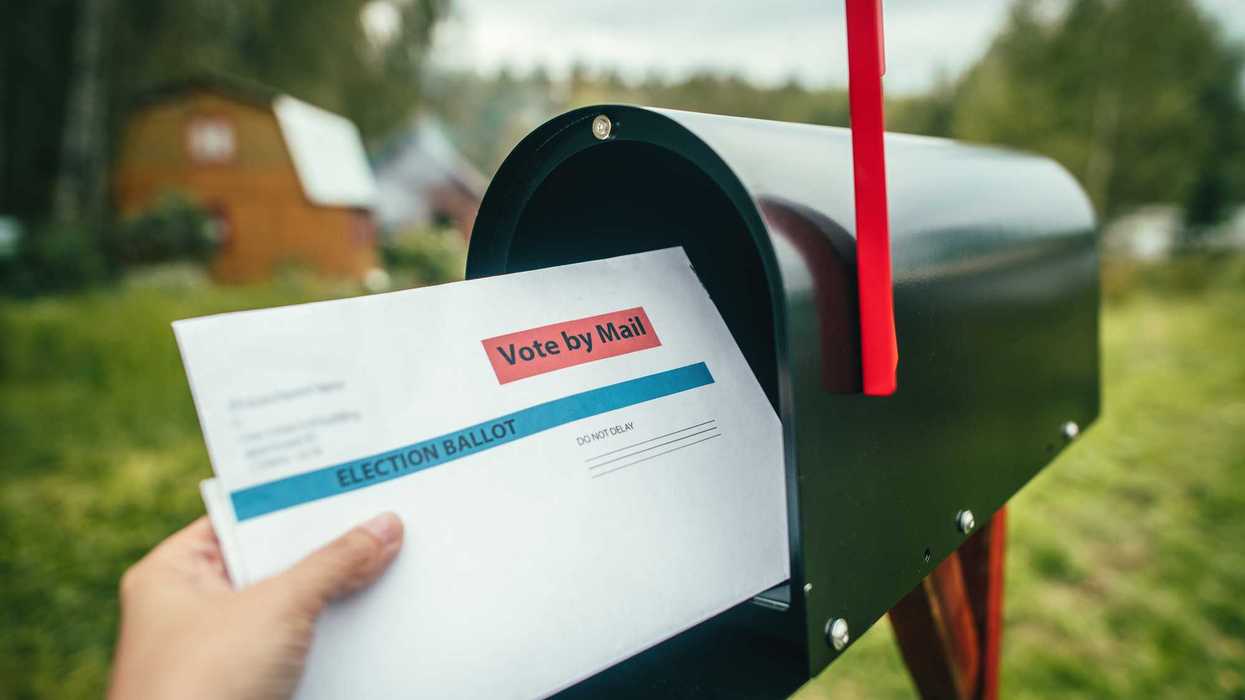
Mail-in voting has become a critical part of California’s voting system as more than 88% of the state electorate cast their ballots by mail in the 2024 general election. In a state where election outcomes are routinely reshaped by the counting of mail ballots, Raman's 11-point surge was hardly extraordinary. Trump nevertheless declared the result "not possible" and evidence of a "rigged election."
Raman’s rise and the responses to it reflect a partisan division in how voters have been conditioned to view elections. The distrust in mail-in voting among GOP constituents did not emerge on its own. It was cultivated over years of messaging from Republican leaders.
President Donald Trump has alleged widespread voter fraud since his presidential loss in 2020.
According to a pre-election post from Trump in April of 2020, mail-in voting “doesn’t work out well for Republicans.” Despite winning in 2024 — when mail-in ballots comprised roughly 30% of the national electorate — Trump has stuck to his claim that mail-in voting is rigged against the GOP.
Trump's election fraud claims gained traction throughout the conservative media ecosystem as politicians, commentators, and online influencers echoed allegations that Democrats were "stealing and cheating" and that election officials were "counting votes until Spencer loses."
While fraud claims begin with prominent political figures — House Speaker Mike Johnson, Florida Senator Rick Scott, and of course, President Donald Trump — they gain plausibility as they are repeated across trusted media personalities, podcasts, and online communities. The conservative-leaning channels that Republican voters are most likely to trust and consume amplify these messages, reinforcing the perception that election fraud is widespread and credible.
As American citizens, our vote is our voice. Assertions that this voice is being undermined or discounted without our knowledge are understandably alarming. While a single allegation may be easy to dismiss, repeated claims delivered by multiple media sources and political officials are far more difficult to ignore.
The effects of this sustained messaging are reflected in public opinion. According to survey data from Marist Poll, distrust in American elections has increased by 10 percentage points since 2024. The reasons for distrust are divided across party lines as Democrats (41%) are most concerned about voter suppression, while Republicans (57%) identify voter fraud as the greatest threat to free and fair elections.
For the majority of Republican voters who already question the integrity of American elections, recurring claims of widespread voter fraud reinforce existing concerns and increasingly shape attitudes toward election policy. In 2018, 57% of Republicans supported no-excuse absentee voting. Today, that support has fallen by roughly 20 percentage points, while Democratic support has remained relatively stable at 82%.
Republican voters have been repeatedly told that one of the most common and accessible methods of voting in state and federal elections is also among the least trustworthy. As confidence in mail-in voting has declined among Republicans, the partisan gap in voting methods has widened. In the 2024 election, approximately one in four Democrats voted by mail, compared with one in five Republicans.
The GOP has framed mail-in ballots as an obstacle, and that is exactly what they have become for Republican candidates.
Donald Trump and his political allies are engaging in psychological self-handicapping — creating obstacles to explain their losses before they occur. But unlike the textbook version of this phenomenon, the consequences extend beyond a single individual, as the entire GOP risks isolating its supporters by eroding trust in the democratic system.
For MAGA supporters, the most accessible pathway to voting has been tainted by allegations of electoral fraud. As a result, Democrats vote by mail at a higher rate than Republicans, and Democratic candidates like Raman are more likely to benefit from mail-in ballots. In this sense, Trump may be right — mail-in voting “doesn't work out well for Republicans.”
By stirring democratic distrust, Donald Trump is not simply warning about disenfranchisement — he is helping to produce it. Claims meant to explain electoral losses are increasingly shaping who participates in the first place.
As the nation approaches the 2026 midterms, the GOP must confront a simple question: If Republican voters are convinced that their ballots will not be counted, why would they vote at all?
Jackie Bond is an independent news writer from Los Alamitos, California, focused on politics, media, and public policy. She graduated from the University of Virginia in 2025 and is pursuing a master’s degree in journalism at Northwestern University.