




For Independence Day 2026, the 250th Anniversary of the birth of our nation, Americans should celebrate this momentous Anniversary by reflecting on a problem concerning the very concept of independence. We should think about how we could resolve the problem by drawing on the same values and strategies as the founding fathers.
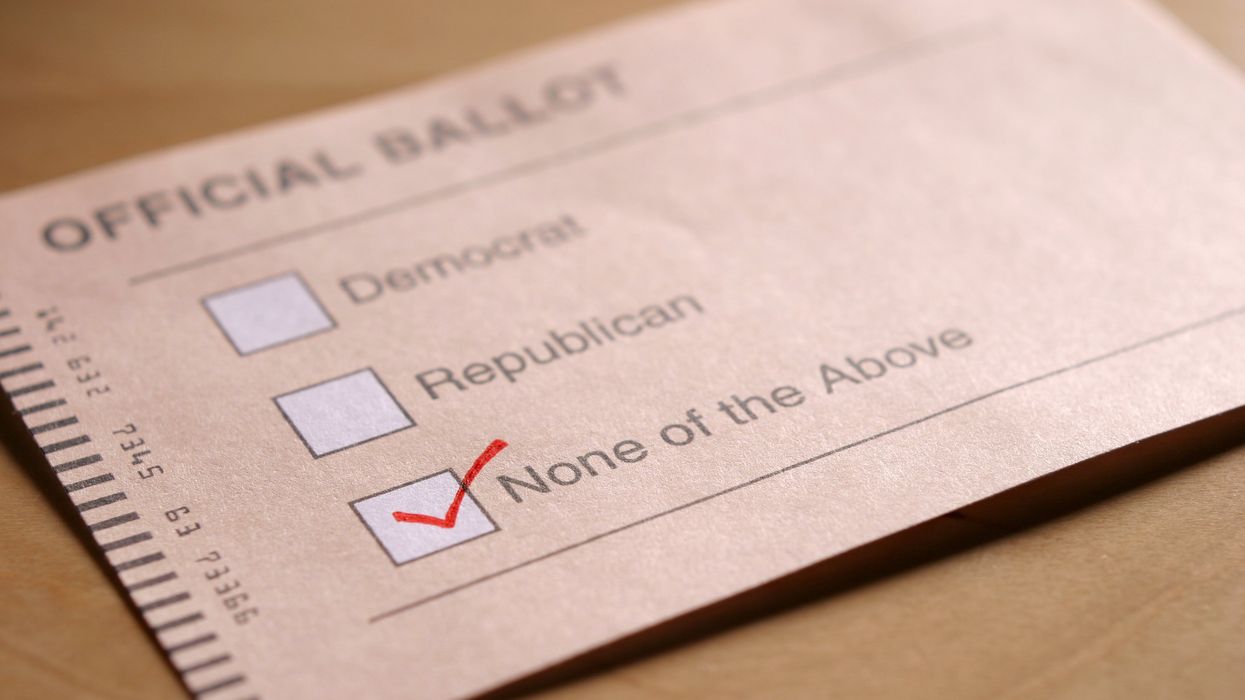
Gallup reports that in 2025, 45% of American voters did not identify as either Democrats or Republicans. Instead, they identified as independents. The problem with the concept of independence that warrants reflection is how we can call ourselves a democracy when almost half of our citizens do not identify with the two political parties that have basically run the country since the late 19th century.
The next major stage of American democracy should concern the structure of our democracy, namely, the process of democratic deliberation, rather than the outcomes. In short, it should not be about a leftward, rightward, or centrist turn, or about some transformation that transcends the political spectrum as we know it. Nor should our reflections focus on whether we support President Trump.
Instead, the next major stage of American democracy should concern the process by which laws are made and how the president, any U.S. president, and Congress should work together.
I have argued in The Fulcrum the last three years close to a dozen times -- and had my columns reprinted via Tribune in 40-50 U.S. newspapers -- for a concept of democratic government I call "tripartisanship." In a tripartisanship system, there are three, not two, major political forces on Capitol Hill: the two major parties and an Independent Caucus in the Senate made up of 5-6 U.S. senators who are independents.
Dartmouth economist Charles Wheelan argued for this “fulcrum strategy” in The Centrist Manifesto, but he proposed a Centrist Political Party to animate it. I propose a different course of action.
The Independent Caucus plays a peacemaker role on the Hill, but it does more than act as a marriage counselor. The Independent Caucus is designed to insert its beliefs, interests, and values into the deliberative process itself.
Moreover, the senators, by design, would not all be centrists. Rather, they would represent a diverse range of independent perspectives. Yet, as an Independent Caucus, they would have to make sacrifices at times to help the Senate reach 60 votes on major policies.
Tripartisanship derives its energy in part from the concept of independence itself and in part from cooperation with other independents. No one in Washington gets everything they want, not the Democrats in Congress, not the Republicans in Congress, and not the President.
What is distinctive about the coming stage of American democracy -- in 2028, 2032 and beyond -- is that it will not focus on the content of public policies as the New Deal did or the Reagan Revolution did. Rather, it will focus on turning a widely agreed-upon dysfunctional Congress and Washington overall into a functional Congress and Washington overall.
The Tripartisan Turn, if it ever comes to be, will stand out not for the new laws that it promised to pass but for the new process of deliberation that it promised to establish. It will stand out for using the leverage of 5-6 U.S. Senators, who were either elected to office or who converted while in office. It will stand out for creating peace between the two major parties and bringing the substantive concerns of independents to the table.
The Tripartisan Turn can save American democracy by providing representation for 60 million-plus independents in our country and by reshaping, rather than dismantling, the two-party system. We should continue to have two major parties, but we also need an Independent Caucus that contains America in miniature.
The most respectful way to celebrate Independence Day 2026 is to honor the concept of independence by encouraging the country to bring us to the place where we can have an Independent Caucus. Integrating the beliefs and values of independents in our political system would do justice to Independence Day 2026.
Dave Anderson edited "Leveraging: A Political, Economic and Societal Framework," has taught at five universities and ran for the Democratic nomination for a Maryland congressional seat in 2016.