
Independent candidates face structural barriers at every level of American politics—ballot access restrictions, fundraising disadvantages, and the near-total dominance of two-party infrastructure. The problem is only getting more stark with recent rulings such as this week’s NRSC v. FEC, where the Supreme Court ruled that First Amendment considerations bar limits on how much money political parties can spend in support of their candidates.But the absence of independent officeholders is not absolute. At the local level, a number of mayors governing major American cities have been elected outside of party structures, winning competitive races and building governing records, showing American voters what independent leadership can mean.
While some of these officeholders are more closely affiliated with major parties than others, they have all publicly spoken on their independence.
The seven mayors profiled here represent large cities. Their tenures span economic revitalization, mental health reform, infrastructure investment, and public safety—evidence that independent governance isn't just a ballot-line novelty, but a functional model with a track record.
Counting up from the city with the lowest population, we have…
Hillary Schieve—Reno, Nevada (pop. ~273,000)
Schieve first won Reno's mayoralty in 2014 and has been reelected twice since, most recently in 2022. She went on to serve as the 81st President of the United States Conference of Mayors—its first president who was an independent politician.
She’s driven on diversifying the city's economy beyond gaming and tourism, drawing tech firms and remote workers to Reno as a lower-cost alternative to Silicon Valley. She drew national attention—including a spot on Politico's "America's 11 Most Interesting Mayors" list—for the revitalization of the Midtown District and public arts investment, and was named 2019 Elected Arts Advocate of the Year.
Suzanne LaFrance—Anchorage, Alaska (pop. ~290,000)
LaFrance, a registered nonpartisan, unseated incumbent Republican mayor Dave Bronson in the 2024 election, taking 53.54% of the vote to Bronson's 46.46%. She previously chaired the Anchorage Assembly during a tense relationship with Bronson's administration, leading inquiries into certain hirings and alleged ethical lapses.
As mayor, she has emphasized bipartisan coalition-building, crossing party lines in legislative endorsements that included a Republican, a Democrat, and an independent candidate in the same announcement.
She has prioritized engaging with individuals who are going to be most affected by policy changes before implementing them, such as getting buy-in from snowplow drivers before installing GPS devices on their vehicles. She also has worked to increase transparency between her office and the public, creating websites to highlight the delivery of public services.
Unemployment has fallen under her watch from 4.3% to 3.3%, and she extended the homeless shelter system from seasonal to year-round.
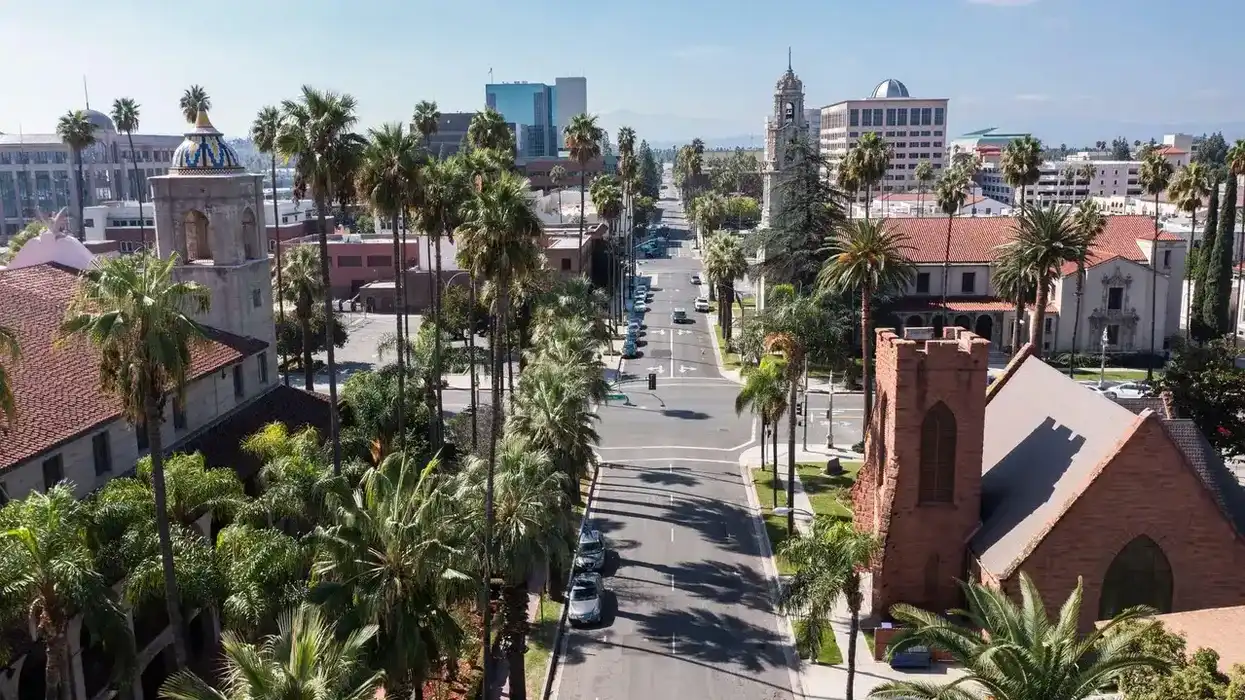
Patricia Lock Dawson—Riverside, California (pop. ~317,000)
A Riverside native and environmental scientist by training, Patricia Lock Dawson was first elected mayor in 2020 and won reelection in March 2024, having previously served nine years on the Riverside Unified School District board.
Her signature initiative is a self-organized "Bipartisan Forum," a standing group of seven Democrats and seven Republicans convened since 2021 to tackle homelessness, mental health reform, and public safety outside partisan structures—work she credits with helping pass California's CARE Court mental-health legislation, connecting adults with untreated mental illness to care and housing services.
Under her leadership, Riverside has secured over $300 million in state and federal dollars to address needs in infrastructure, homelessness, and workforce development. In October 2025 she was selected to lead Big City Mayors, a coalition of California's 13 largest-city mayors.
Rick Blangiardi—Honolulu, Hawaii (pop. ~350,000)
Blangiardi describes his independence as: "I'm an independent. Always have been. I am liberal in some areas and conservative in others, and I don't believe either party can lay claim to all of the best ideas in every area."
A longtime television executive who ran Hawaii News Now, he was elected Honolulu's mayor in 2020 and reelected outright in the August 2024 primary. His tenure has included addressing the COVID-19 pandemic and expanding the Honolulu rail system.
He revived the city’s Private Activity Bond program to issue bonds for affordable housing and has focused on negotiating changes to local police contracts to improve recruitment efforts.
Jim Ross—Arlington, Texas (pop. ~400,000)
A former Marine, Arlington police SWAT officer, and restaurateur, Jim Ross was first elected mayor in a 2021 runoff and has since won reelection twice, including a third and final term in May 2026.
Ross said he has "brought over 27,000 new jobs to Arlington" and "increased the average wage by more than 20%" during his two terms. He is a member of Mayors Against Illegal Guns.
In 2025, he publicly called for a legal and ethical review of a Tarrant County redistricting proposal tied to the national gerrymandering wars. He described it as highly unusual, explicitly invoking his independence: "I don't call myself a Democrat or a Republican—I want what's best for the residents of Arlington."
He’s also worked to secure private capital investments for the city, claiming over $1.1 billion in investment since he took office.
Yemi Mobolade—Colorado Springs, Colorado (pop. ~500,000)
Mayor Mobolade is the public servant on this list who most clearly puts forward the independent label as key to his governing philosophy. His victory in conservative stronghold Colorado Springs shows the power of an independent message.
Taking office in June 2023, his tenure has emphasized public safety staffing, including efforts to hire hundreds of police officers. These efforts have led to declines in homicide rates, motor vehicle thefts, and overall property crime. Police response times have been cut in half, and 911 responders have more than doubled their early call response rate. Suicide rates are down significantly.
He secured a $820 million road-renewal bond, and his administration has filled hundreds of thousands of potholes during his tenure. He has built a reputation around community engagement, focusing on delivering on priorities that members of his city are most interested in.When looking at the accomplishments of these mayors, what sticks out as a throughline? A focus on infrastructure and public safety. Filling potholes, hiring police officers, and building houses. Efforts to bring disparate voices together, and a focus on acting transparently.
In short, when you put party platforms aside and work to represent the people, you can get a lot of things accomplished to improve people’s day-to-day lives.
Note: Several mayors in jurisdictions that have nonpartisan local elections have been excluded from this list when public statements from them about being independents and not tied to either party couldn’t be found, and their status as independents couldn’t be verified.
6 US Cities that Show America What Independent Leadership Looks Like was first published on Independent Voter News.
This article is republished as part of The Fulcrum’s partnership with IVN and the Latino News Network to expand voter‑first journalism and strengthen public‑centered coverage of democracy.