




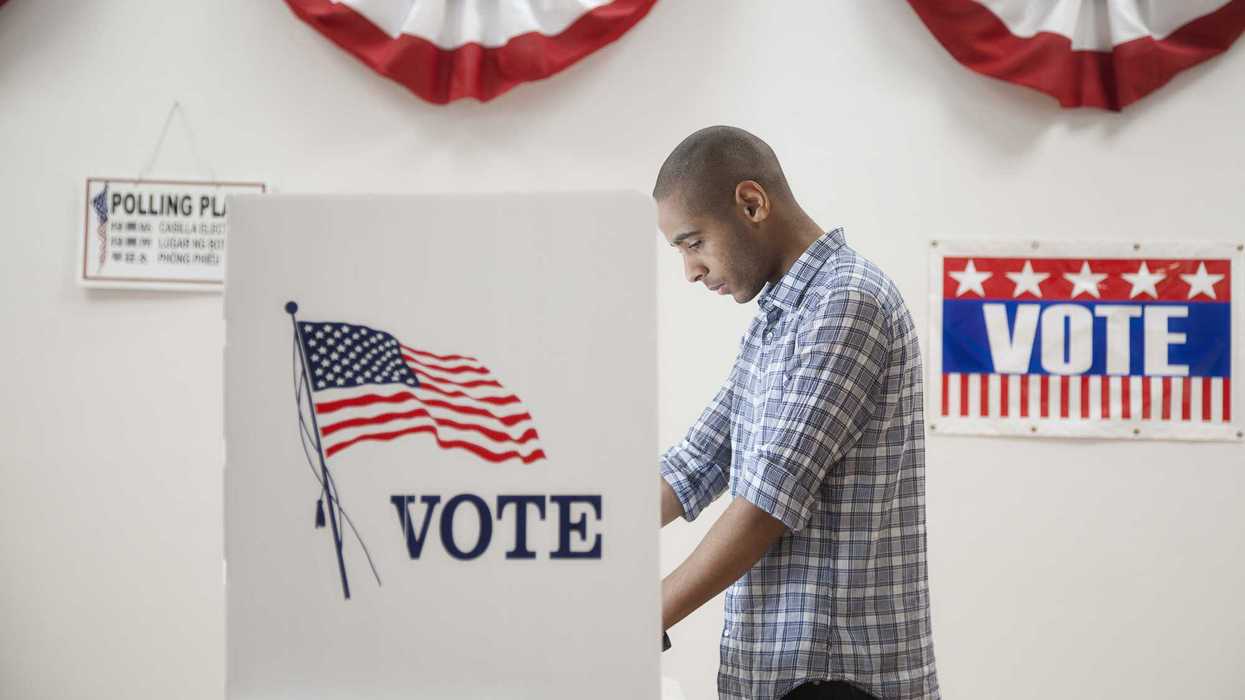

Democracy is facing a paradox. Around the world, citizens continue to support democratic ideals while simultaneously losing faith in democratic institutions. According to a 2024 Pew Research Center survey, a median of 59% of respondents across 24 countries were dissatisfied with how democracy functions in their own nation. Yet despite this frustration, support for democratic governance remains resilient. The crisis confronting liberal democracy is therefore not a rejection of democracy itself, but a growing belief that voting alone no longer provides meaningful political influence.
This dissatisfaction is particularly pronounced among younger generations. In many democracies, turnout among younger voters consistently lags behind older cohorts, and surveys show declining trust in legislatures, parties, and executive institutions. Political participation increasingly feels symbolic: citizens are asked to choose between broad coalitions every few years while day-to-day policy formation occurs in spaces largely insulated from public input. Lobbyists, party elites, bureaucratic agencies, and professionalized political consultants often play a more continuous role in shaping policy than voters themselves.
The result is a participation gap. Citizens are formally sovereign but functionally distant from governance. This gap does not necessarily produce apathy, but it does produce frustration: the sense that democratic systems are procedurally intact yet substantively unresponsive.
The solution is not to abandon representative democracy. Elections remain essential for accountability and political stability. But they are insufficient as the sole mechanism of participation. Democracies require additional institutions that allow citizens to exercise meaningful influence between elections. One promising model is a permanent Citizen Chamber: a legislative body composed not of elected politicians but of ordinary citizens selected through democratic lottery, or sortition.
The logic of sortition is not new. In classical Athens, many public offices were filled by lottery rather than election. The Athenians feared that elections would privilege wealth, status, and rhetorical skill, while sortition would distribute political power more evenly across society. Although Athenian democracy was deeply exclusionary by modern standards, its institutional design reflects a durable insight in democratic theory: elections are not the only legitimate way to produce representation.
Modern political science has revisited this idea through deliberative democracy. Across recent decades, governments have experimented with citizens’ assemblies composed of randomly selected participants who deliberate on complex policy questions after hearing expert testimony. The OECD documents (and overviews) hundreds of such assemblies across democratic states. Ireland’s Citizens’ Assembly is perhaps the most frequently cited example, playing a significant role in shaping public referendums on abortion and same-sex marriage. In these cases, randomly selected citizens demonstrated a capacity to engage seriously with morally and technically complex issues when given structured time, balanced information, and institutional support.
Yet most citizens’ assemblies share a structural limitation: they are advisory. Governments may choose to ignore their recommendations without consequence. As a result, deliberative institutions often enhance discussion without redistributing actual power. They expand voice but not authority.
A Citizen Chamber would attempt to correct this limitation by embedding sortition directly into the legislative process.
Under this model, a national legislature would become bicameral. The first chamber would remain an elected parliament responsible for initiating legislation, reflecting partisan competition and electoral accountability. The second chamber would be a Citizen Chamber composed of approximately 500 randomly selected citizens chosen through stratified sampling to reflect national demographics, including age, gender, region, education level, and income distribution. Members would serve one-year terms and receive full-time compensation to ensure accessibility across socioeconomic backgrounds.
Crucially, this chamber would possess binding authority. Any major legislation passed by the elected house would require the Citizen Chamber's approval before becoming law. The Citizen Chamber could also delay legislation for reconsideration or require public revision, forcing elected officials to justify policy more transparently. However, it would not initiate legislation independently, preserving elected representatives' agenda-setting role and preventing institutional gridlock.
This structure addresses several well-documented failures of modern democratic systems.
First, it reduces money's influence in politics. Electoral systems reward candidates who can raise funds, build media presence, and maintain party infrastructure. By contrast, selection through lottery eliminates campaign finance entirely. Political authority becomes independent of wealth and professional political ambition.
Second, it improves descriptive representation. In many democracies, legislatures systematically overrepresent older, wealthier, and more educated citizens. For instance, the average member of Congress in the United States is significantly older and wealthier than the median citizen. A randomly selected chamber would likely reflect society’s demographic composition far more accurately than professional politicians.
Third, it may reduce polarization. Electoral incentives often reward ideological signaling, party loyalty, and conflict amplification. Citizens selected by lottery face no reelection pressures and therefore have fewer incentives to perform partisan identity. Empirical research in deliberative settings suggests that structured discussion among diverse participants can reduce polarization and increase willingness to compromise.
However, these advantages come with serious risks.
The most immediate concern is competence. Public policy increasingly involves technical domains such as monetary policy, artificial intelligence regulation, and climate modeling. Randomly selected citizens may lack the expertise required for such decisions. Yet this critique often overstates the expertise of elected officials themselves, many of whom rely heavily on staff, think tanks, and agency bureaucracies. The relevant comparison is not between citizens and experts, but between citizens and professional politicians operating under similar informational constraints. A Citizen Chamber would mitigate knowledge gaps by requiring structured expert testimony from multiple perspectives and providing nonpartisan policy briefings.
A second risk is manipulation. In an era of fragmented media ecosystems and algorithmic information flows, any deliberative body is vulnerable to misinformation. Institutional design cannot fully eliminate this challenge. However, it can be reduced through transparency requirements, public documentation of deliberations, and strict rules governing evidentiary standards during testimony.
A third concern is legitimacy. Critics may argue that randomly selected citizens lack democratic mandate. Yet democratic legitimacy does not arise solely from electoral victory. It arises from representativeness and consent. A statistically representative sample of citizens, selected through transparent randomization procedures, may in fact reflect the population more faithfully than electoral systems shaped by turnout disparities, gerrymandering, and campaign financing inequalities.
Importantly, such a reform should not be implemented abruptly. Democratic institutions rarely tolerate sudden redistribution of power. A more realistic pathway would involve gradual experimentation at local and state levels. Participatory budgeting programs and municipal deliberative assemblies already demonstrate that citizens can meaningfully engage with policy allocation decisions. Scaling such experiments incrementally would allow democratic systems to build legitimacy and institutional learning over time.
The greatest challenge facing liberal democracy today is not simply authoritarian resurgence, but political disengagement within democratic societies themselves. When citizens believe participation has little effect on outcomes, democratic legitimacy erodes even in formally free systems. Elections remain indispensable, but they cannot be the only way citizens engage with power. A Citizen Chamber would not replace representative democracy, but extend it, transforming citizenship from periodic selection of leaders into continuous participation in governance.
In doing so, it would revive a foundational democratic principle: that political power is most legitimate not when it is distant from ordinary citizens, but when ordinary citizens are meaningfully involved in its exercise.
Dylan Mabee is a high school student with a strong interest in government, public policy, political science, and civic engagement.













The President Invited Iran to Bomb My Home