


It is among the most familiar patterns of the Trump era. First, the president says or does something weird, rude or otherwise norm-defying. Some elected Republicans object, and the response from Trump and his minions is to shoot the messenger. The dynamic holds constant whether it’s big (January 6 pardons) or small (tweeting “covfefe” just after midnight).
The essence of this low-road-for-me-high-road-for-thee dynamic rests on the belief that Trumpism is a one-way road. Insulting Trump, deservedly or not, is forbidden, while Trump’s antics should be celebrated when possible, defended when necessary, or ignored when neither of those responses is possible. But he should never, ever face consequences for his own actions.
This was the week Trump’s routine went global.
A number of longtime defenders of the transatlantic alliance are very angry at our allies.
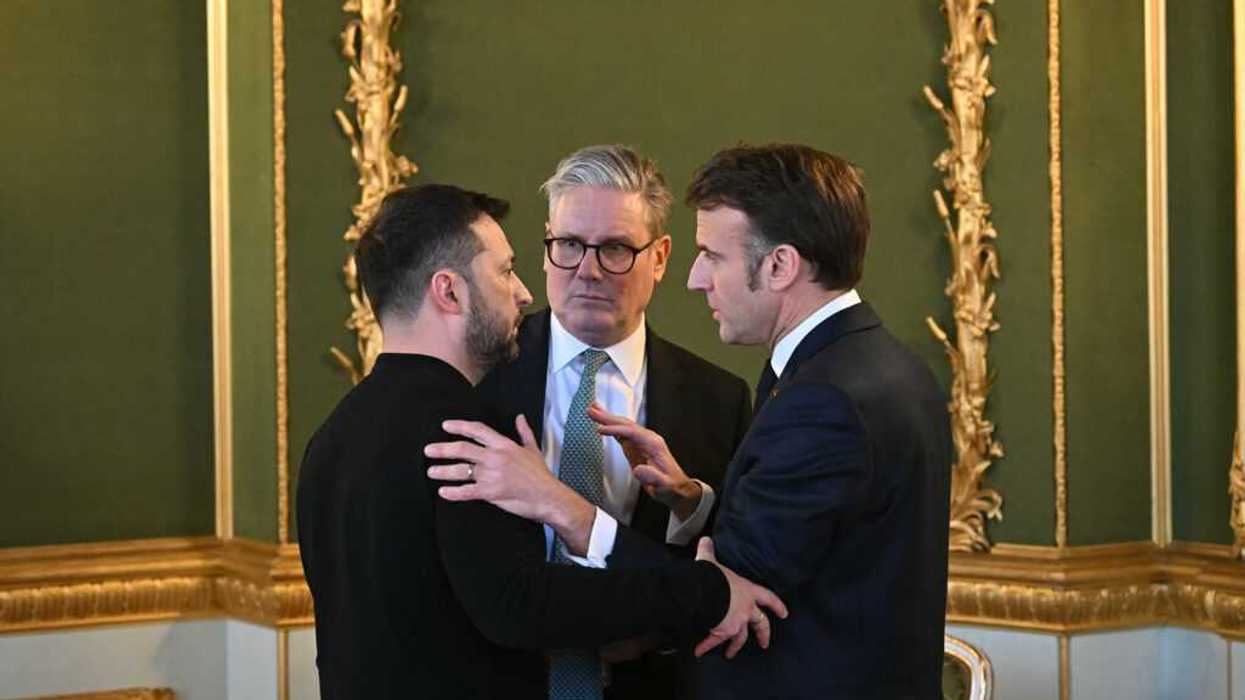
NATO members have refused to allow American jets to launch from, or even over, their territory. They won’t help secure the Strait of Hormuz. French President Emmanuel Macron has even called for a coalition to “stand up” against both the United States and China.
I think these are serious strategic mistakes, especially Macron’s posturing to go out like a modern-day de Gaulle instead of as a lame duck. But politically, they are hardly shocking.
Let’s review how we got here.
Trump has routinely mocked our allies. For efficiency’s sake, let’s forgive all of the petty jabs from the first term ostensibly intended to get them to spend more on defense. In Trump’s second term, he claimed our NATO allies would never fight on our behalf, despite the fact that the only time NATO invoked Article 5 — an attack on one is an attack on all — was in the wake of 9/11.
Back in January, in Davos, Switzerland, Trump revised this false claim, admitting that some did fight in Afghanistan, but that “they stayed a little back, a little off the front lines.” This infuriated not just allied leaders, but their voters. Indeed, Trump is even unpopular with the populist right across most of Europe.
On a per capita basis, Denmark, not America, had the most casualties in Afghanistan.
Speaking of Denmark, Trump threatened to go to war with the Danes to take possession of Greenland. The threats, public and private, were so relentless and serious that Denmark had to actually plan for a war against the U.S.
Trump didn’t go as far with Canada, but he poisoned that alliance with his repeated insistence that Canada should become America’s 51st state.
Trump also cut off most direct military aid to Ukraine, opting instead to strong-arm Europe into buying American weapons to boost our defense industry. And all while lending rhetorical aid and comfort to Russian President Vladimir Putin as Trump’s “peace envoy” talked up business deals with Russia.
Trump abrogated trade agreements with our allies to levy massive tariffs on nearly all of them, forcing many countries to pursue trade agreements with China. His erratic shifting of policies and rates sent allied economies scrambling. Trump’s American defenders may roll their eyes at his openness to emoluments — a plane from Qatar, a gold bar and Rolex from Swiss business leaders, a crown from South Korea — but just imagine how this stuff is viewed by the broader public in allied countries. Trump mocks notions of shared values, but if you bring him a trinket, he’ll talk.
Then Trump launched a surprise war on Iran without consulting our allies. When British Prime Minister Keir Starmer suggested sending aircraft carriers to help, Trump mocked him.
“That’s OK, Prime Minister Starmer, we don’t need them any longer,” Trump posted on Truth social. “But we will remember. We don’t need people that join Wars after we’ve already won!”
Trump has since changed his tune. In his national address last week, Trump essentially called our allies cowards who needed to muster some “delayed courage.” On Monday, he explained he was done with NATO because they refused to give him Greenland.
Trump’s one-way-street antics work domestically because of his support within the GOP base. But he can’t incite a primary challenge to elected allied leaders, not when he’s loathed. In January his approval rating in the U.K. was 16 percent (and in Denmark just 4 percent). One in 5 Europeans see America as a greater threat than China or North Korea.
Again, I think it would be good for Europe—which has seen energy prices skyrocket because of the war and still needs the U.S. for its security—to swallow some of the humiliation and help. But the refusal of Trump and his defenders to acknowledge why it’s politically hard at this point is maddening.
Trump would never dream of taking a devastating political hit for an ally. But he and his defenders cannot fathom why allies feel the same way about him.
(Jonah Goldberg is editor-in-chief of The Dispatch and the host of The Remnant podcast. His Twitter handle is @JonahDispatch.)









The President Invited Iran to Bomb My Home