
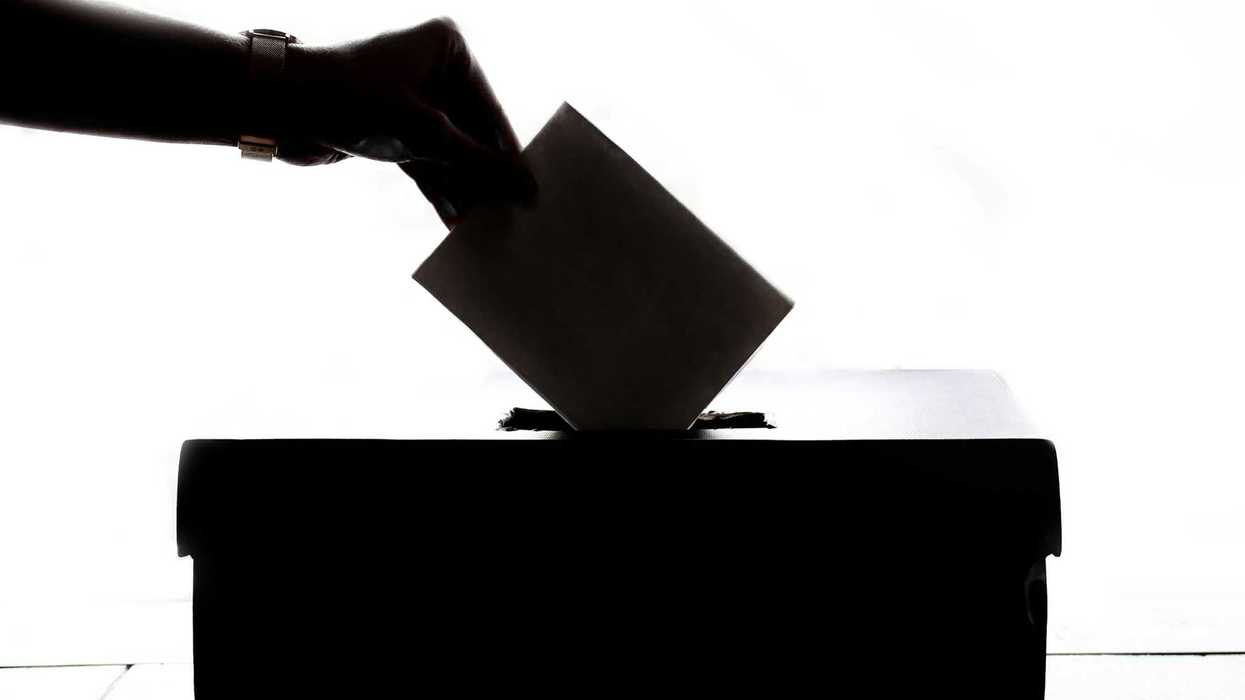
A democracy weakens long before it collapses, and the first cracks always appear in its elections. Election interference is no longer a distant warning — it is active, accelerating, and coming from within our own country. Representative John Lewis reminded us that “Democracy is not a state. It is an act.” Today, even that act is being deliberately weakened.
There was a time when Americans feared election interference from foreign adversaries like Russia or China. Today, the more urgent threat comes from officials who swore an oath to defend the Constitution yet work to weaken it in plain sight. That shift is not abstract; it is reshaping how — and whether — Americans can exercise their most fundamental right.
In our Republic, voting is being made harder — not through isolated disputes, but through coordinated efforts that reshape rules, narrow access, and erode constitutional authority. These actions fracture public confidence and weaken the guardrails that protect the democratic process. Election integrity is not a partisan advantage but the foundation of a functioning democracy. When leaders manipulate the system and citizens fail to confront the warning signs, interference spreads — and democracy grows weaker.
America is a democracy grounded in the people themselves — government of the people, by the people, and for the people. Under the Constitution, states — not presidents — administer elections and safeguard the process (Brennan Center). The framers feared concentrated power, so they distributed election authority across the states to prevent any single leader from controlling outcomes (States United). Yet today, Americans are watching leaders test those limits and attempt to shape outcomes in their favor.
The threat of interference does not stop with rhetoric. Presidential overreach has become a central threat (Brennan Center). The president is trying to exert control over elections, pushing executive power beyond constitutional limits. Congress must check the president and remind him that America is a republic grounded in shared power, not presidential control.
Recently, the House passed the SAVE America Act — legislation requiring proof of U.S. citizenship and photo ID to register and vote in federal elections, while imposing new federal oversight of voter registration (NPR). The president has threatened forceful law enforcement actions, criminal prosecution, and the removal of states’ constitutional authority to run their own elections under the Elections Clause (Brennan Center). These threats strike at the heart of the balance the framers designed to prevent any single leader from influencing outcomes.
Across the country, voters have witnessed bomb threats at election offices, rumors targeting immigration enforcement at polling sites, and executive actions attempting to alter election procedures — many blocked by the courts (Politico). The continued promotion of false claims about the 2020 election fuels distrust, deepens confusion, and weakens confidence in state‑run elections. Each tactic follows the same pattern: testing how much confusion or fear the public will tolerate.
Recent investigations show how deeply this pattern has taken root. Political appointees who repeat election falsehoods now oversee federal task forces that pressure state officials and question voting systems. Executive actions have attempted to impose new citizenship document requirements and weaken election‑security infrastructure — moves courts have partially blocked because the Constitution assigns these powers to Congress and the states, not the president.
The Constitution does not use the phrase “election interference,” but it establishes the guardrails that interference threatens. The Elections Clause gives states authority to run elections while allowing Congress to set nationwide standards to protect voting rights (Article I Section 4). The framers distributed election authority across the states to prevent any single leader from manipulating outcomes. Yet recent years show how easily these guardrails bend when leaders test limits or exploit confusion (Brookings). When protections weaken, so does our Republic.
Project 2025 pushes that vulnerability further. Its proposals call for expanding presidential control over federal agencies and reducing federal oversight of elections (Project 2025), changes many observers warn could weaken long‑standing protections (Govfacts). Although Project 2025 is not law, its recommendations have already shaped political rhetoric and administrative priorities (BBC), reinforcing recent federal statements about “the right people voting” and “electing the right leaders.” As Governor Kristi Noem put it, leaders must ensure “the right people vote.” Each signal asserts a federal role the Constitution does not grant — a deeper consolidation of power.
But interference is not driven by policy alone; it is fueled by the money that shapes narratives and public perception. Billionaires and powerful donors now drive political messaging (Brennan Center), fund misinformation networks, and influence policy agendas that do not reflect the needs of ordinary citizens. Some have openly declared intentions to reshape government or control information (POLITICO). When wealth distorts public understanding or manipulates democratic processes, interference accelerates — and accountability collapses.
Americans cannot afford to be uninformed. Political ignorance is not just unfortunate — it is dangerous. As Dr. Lance Watson preached at Washington National Cathedral, ignorance can be invincible, willful, or the result of choosing comforting lies over difficult truths (Holy Eucharist: HBCU). When leaders repeat falsehoods — about elections or public institutions — citizens rationalize what they know is not true. Distortion becomes belief, and belief becomes behavior. A democracy cannot survive when its people are misled.
The framers understood this danger, which is why they embedded the First Amendment into the Constitution (First Freedoms Foundation). They knew a free press was essential to ensure an informed public able to recognize abuses of power and ensure accountability. A politically astute public is essential.
Yet today’s president has worked to prevent the press from doing its job. From arrests to intimidation to purchasing networks, the objective is the same: weaken the institution that checks executive power. When the press is silenced, the people are silenced — and the public is easier to mislead.
In a 2017 interview on Meet the Press, Senator John McCain warned that suppressing a free press is “how dictators get started” (AP News). He admitted he did not always like the press, but he defended it because democracy cannot survive without it. When leaders silence journalists, they are not attacking the media; they are attacking the public’s right to know. And when citizens lose access to reliable information, ignorance grows — the condition the framers feared most. A democracy without truth is a democracy without guardrails.
Breaking this pattern requires action. Citizens must recognize interference when it appears, refuse to participate in it, and report intimidation or misinformation to local election authorities. Before Election Day, every voter should confirm their registration, verify their polling place, understand their voting options, and research candidates’ constitutional commitments. These steps may seem small, but they anchor democratic participation — and deny confusion the power it seeks.
But voters cannot be the only guardrail. Congress has a constitutional responsibility to respond when federal officials blur state authority, spread falsehoods, or assert powers the Constitution does not grant. Through hearings, oversight, and public accountability, lawmakers must affirm that federal officials have no authority to influence who votes or who wins.
Federal officials — including the president and the secretary of Homeland Security — must respect constitutional limits, refrain from interfering in state‑run elections, and allow the press to operate without intimidation or retaliation.
Democracy is not guaranteed. It is an act — one that belongs to all of us. Election interference collapses only when voters refuse to reward it. When citizens commit to electing leaders who honor their oath, respect constitutional limits, and choose country over party, they reclaim their power and strengthen the Republic. Your vote is your voice. Your voice is your power. And your vote is the final guardrail that protects America from interference coming from within.
Bio: Carolyn Goode is a retired educational leader and national advocate for ethical leadership, government accountability, and civic renewal. She writes about constitutional responsibility, democratic norms, and the importance of an informed citizenry.