



The new Ken Burns documentary, The American Revolution, provides a special opportunity to learn why our nation’s founders chose liberty and built a democracy based on three branches of government that would serve as a system of checks and balances on one another.
Today, that system is being challenged and is at a dangerous tipping point. One branch, Congress, has been dormant, basically ignoring its primary responsibility to enact laws that will govern us and appropriate funds that enable the government to function. In its acquiescence to the executive branch, Congress ignores its own constitutional responsibilities. And in failing to protect its own role and prerogatives, it has failed to protect us.
We elect a President to lead the administrative branch of government. A key aspect of this is to faithfully execute the laws past and present Congresses have enacted, and to use the funds as Congress appropriated and directed, not ignore or subvert the Congressional branch’s role. We also vote for State and local governments that have a sphere of operation that the Executive Branch of the federal government is – or at least was - bound to respect. Yet within the administrative branch, independent voices have been silenced, fired, and doxed for speaking out.
The lower federal courts have served as lone bulwarks against the administration’s assaults on our freedoms and unfair actions. These courts have written meticulously researched and reasoned opinions to restrain violations of the rule of law in fraught, time-sensitive situations and in the face of attacks on their character and threats to their person.
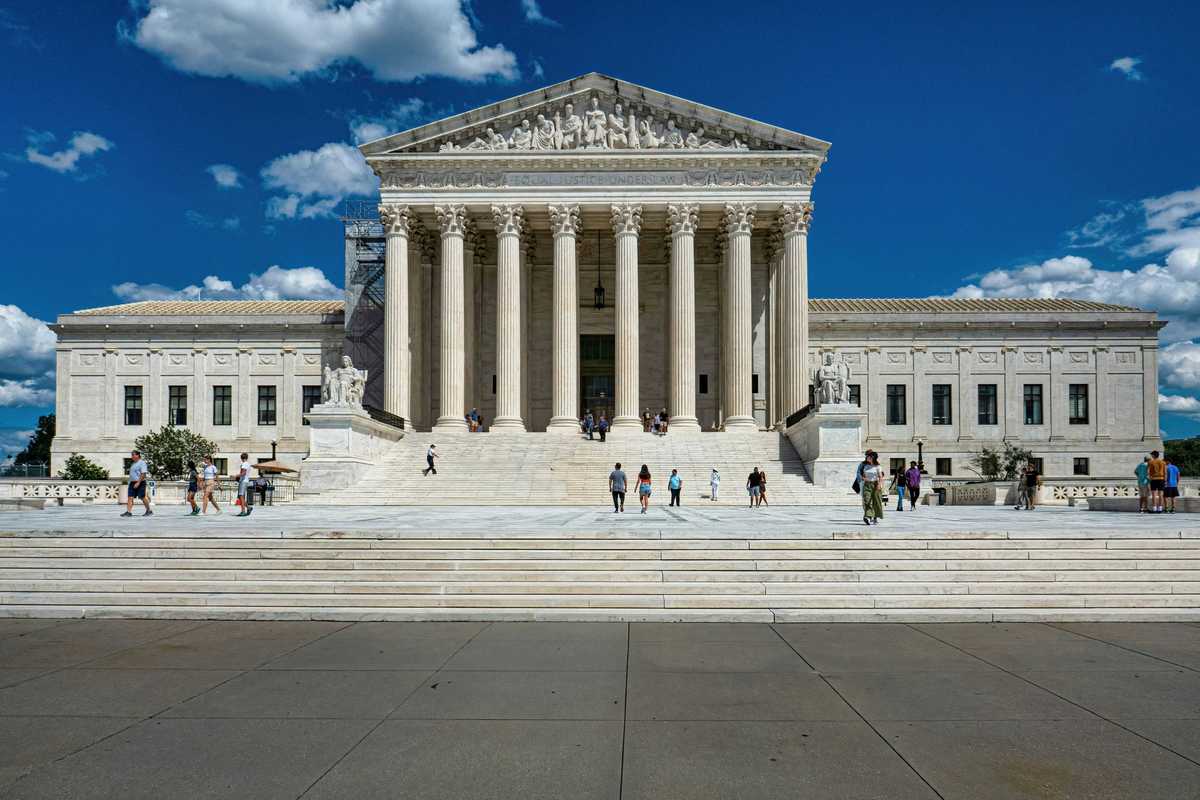
But the lower federal courts are a fragile bulwark. They are being undermined at the Supreme Court. Often, over vigorous minority dissents, the extremists on the Supreme Court have issued a score of largely unexplained orders that tolerate, if not encourage, dangerous behaviors that the lower courts—who carefully examined the actual evidence—had enjoined.
Without briefing or argument, these Justices have allowed unprecedented assertions of power to proceed while the underlying cases wind slowly through the court system. This “temporary” unwillingness to let the lower courts’ opinions stand is far from temporary to a person deported to a distant country, to a National Guard member whisked away to police duty in one of our cities, or to a person denied access to medicine, a job, and a paycheck overnight.
Moreover, our Bill of Rights has long served to protect our freedoms against authoritarian rule. If the “will of the people” argument proves anything, it is that we should expect any President to abide by the constitutional boundaries - and to be held accountable for brazenly doing otherwise.
When the institutions that we rely on to follow the rule of law are prevented from doing so, those in power forfeit our consent under the principles on which our nation was founded. A supine Congress and dogmatically myopic Supreme Court majority require us to take action to protect ourselves.
We must act to reclaim our constitutional form of government.
We can all do something. We can vote, write, and call our Congress people, protest at their offices and in our communities, write articles, and engage in our civic spaces.
We can engage in protests, local protests, and massive national protests like the March on Washington for civil rights.
We can document and oppose the harsh and cruel tactics of ICE.
We can use our dollars to stop buying from or otherwise supporting those who enable unconstitutional and illegal behaviors. If asked to carry out a patently illegal order, refuse and go public, and support those who do so vocally.
Acquiescence is not an option. Without bold and non-violent resistance, millions more will suffer grave harm in short order, in addition to those who already have. We will all pay the price if we do not get our law-abiding government back.
James B. Kobak Jr. is a former president of the New York County Lawyers Association and Chair of its Justice Center, and presently chairs the National Center for Access to Justice and prepared this article as a volunteer member of Lawyers Defending American Democracy.









The President Invited Iran to Bomb My Home