




Equal Access in an Age of Concentrated Power
The American constitutional system was designed to restrain power, not to pursue a single national mission. Authority was divided across branches, diffused among states, and slowed by deliberate friction. As James Madison wrote in Federalist No. 51, ambition was meant to counteract ambition. The design assumed competing interests would prevent domination.
For more than two centuries, that architecture has endured. The United States remains the world’s largest economy by nominal GDP, according to the World Bank’s World Development Indicators, with deep capital markets and a formidable innovation system.
But constitutional survival is not the same as national alignment. A system can remain intact while drifting from the conditions that once sustained it. The central question is whether the incentives now operating in the American political economy still support equal access to opportunity, political voice, and competitive markets, or whether those avenues of entry are being constricted by concentrated power.
That distinction is the hinge of the moment.
The America We Want
Despite deep partisan division, Americans continue to express shared expectations about opportunity, fair process, and institutional stability.
They want upward mobility that feels real.
They want elections that are credible and orderly.
They want markets where new entrants can compete.
They want rules that bind both public officials and concentrated wealth.
They want stability without stagnation.
The American promise has never been equality of outcome. It has been access. Over time, constitutional amendments, civil rights reforms, and market guardrails expanded participation and recalibrated concentration. One premise endured: the system must remain open enough for effort and innovation to translate into advancement.
Equal access is not just rhetoric. It is the operating condition of a durable republic. It is civic because it protects equal standing before the law. It is economic because it preserves entry and contestability. It is strategic because systems that deny access generate instability.
The America We Have
The United States remains productive and powerful. Yet concentration has intensified in ways that alter incentives.
Research from the National Bureau of Economic Research documents rising wealth inequality over recent decades. Separate NBER empirical work finds sustained increases in aggregate markups and firm-level pricing power across the U.S. economy. Long-term data from the Pew Research Center record declining public trust in federal institutions.
These patterns do not signal collapse. They signal structural drift.
The deeper issue is political capture: concentrated economic power converting into durable influence over regulatory design, tax structure, education, public information, enforcement priorities, and legislative agendas.
The pattern is self-reinforcing. Concentration increases bargaining power. Bargaining power shapes rulemaking and tax provisions. Complexity advantages incumbents over new entrants. Barriers rise in housing, healthcare, finance, and digital platforms. Mobility narrows. Perceived fairness declines. Polarization then weakens oversight, allowing capture to deepen.
The Constitution remains. Operating incentives increasingly favor incumbency.
A System Under Visible Stress
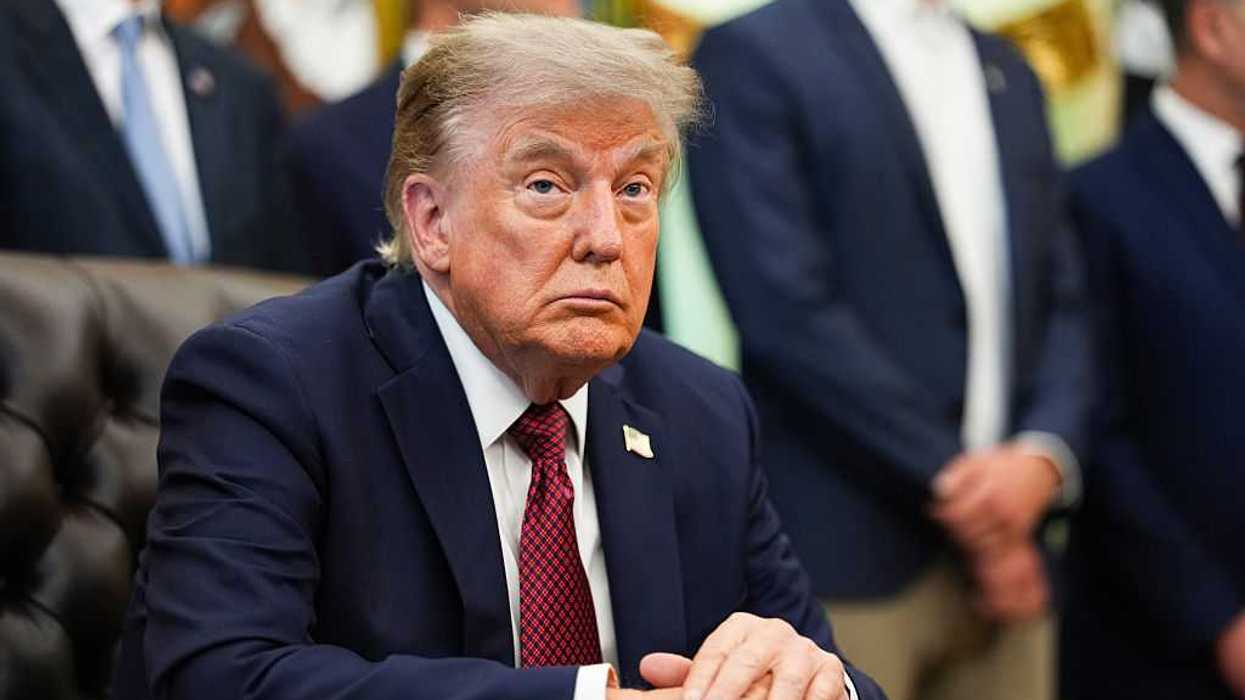
A year into a second presidential term marked by assertive executive action, institutional strain is visible.
Expanded use of executive authority in areas traditionally shaped through legislative negotiation, coupled with limited legislative push-back and periods of judicial acquiescence, has shifted the balance of constitutional power in practice toward the executive. Oversight disputes reveal how much depends on informal norms. Public controversies over conflict-of-interest boundaries sharpen concern about guardrails separating private interest and public office.
These vulnerabilities accumulated over time. When polarization erodes congressional cohesion, executive discretion expands. When economic concentration intersects with executive consolidation, capture becomes more durable.
Governance instability has measurable economic effects. Regulatory unpredictability delays investment. Political volatility raises risk premiums. Allies hedge. Domestic actors price uncertainty into capital allocation. Under these conditions, the structure of governance becomes a live determinant of economic stability and national resilience.
Open Systems and Closed Systems
The central divide is structural.
Open systems protect entry and competition. Closed systems protect incumbency and convert leverage into insulation from accountability. Equal access is the practical test. When entry narrows and influence concentrates beyond accountability, the system begins to close.
As access to political voice, housing, infrastructure participation, and capital narrows, economic and geographic mobility decline. Legitimacy erodes. Volatility rises. That cross-sector volatility can drive new coalitions among actors who would not otherwise align.
Historical Precedent for Realignment
This is not unprecedented.
Industrial consolidation and railroad rate manipulation in the late nineteenth century triggered investigations that culminated in the Sherman Antitrust Act. Visible bank runs during the Great Depression precipitated financial restructuring. The GI Bill broadened asset ownership and education access, anchoring postwar growth in wider participation.
Realignment occurred when instability threatened durability.
Why Alliances Begin to Form
Alliances form when instability crosses sector boundaries.
Younger households face blocked entry into asset ownership. Small and mid-sized firms confront rising entry costs. State and local leaders face stagnation tied to constrained housing supply. National security planners confront concentrated supply chains. Institutional investors and retirement savers tied to long-term market performance price governance volatility as systemic risk. Rule-of-law advocates respond to the erosion of accountability.
These pressures arise from multiple forces. Technology, globalization, regulatory design, political incentives, and federal tax structures that disproportionately reward capital accumulation at the top all play roles. Tax provisions favoring capital gains and inherited wealth accelerate concentration and dampen broad-based asset formation. Concentrated power amplifies these dynamics by shaping rules and insulating incumbents.
When foundational systems become less contestable and less predictable, cross-bloc alliances become rational. Convergence does not require identical policy agendas. It requires agreement that access to ownership, markets, representation, and accountability must remain open enough to sustain mobility and legitimacy.
The America We Need
The country does not need ideological purity tests. It needs structural openness.
Reform in closed systems rarely begins with those who benefit from closure. It emerges when the economic and political costs of entrenchment become too visible to ignore.
Recommitment to competitive markets and transparent guardrails reduces rent extraction and capture. Tax structures that tilt toward capital concentration warrant recalibration to strengthen broad-based asset formation and widen ownership. A durable framework requires institutionalized review of major tax expenditures and regulatory privileges, with automatic sunset unless demonstrated to support broad-based mobility and competition. Such review could rely on independent budget authorities and require affirmative congressional reauthorization tied to transparent metrics.
Expanded housing supply improves mobility. Credible election administration stabilizes governance. Energy systems designed for participation widen opportunity.
These steps do not eliminate disagreement. They restore access.
What we want is an open system where effort translates into mobility and voice retains meaning.
What we have is a powerful but increasingly closed system that concentrates influence and narrows entry.
What we need is renewed structural openness before closure becomes entrenched.
The question is whether the system remains open enough for disagreement to occur within durable and legitimate institutions.
Edward Saltzberg is the Executive Director of the Security and Sustainability Forum and writes The Stability Brief.