

As part of a collaboration between The Fulcrum's NextGen initiative and Made By Us, The Fulcrum is publishing Letters to America, a series created through the Youth250 project that invites Gen Z to reflect on the nation’s past, present, and future as the United States approaches its 250th anniversary.
I would not have used American to describe myself for a very long time.
I was five years old when I first understood what it meant to leave something behind.
My father had found an opportunity, a fresh start, and so we packed what we could and flew north from Caracas. I didn't know then that Venezuela was already becoming unrecognizable. I only knew that the life we were leaving had been, in every way that mattered, ours.
And America did not feel like mine for a long time.
I ate the hot dogs. I said the Pledge. I learned to conjugate in English before I fully understood what citizenship meant. But identity doesn't follow a schedule or a diet, and for years I held my Americanness at arm's length, not because I didn't love the country, but because I wasn't sure it loved me back the way it loved everyone else. The paperwork made that clear. My mother couldn't work. Our legal status depended on institutions that didn't know our names or care about us.
Even then, I think I was already American in all the ways that counted.
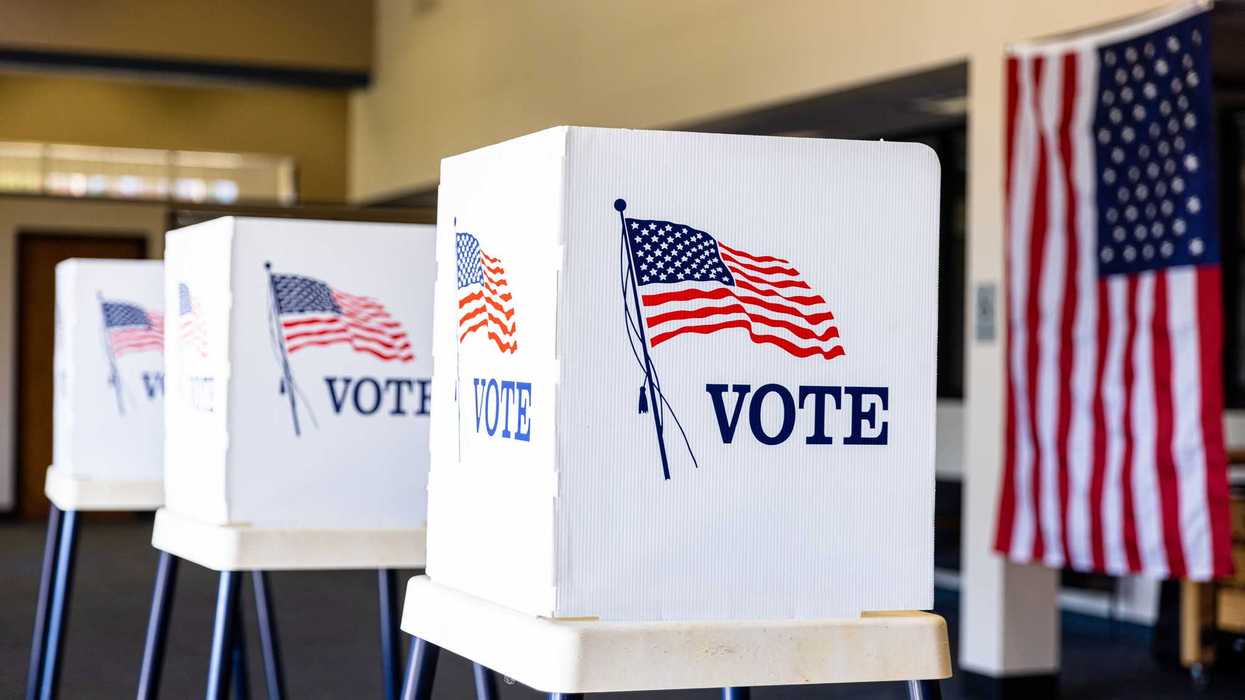
The thing that makes someone American is not the documentation. It is the refusal to stop caring about what this country could be. My father watched the 2016 results come in and, for a moment, questioned whether we had made the right choice. I was in elementary school. My teacher had run a mock election, and Hillary won by a landslide, with Obama in second place, because we were seven and didn't fully understand how it worked. But I remember the weight of that night. I remember what it looked like on my father's face. He had left a country because he believed in democratic institutions, and here, at the kitchen table, democracy felt fragile in a way that was eerily familiar.
That recognition and grief for democracy are the most American things I have ever felt.
Because to grieve for a country, you have to love it first. And loving a country, really loving it, means seeing it clearly: not as myth, not as symbol, but as a project that is always unfinished and always worth fighting for.
I did not become interested in civics because I had answers. Rather, I became interested because I had questions I couldn't stop asking. I flew alone to Washington, D.C. for the first time, in the middle of the biggest IT outage in years, and landed just in time to learn that Joe Biden had dropped out of the race. I lobbied in the halls of a government I had studied mostly from the outside. I stood in rooms where history was moving and tried to understand what my voice was meant to do there.
What I found, every time, was that service was the answer to the questions I kept asking. Not service as performance. The kind that shows you that your presence matters, that you are not a guest in the project of democracy, but an active contributor to it.
No one believes in this country the way people who chose it do. My family did not come here for easy wealth or a clean break from the past. We came because we believed that a country organized around written rights, with institutions designed to outlast any one leader, was worth the sacrifice of everything familiar. We came because authoritarianism teaches you, very efficiently, to love the things it destroys.
I was naturalized in April of 2025. On paper, that is when I became American. But I think I knew it long before then, sometime between the mock elections and the first time I walked into a room in Washington and said what I believed out loud to someone with the power to act on it. Sometime between the arepas we never gave up and the Pledge I said every morning in a language that still feels borrowed.
But I am, in every way I know how to measure it, American, and I am home.
Emiliana Korin, 16, Athens, GA







The President Invited Iran to Bomb My Home