

As the United States falls behind in the great power competition, climate change is providing economic and military advantages to our geopolitical rivals and destabilizing the world. We are outgunned and outmanned, and global warming will only exacerbate the issue. The war in Iran is now accelerating climate change to a level that will have devastating consequences on the human race and our planet, while ultimately benefiting our adversaries. As President Trump puts off making a deal with Iran, Russia, especially, is in a position to reap the benefits and gain a tactical edge. The Department of Defense (DOD) used to talk a bit about these environmental threats, but most Americans do not understand how dire the situation is. We should be yelling.
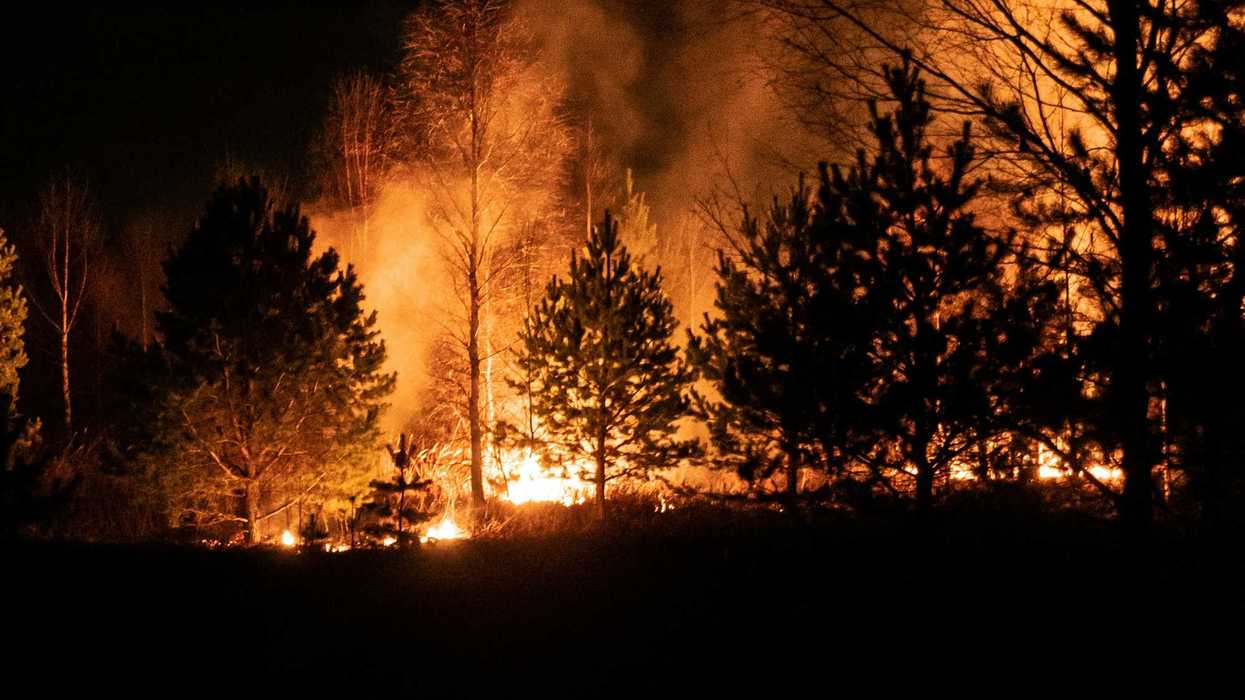
The increasing volatility of climate change pushes our world more rapidly towards global conflict every day. Heat domes, massive fires, and lethal floods all over the world signal “mayday.” The DOD used to call climate change a national security priority, “integrating climate considerations into policies, strategies and partner engagements.” Former Secretary of Defense Lloyd Austin used to say that “no nation can find lasting security without addressing the climate crisis,” one of the only threats that “truly deserve[s] to be called existential.” Natural resources have been a frequent source of armed conflicts for millennia; future conflict will only intensify as these resources are reduced at a rapidly increasing rate.
The Trump regime calls climate change a hoax and has reversed any progress we’ve made. In 2021, departments of Homeland Security and Defense, as well as the National Security Council, joined together to communicate the gravity of climate change. Though the notion that climate change is a national security threat may not be novel, the combination of reports from all these different agencies still marked a new era: a moment in U.S. policy “that place[d] climate change at the center of the country’s security planning.” Even then, some experts called the documents reporting the problems “disappointing” because they are “more of a review of the challenges…than a set of prescriptions for how to address it.” Now, we’re not even doing that. We’re hastening the damage.
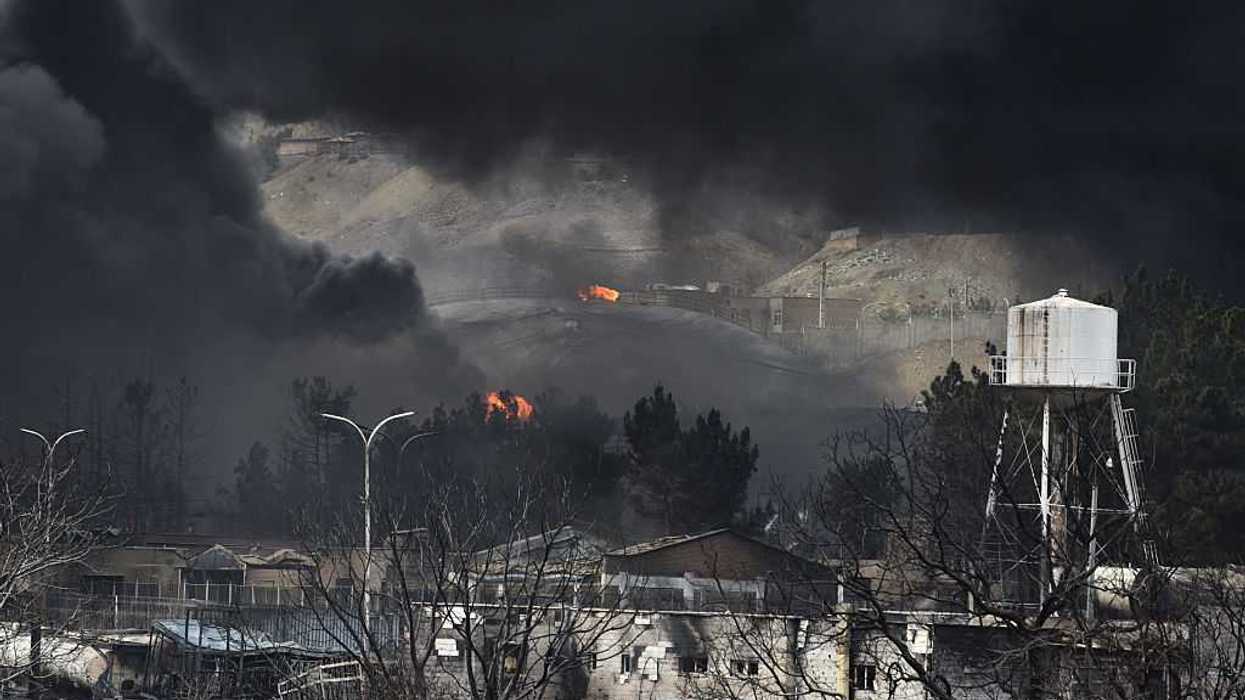
Not only is there no sense of urgency around this existential threat, but Americans are actively contributing to what is being called an “unfolding ecological crisis” and a “multifront assault on the environment” in Iran, the Gulf, and Lebanon. The attacks on Iranian oil facilities have led to fires, black rain, oil spills, poisoned soil, toxic smoke, and more; the war unleashed more carbon pollution in two weeks than Iceland does in a year.
To pay for Trump’s war with Iran, Republicans are proposing devastating cuts to critical environmental programs. Instead of building up our resilience to an impending problem, we’re worsening; they’re cutting over a billion dollars from FEMA emergency management and slashing funding at the Environmental Protection Agency (EPA) by half, stripping billions from clean drinking water infrastructure and coastal protection. That’s on top of the $15 billion they’re pulling from the Energy Department that would otherwise be spent on renewable energy and removing carbon dioxide from the air. Trump’s War, which is destroying the planet, is so expensive that in order to pay for it, Trump wants to steal money from the programs that would save us from the damage that we’re causing to the planet in this war we couldn’t otherwise afford. We’re digging our own graves–at least twice over.
The ice caps are not simply melting; they have melted. Where nearly a million square miles of ice once existed, there are now open waterways. Those countries best equipped to traverse those waters will dramatically cut the normal time required to make the voyage; the U.S. only has three icebreaking ships while Russia boasts at least 57 and is planning on spending around $30 billion to develop a shipping lane called the Northern Sea Route. Some may call a numerical comparison of icebreakers alarmist, but there is still an obvious imbalance here that may make it increasingly difficult to project power, deter aggression, and reassure allies and partners. Warmer weather also means that formerly frozen land may become farmable, formerly nonexistent seas may become fishable, and general access to oil deposits has emerged. The faster the ice caps melt, the sooner Russia, the country with the most arctic coastal property, can extract its economic potential.
There are numerous reasons to end the war. Though one of those reasons should be for the sake of our planet, another is for a bare minimum, common-sense defense strategy. We simply must acknowledge that blowing up everything is handing an advantage to our enemies. Instead of slowing climate change to mitigate the rapid destabilization occurring worldwide, the war in Iran is speeding it up, and Russia may be the greatest beneficiary. Trump is not playing “5D chess” if he can’t see that the moves we’re making now weaken the United States and the world overall, while offering upsides to our enemies. We need military leadership that understands the threat of a richer Russia with increased hegemony over international waterways. We must impeach Trump and Hegseth, invest again in our environment, and end the war. These are matters of national security–and survival.Julie Roland was a Naval Officer for ten years, deploying to both the South China Sea and the Persian Gulf as a helicopter pilot before separating in June 2025 as a Lieutenant Commander. She has a law degree from the University of San Diego, a Master of Laws from Columbia University, and is a member of the Truman National Security Project.