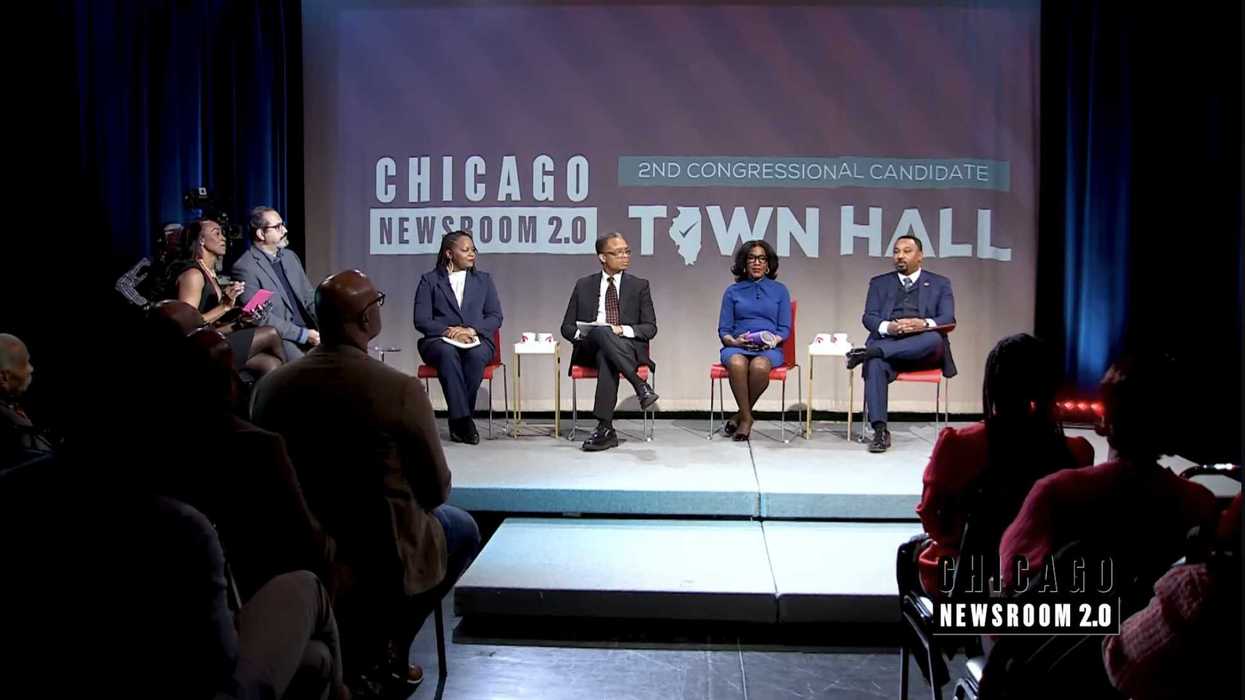

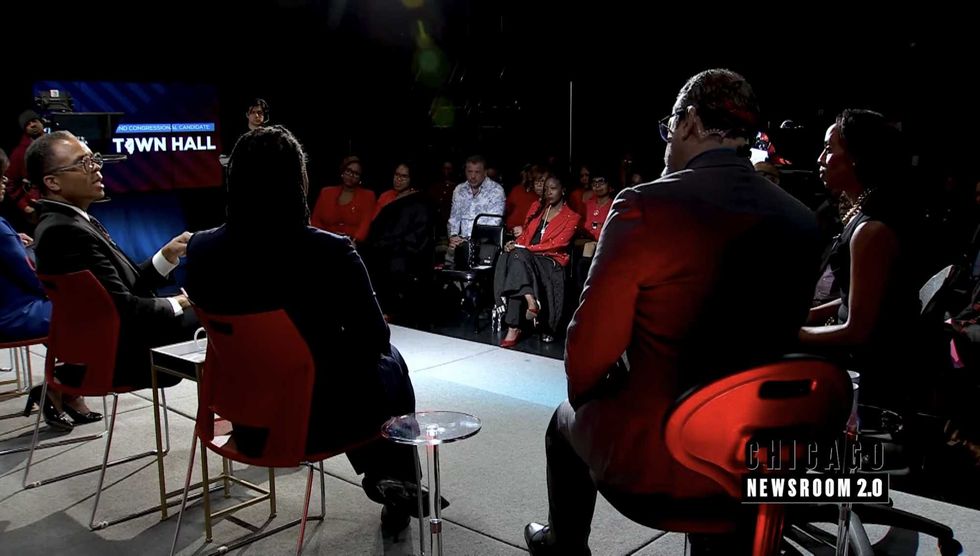
Several of the leading Democratic contenders for Illinois’ 2nd Congressional District gathered Thursday, February 12, for a televised town hall on the Chicago Access Television Network (CAN-TV), offering voters a rare opportunity to hear their priorities side by side as the competitive primary enters its final month. The forum was moderated by The Fulcrum's executive editor and Latino News Network's publisher Hugo Balta and public health and emergency management expert Dr. Suzet McKinney, who pressed the candidates on the district’s most urgent needs and the kind of leadership they believe residents deserve.
Former Congressman Jesse Jackson Jr., Cook County Commissioner Donna Miller, State Sen. Willie Preston, and Metropolitan Water Reclamation District Commissioner Yumeka Brown took part in the discussion. State Sen. Robert Peters, another top contender, was scheduled to appear but excused himself due to being taken ill.
- YouTube youtu.be
The race has drawn heightened attention because the seat is open for the first time in more than a decade. The vacancy was created when U.S. Rep. Robin Kelly announced she would not seek reelection and would instead run for the U.S. Senate, prompting a crowded Democratic primary in a district where the nominee is expected to be the overwhelming favorite in November.
After candidate introductions, Dr. McKinney opened the evening by asking all candidates, “What do you believe the 2nd District needs from its next representative that may not be getting today?”
Donna Miller was the first to respond:
"I think that what we all need in this country is diplomacy. We all need to be not looking to fight. We need to be coming together. I look at leadership as a choice you make in your life to make sure that you're bringing value, ethics, and transparency to government. And that's what I would bring to the 2nd congressional district."
McKinney followed with tailored questions that pushed each contender to connect their experience to the district’s needs. To Jackson, she posed, “What would you do differently now that you did not — or could not — do during your previous service as Congressman?”
Jesse Jackson Jr. responded:
"What's really clear to me is that the district needs to be connected to the global economy. The Bishop Ford Freeway at eight in the morning, going north, is in a traffic jam, so is I-57. No one in Chicago or in the region is fighting to get to the South Side of Chicago and south suburbs. The next representative of the 2nd congressional district really has to find a way to alter traffic. To bring jobs to the South Side of Chicago and south suburbs. To connect the district to the global economy so that we can sustain ourselves."
Balta’s questions included the economy, poverty, and basic needs—issues that have long shaped life in the 2nd District. He asked the candidates, “The racial wealth gap remains wide in Illinois. What specific policies would you support to help families build wealth — not just income — through homeownership, savings, or retirement security?”
Yumeka Brown had this to say:
"As a resident of the Southland of Chicago, I have seen a major hit in property taxes, which has caused a lot of businesses not to want to come to the south suburban communities that are east of Harlem. I will bring federal dollars back to those communities to help support small businesses. I think that that is critical."
Balta then pressed the group on child well‑being, asking, “Child poverty has lifelong consequences for education, health, and earnings. What federal policies would you prioritize to reduce child poverty in this district?”
Willie Preston said:
"Some people in this nation had a 400-year start. It is not a surprise that they have greater wealth. We have to champion reparations. Every child in this nation should have a CD (certificate of deposit) put into their name. And we should be able to let that grow, and then when they're of age, turn that over."
Throughout the evening, candidates offered sharply distinct visions. Jackson emphasized economic revitalization and infrastructure investment. Miller focused on her experience managing county budgets equips her to negotiate at the federal level. Preston highlighted workforce development and the expansion of trade schools. Brown centered her message, calling for long‑term investment in community well‑being.
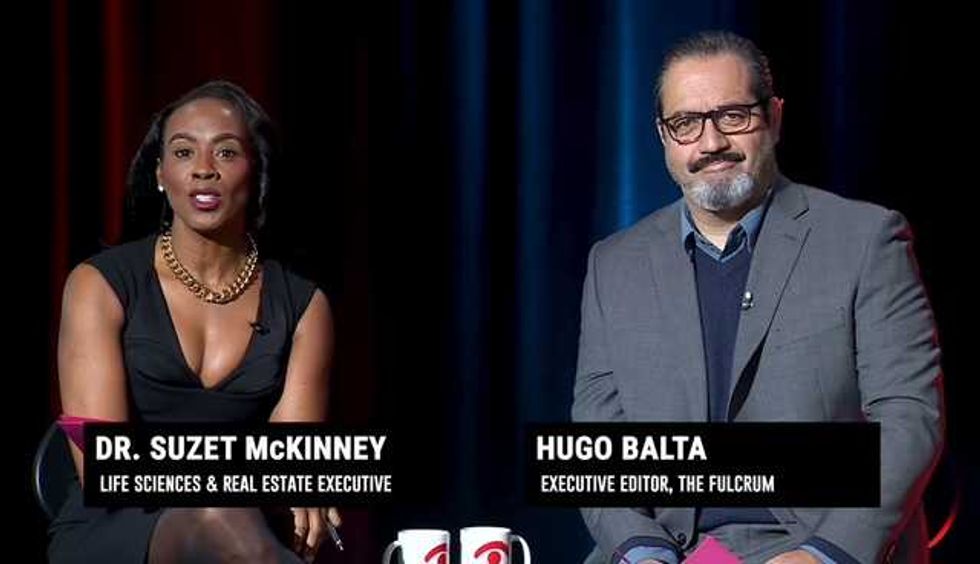
Reflecting on the significance of the event, Balta said, “Town halls like this give voters something they rarely get in a crowded primary: a chance to hear candidates engage directly with the issues that shape their daily lives. When people can compare visions in real time, they’re better equipped to choose the leader who truly understands their community.”
Ten Democrats are on the ballot overall, including Adal Regis, Eric France, Patrick “PJK” Keating, Sidney Moore, and Toni C. Brown. Republican Mike Noack is running unopposed in his party’s primary.
CAN-TV also hosted a Town Hall with the leading contenders in the 9th Congressional District. You can watch that debate by clicking Here.
Darrious Hilmon, Executive Editor at CAN‑TV, underscored the network’s mission, saying, "CAN TV's broadcast of the 2nd and 9th Congressional Towns are proof-points of our unwavering commitment to civic engagement, voter education, and ensuring that our communities have direct access to the information they need to participate fully in our democracy."
Illinois 2nd District Candidates Meet in High‑Impact CAN‑TV Town Hall Ahead of 2026 Primary was first published by the Latino News Network and was republished with permission.
Hugo Balta is the executive editor of The Fulcrum and the publisher of the Latino News Network. He is often a guest and guest host of Chicago Newsroom 2.0 on CAN-TV.