

Jonah Goldberg: Voter ID shouldn’t be this controversial
Jonah Goldberg February 11, 2026
President Trump says that “Republicans” should “nationalize the election” or at least take over voting in up to 15 places where he says voting is corrupt. His evidence of fraudulent voting is that he lost in such places in 2020, and since it is axiomatic that he won everywhere, the reported results are proof of the fraud.
This is all delusional, narcissistic nonsense. But at this point, if you still claim it’s an open question whether Trump actually lost the 2020 election (he did), you’re immune to the facts or just lying — either about not having made up your mind or about what actually happened. So, I don’t see much point in relitigating an issue that was literally litigated in more than 60 courtrooms.
But Republicans’ inability simply to tell the truth about Trump’s lies makes talking about elections and election integrity infuriatingly difficult. One tactic is to assert that Trump didn’t say what he plainly said. “What I assume he meant by it is that we ought to pass — Congress ought to pass the SAVE Act, which I’m co-sponsor of,” is how Sen. Josh Hawley, R-Missouri, responded to questions about Trump’s remarks.
Before later correcting himself, Sen. John Kennedy, R-Louisiana, insisted the president never said he wanted to “nationalize” the elections. “Those are your words, not his,” he told reporters.
But Democrats are wrong to suggest that all of the difficulty is generated by Trump’s lies and the Republicans’ inability to reject them.
On Sunday, ABC’s Jonathan Karl asked Sen. Adam Schiff, D-California, given “that the Republicans have undermined confidence in elections and the integrity of elections,” why not have a photo ID requirement for voting?
Schiff responded by scoffing at the idea that Democrats should cave to “the distrust (Republicans) created in order to enact a voter suppression law, which is the SAVE Act.”
Now there are reasonable objections to proof-of-citizenship requirements in the SAVE Act, but the framing of both the question and the answer is flawed.
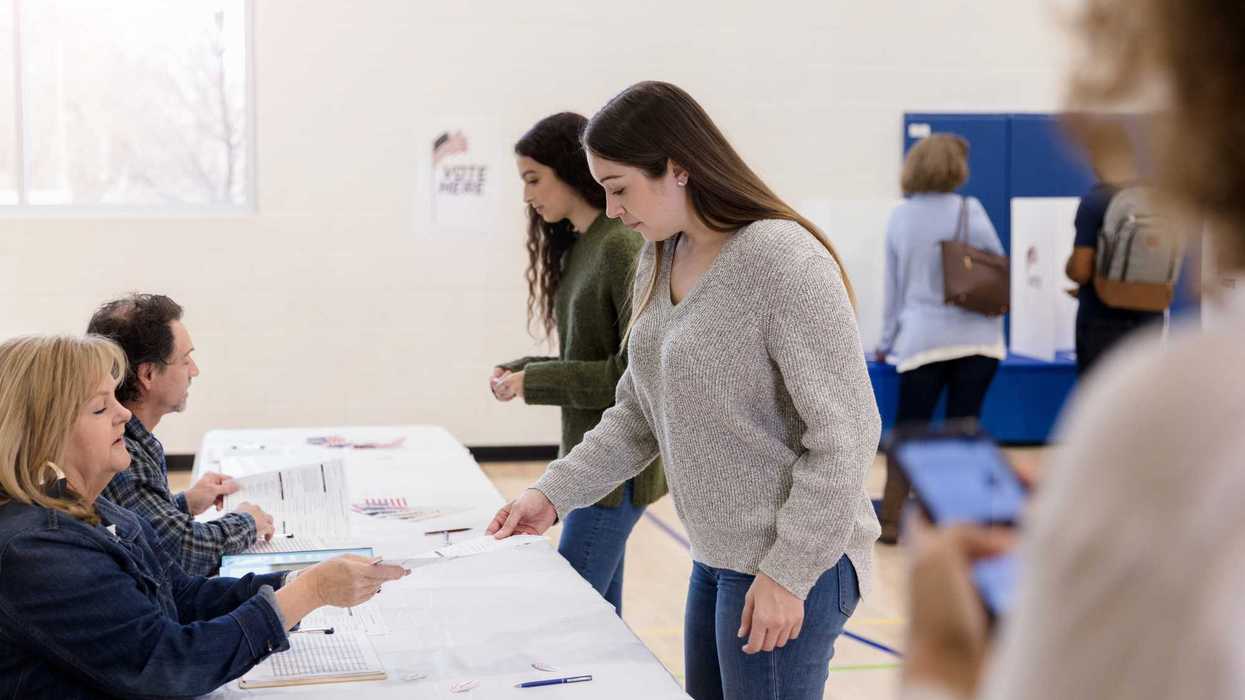
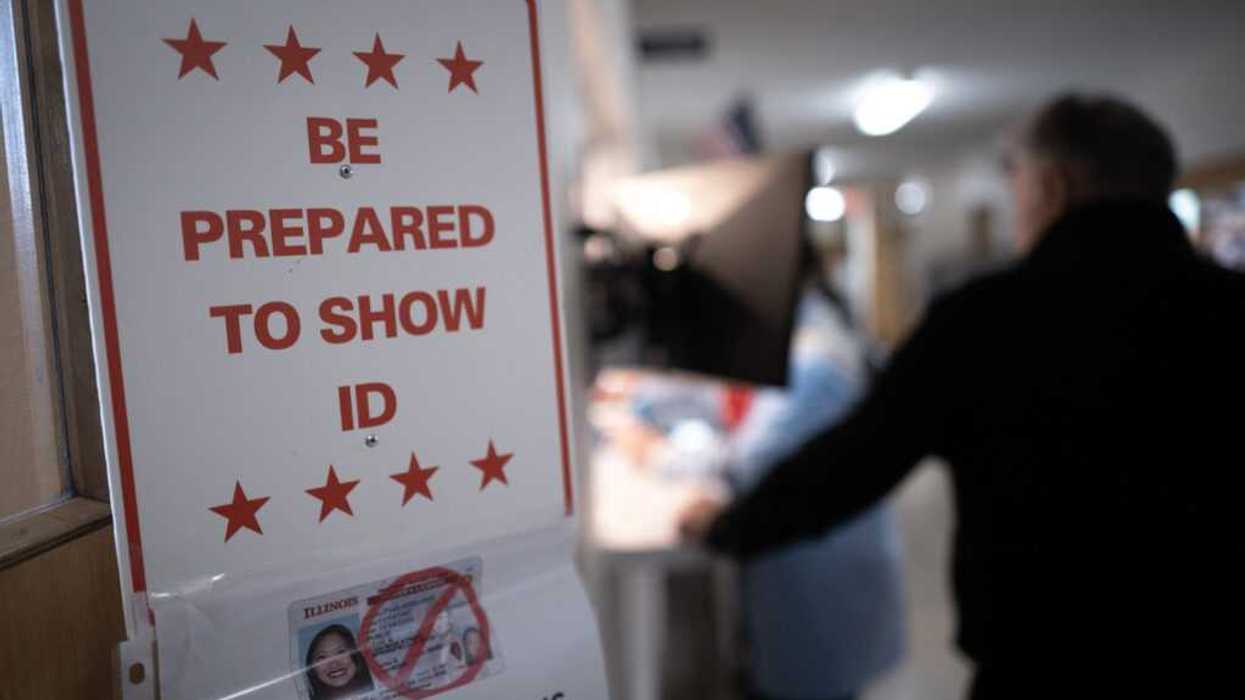
Americans — including large majorities of Democrats — have favored voter ID for decades. Since long before anyone dreamed Donald Trump would run for president, never mind get elected, the idea has been wildly popular. In 2006, 80% of Americans favored showing proof of ID when voting. The lowest support over the last two decades, according to Pew, was in 2012 when a mere 77% of Americans, including 61% of Democrats favored voter ID. Last August, Pew found that 95% of Republicans and 71% of Democrats favored having to provide government-issued ID when voting.
Two things have bothered me about Democratic opposition to voter ID. First is the claim that millions upon millions of Americans lack adequate ID. While it’s true that the SAVE Act’s provisions for providing proof of citizenship creates novel challenges — lots of people don’t have their birth certificates and many forms of ID don’t specify citizenship — Democrats were making this argument years before the citizenship issue ripened. (To be clear, evidence of noncitizens voting in significant numbers is scant to nonexistent.)
Regardless, if the problem is that huge numbers of “marginalized” people don’t have sufficient ID to vote, that also means they don’t have good enough ID for all manner of things. Indeed, I can think of few things more likely to marginalize someone than not having ID. You can’t get a credit card, buy or rent a home, apply for welfare benefits, travel by plane or open a bank account without identification. That’s some serious marginalization.
Second, if you want people to trust the integrity of elections and the sanctity of “our democracy” waxing indignant over the idea of presenting ID when democratic majorities favor it is an odd choice. It arouses the suspicion that there’s a reason for opposing such measures. Mostly thanks to Democratic initiatives, America has made it wildly easier to vote over the last three decades. Why is it so preposterous that new safeguards be put in place amid all of the mail-in and early voting?
My theory is that at some deep level there is a dysfunctional bipartisan consensus that lax voting rules benefit Democrats. That’s why Republicans want to tighten the rules and Democrats favor loosening them. The funny thing is, I think both sides have always been wrong. Indeed, as the demographics of parties’ coalitions have changed, the assumption has gotten sillier. Over the last decade, the GOP traded “high propensity” college-educated suburban voters for non-college low-propensity voters.
Yet both parties have intensified their delusions. Voter ID is not voter suppression, and requiring voter ID will not guarantee Republican victories. It’s just a reasonable idea, albeit in an unreasonable time.
Jonah Goldberg is editor-in-chief of The Dispatch and the host of The Remnant podcast. His Twitter handle is @JonahDispatch.