



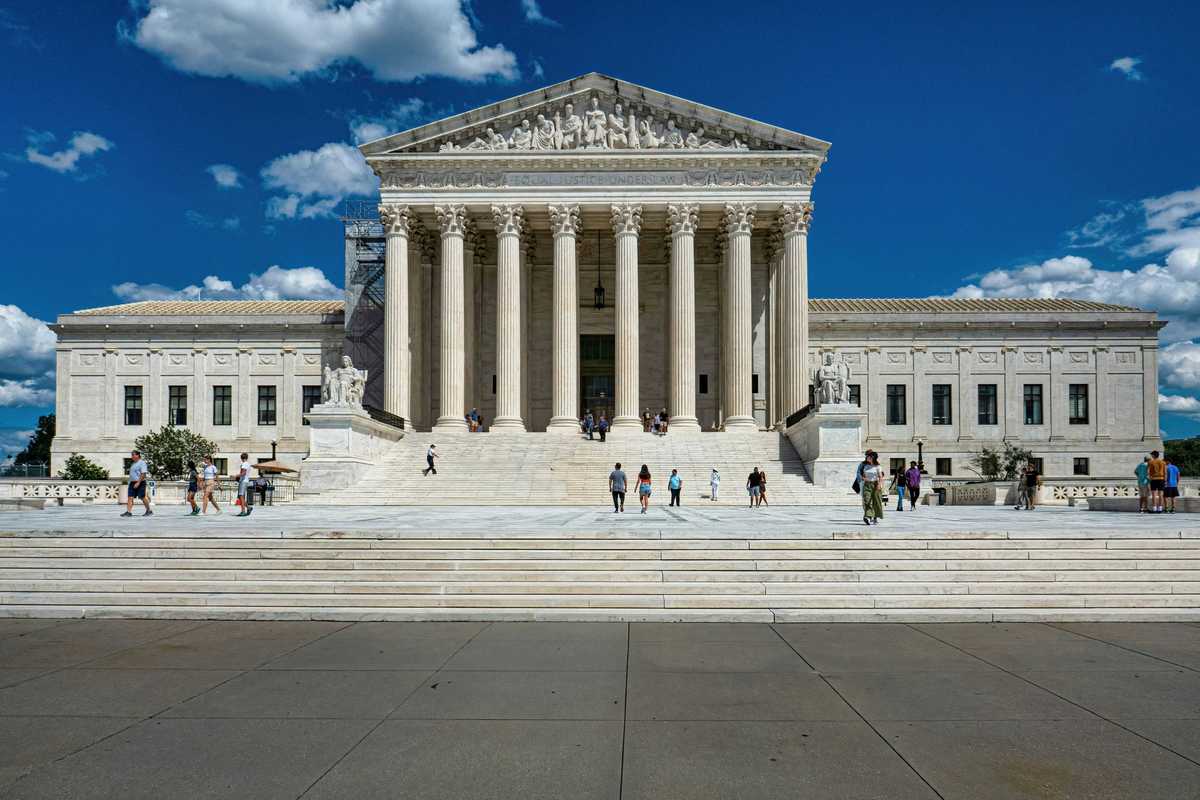


American politics has become so nationalized that many people—especially students—no longer know where their participation ought to be focused. Every issue feels federal, every fight existential, and every outcome distant.
The result isn’t apathy so much as exhaustion: a sense that politics is something to watch, not something to influence. But that diagnosis misses an important truth. Political power in the United States hasn’t disappeared—it’s been mislocated.
Young people in particular have a deeply pessimistic view of national politics: in a Harvard Youth Poll conducted just last year, only 15 % of 18- to 29-year-olds said the country was heading in the right direction, and a shockingly low 19 % trusted the federal government to do the right thing most of the time. If young people think that making a difference requires influencing politicians in Washington, a space they view as dysfunctional and toxic, their disengagement is rational.
Yet when young people disengage or absorb the rage and cynicism that have come to define our national politics, it doesn’t just hurt participation today. It threatens the health of our democracy for decades to come.
But it doesn’t have to be this way. We know from decades of research that the civic habits formed in early adulthood follow us for life. Burnout, alienation, and withdrawal aren’t inevitable. Young people want to make a difference. They want to make things better. They often simply don’t know where to focus their energies or how to begin. We can help students reject cynicism and despair by empowering them to engage in advocacy close to home: at their state legislatures.
At the state level, one letter, one meeting, one powerful piece of legislative testimony can still change the conversation. The scale is human. The impact is visible. And for students, that first taste of influence can transform disengagement into lifelong civic commitment.
We know because we see it every semester. That’s the core philosophy behind ENACT: The Abraham Feinberg Educational Network for Active Civic Transformation, a national model that empowers college students to learn about democracy by practicing it. Through partnerships with nearly 50 campuses across the country, ENACT students research issues, gain civic skills, and work with policymakers on both sides of the aisle to advance policy solutions in their states.
In our classrooms, we see what happens when students engage politics at a human scale. Consider a small group of undergraduates who enrolled in an ENACT course built around real-time state legislative advocacy in Virginia. They selected an active bill that would increase funding for K-12 school counselors (in part, motivated by watching friends struggle with mental health, absent professional support). The three students conducted research, developed arguments, and met directly with lawmakers to make their case.
The bill never became law. Yet the experience proved transformative. One legislator postponed another meeting just to hear more from the students. “They really do care what we have to say,” the students wrote afterward. That realization—that political influence is still possible at a human scale, even if it fails to achieve an immediate policy win—often does more to counter cynicism than any abstract lesson about democracy.
Experiences like this don’t make headlines. But even unsuccessful political efforts can quietly build a sense of political agency among those who engage.
Our new book, ENACT-ing Change: A Handbook for Teaching Advocacy and Civic Engagement (Brandeis University Press, 2025), offers a roadmap for educators who want to bring this approach to their classrooms and communities. It showcases models that work, from student teams who helped support opioid response legislation in Maine to those who advanced food security initiatives in Massachusetts and police reform measures in North Carolina.
Surveys of ENACT alumni show the lasting impact of this model. In one recent study, 60% had contacted an elected official in the past year compared to just 19% of Americans. Nearly half had volunteered with an advocacy group, and 80% had donated to a political cause. More than 70% said the course shaped their professional paths, often steering them toward law and public service.
Young people can become powerful defenders of American democracy and advocates for their communities. Higher education has a critical role to play in that process. We can remind students that civic life isn’t beyond repair. It’s a living system and its survival depends on participation, creativity, and hope.
If we’re serious about democratic resilience, we should stop looking solely to the national spectacle for signs of life. Some of the most durable civic habits are being built quietly, at the state and local level, by students learning that politics is not just something done to them. It’s something they can still shape.
Higher education’s contribution to democracy doesn’t need to be loud and boisterous—but it does need to be tangible. This is work we can support, engage with, and invest in. And in this precarious moment, those quiet, concrete acts of political empowerment matter more than ever.
Robert W. Glover is an Associate Professor of Political Science and Honors at the University of Maine. He co-leads the Maine Chapter of the Scholars Strategy Network. Kathleen Cole is a Professor of Political Science and Chair of the Department of Social Science at Metropolitan State University.











The President Invited Iran to Bomb My Home