

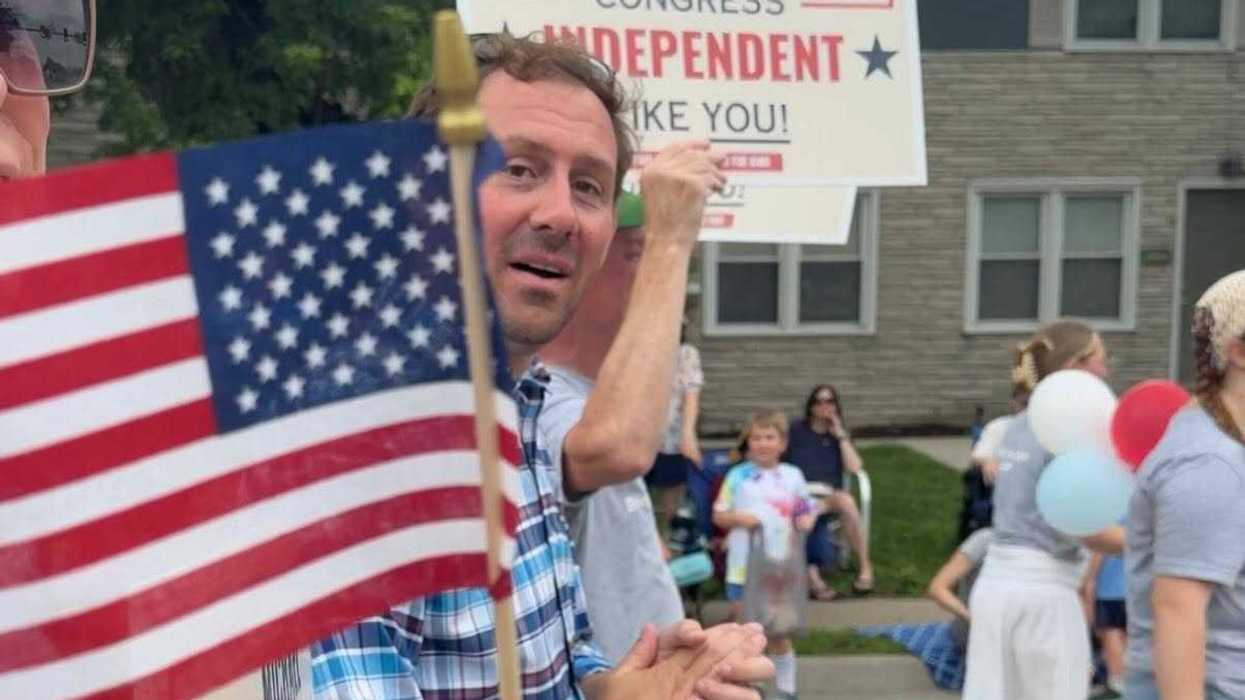
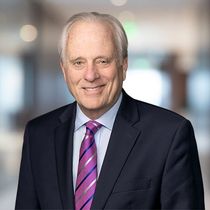
Eight cities in eight different counties, all in one week. When we talk about cities in Iowa’s First Congressional District, keep in mind most are county seats with populations that often don’t reach 7,000. In the closing months of a political campaign in southeastern Iowa, chatter in those towns and cities centers on the cost of living, farmers' struggles, and the hot-button issue of data centers.
Michael Bridgford is tireless, but the challenge is daunting. I met him over lunch last spring when he was first considering a run. A long-time friend met him at a conference and told Michael he would connect him to a guy who won a long-shot campaign. I’m that guy. Running as a Republican, I upset a 32-year incumbent in deep-blue Madison, Wisconsin.
If you were drafting a candidate with the right bio for the district, Michael fits the profile. Grew up on a family farm. Graduated from a high-school class of 88 students. He went on to earn his MBA at Northwestern. Worked at John Deere. Small business owner. And on the campaign trail, two young, cute daughters are often in tow.
The races in Iowa’s First have been oh so tight in recent years. The district has flipped back and forth between Democrats and Republicans.
Two years ago, after a recount, the incumbent won by just 798 votes.
This year is a rematch between the winning Republican and her Democratic challenger.
But here’s the punchline. Michael is running as an Independent.
National polls are staggering. CNN says 47% of voters now call themselves Independents. I woke up to a New York Times headline today asking, “Is an Independent Wave forming?
But calling yourself an Independent and voting for an independent candidate are two different things.
The fact is, most Independents still lean one way or the other. The numbers are almost perfectly split: 39% of Americans lean Democratic, 37% lean Republican, and 25% say they don’t lean either way.
Look at his campaign staff and volunteers to see the crest of that emerging surge. At this moment, 56% of voters under 29 are Independents. He leans on an army of college students to provide the energy to counter the infrastructure political parties provide.
“The parties, they just want to fight,” Bridgford said. “They’re not interested in actually solving the problem.”
Look at the tiny margins in the House and the Senate. If you could just get five House Members elected as Independents, you would control the most powerful wedge caucus in Congress.
"Right now, it's a record-tight margin in the House. You know, Speaker Mike Johnson was elected by two votes. Just one or two Independents could have a really outsized impact on day one," Bridgford told Channel 8 News in Des Moines.
Former West Virginia Senator Joe Manchin and a group of allies are devoted to that mission.
“First of all I’m living proof that one vote makes a difference”, said Manchin. “Both sides knew that I wasn’t going to go crazy and go far left or far right; we were able to get some things done.”
Manchin, a one-time Democrat turned Republican, has joined forces with similar-minded political operatives to form the Independent Leadership Council, which is providing strategic guidance and money to Michael and a handful of other candidates around the country.
His daughter, Heather, has helped raise $ 10 million to support candidates in Montana, Alaska, California, Nebraska, and Iowa.
“What made this moment feel different is this convergence of higher unaffiliated Independents. We now have 16 states, 106 districts, where unaffiliated or Independents outnumber Republicans or Democrats. I think you have a real hunger. We’re feeling it and seeing it.”
Bridgford’s core beliefs straddle the political divide.
“I believe we need a secure border. I think that’s a policy that Republicans support. I think with the trade wars, we need to step away from those. I think that’s a policy Democrats support,” Bridgford told the local newspaper Our Quad City. “At the end of the day, we’re at a moment where we need a lot of common sense.”
With the election just weeks away, cold, hard facts make his race a long shot. He has raised six figures, but the two major party candidates are both closing in on four million. Right now, the Democrat leads in polling, with Michael a distant third.
Looking for a breakout moment. He was excited when television stations in Dubuque and Cedar Rapids recently announced joint plans to hold a debate.
“I think a turning point in the race will come in the debate. Right now the other candidates have not accepted one. They are worried it will give me momentum. I can feel the support building at my campaign stops and fundraisers,” he told me.
But now with the debate scheduled for late October, he’s on the outside.
A spokesman for the stations says Michael has not met the fundraising threshold to qualify. The stations will not disclose that number, calling it “proprietary.”
Frustrated but not discouraged, he has not slowed down.
Not surprisingly, when we talked, he was on the road. Again.
I beat a 32-year incumbent. Every night there is an election surprise. Michael knows the odds, but this fall the zeitgeist feels right for an Independent to win somewhere.
Eight cities down. Eight more this week. One parade, one church picnic, one more high school football game ahead. And, with any luck, an invite to the debate in late October.
Scott Klug served in the House of Representatives from 1991 to 1999. He hosts the political podcast “ Lost in the Middle: America’s Political Orphans.”








The President Invited Iran to Bomb My Home