


Skip to content
Search

Latest Stories

Top Stories

Marjorie Taylor Greene Resigns: The Primary Problem Exposes America’s Broken Election System

With Trump’s threats and only 7% of voters deciding most races, Greene’s exit spotlights America’s broken primaries.

Opinion

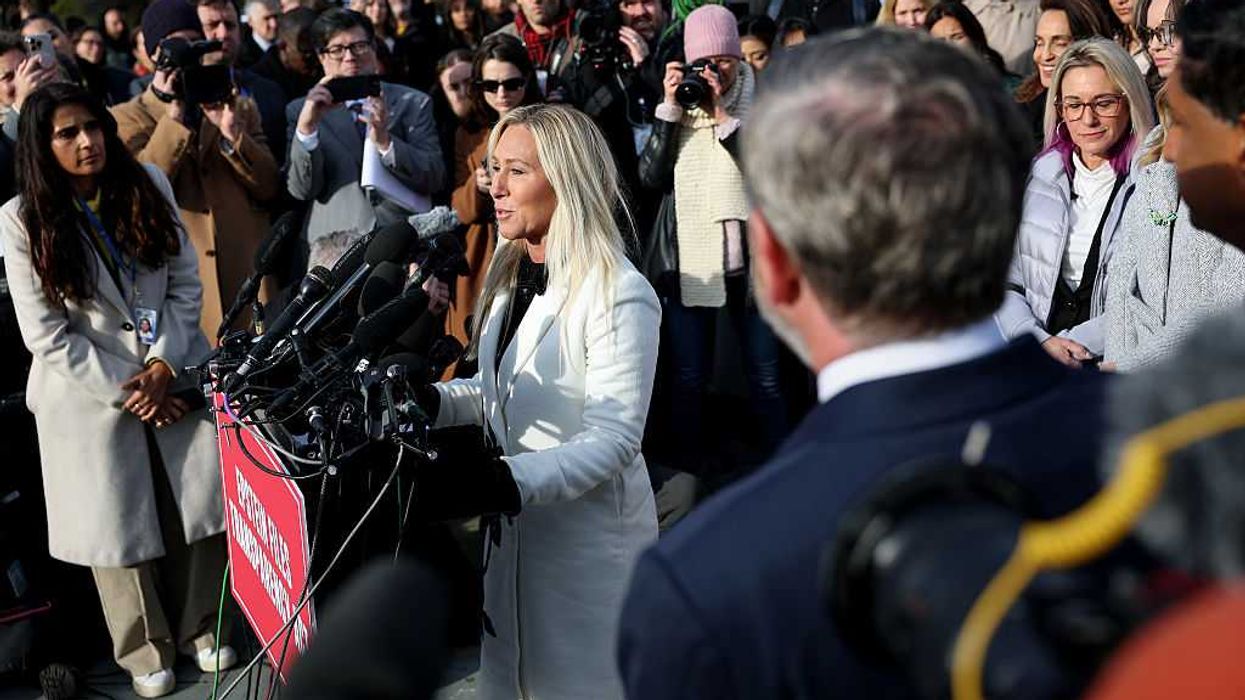
​Marjorie Taylor Greene.

Marjorie Taylor Greene’s resignation highlights the Primary Problem—tiny slivers of voters deciding elections. Here’s why primary reform and open primaries matter.

Getty Images, Anna Moneymaker

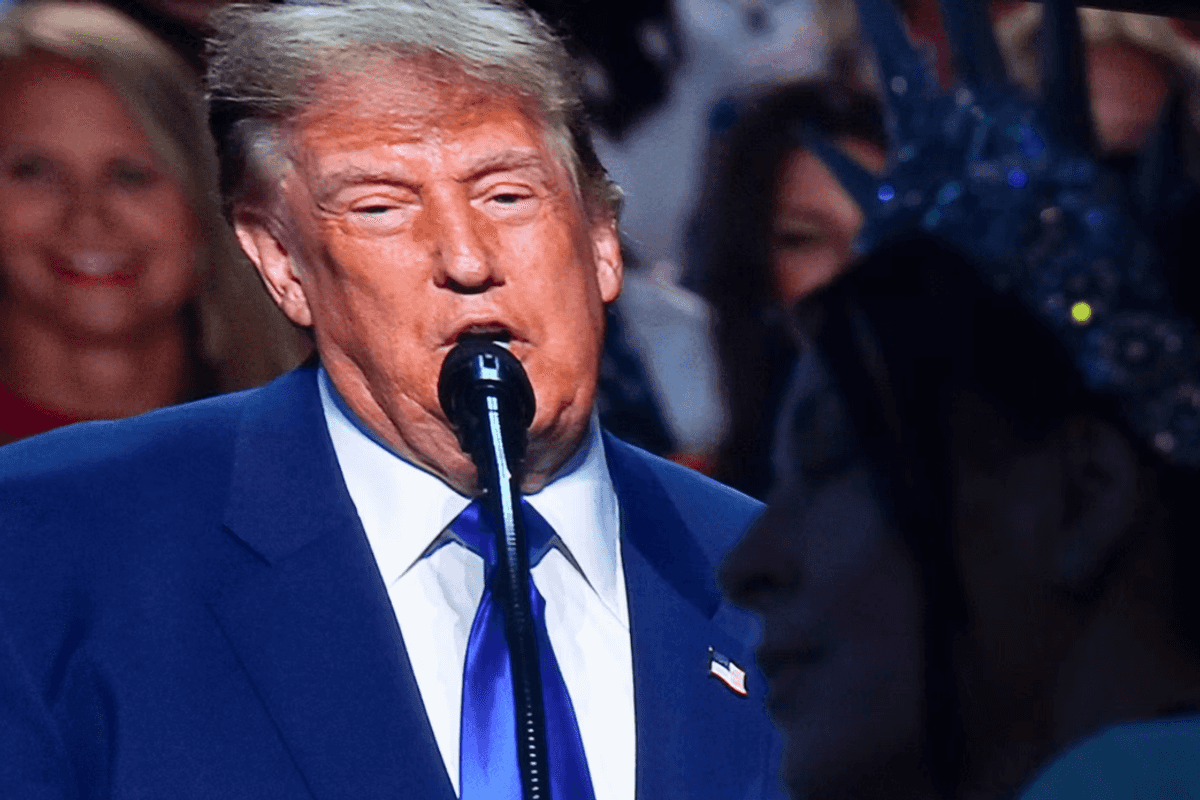
The Primary Problem strikes again. In announcing her intention to resign from Congress in January, Rep. Marjorie Taylor Greene (R-GA) became the latest politician to quit rather than face a primary challenge from her own party.

It’s ironic that Rep. Greene has become a victim of what we at Unite America call the "Primary Problem," given that we often point to her as an example of the kind of elected official our broken primary system produces. As we wrote about her and Rep. Alexandria Ocasio-Cortez, “only a tiny sliver of voters cast meaningful votes that elected AOC and MTG to Congress – 7% and 20%, respectively.”


Of course, Reps. Greene and Ocasio-Cortez are not the exceptions — they’re the rule. In 2024, just 7% of voters elected 87% of the U.S. House — because most races were effectively decided in party primaries. Next year, the Cook Political Report predicts that 92% of House races and 83% of Senate races will be decided in primaries. How many voters will decide? Likely somewhere between 7-10%.

But while Rep. Greene might be an unlikely victim of party leaders weaponizing primaries to enforce loyalty, the dynamics are the same as other retirements we’ve seen recently, from Sen. Thom Tillis (R-NC) to Rep. Jared Golden (D-ME).

It goes like this: You make a high-profile stand against your party, you immediately face the wrath of party leaders and primary voters, and when it becomes clear you might not survive your next primary, you decide to step aside rather than face that indignity.

After being one of President Donald Trump’s most ferocious supporters and defenders since joining Congress, Rep. Greene drew his ire in leading the charge to release the Epstein files — among other policy disagreements.

As he’s done repeatedly when members of his party oppose him, Trump immediately threatened Rep. Greene with a primary challenge, making it clear that he’d support a candidate more loyal to him. When she announced her resignation, he explicitly said that she called it quits because she didn’t want to “face a Primary Challenger with a strong Trump Endorsement.”

After announcing her resignation, Greene underscored the personal toll of party discipline, writing, “I refuse to be a ‘battered wife’ hoping it all goes away and gets better.”

At the end of the day, Greene’s resignation isn’t just about one politician bowing to Trump’s threats. It’s about a system that rewards loyalty to party bosses and donors over constituents. As Greene herself put it, “Congress has become nothing more than a money laundering operation for the Political Industrial Complex.”

As Tangle Executive Editor Isaac Saul wrote, “She’s now leaving because the president said he would primary her, an experience she knows will be hell, and she doesn’t want to stick around to be treated like a villain by the very movement she ran to represent.”

Primary threats — whether from Trump or Democratic leaders — are effective because in safe districts, you only need to mobilize a sliver of voters to take someone out. It wouldn’t necessarily matter if the majority of Rep. Greene’s constituents supported her, because primary voters are all that matter. At the end of the day, we’ll never know if Rep. Greene’s public stand was supported by a majority of her constituents. And that’s the real problem here.

If we want elected officials liberated to represent most of their voters, we need to make general elections matter again — when most people vote. That means open, all-candidate primaries — where every voter gets a say, and candidates have to win the support of a majority, not just the 7% in party primaries.


Ross Sherman is the Press Director for Unite America.

Read More

Jolt Initiative Hits Back at Texas Attorney General Ken Paxton in Fight Over Voter Registration

Texas Attorney General Ken Paxton, who is running for U.S. Senate, speaks at an event in Lubbock on Oct 7, 2025. Paxton is seeking to shut down Jolt Initiative, a civic engagement group for Latinos, alleging that it's involved in illegal voter registration efforts. The group is fighting back.

Trace Thomas for The Texas Tribune

Jolt Initiative Hits Back at Texas Attorney General Ken Paxton in Fight Over Voter Registration

Jolt Initiative, a nonprofit that aims to increase civic participation among Latinos, is suing Texas Attorney General Ken Paxton to block his efforts to shut the organization down.

Paxton announced Monday that he was seeking to revoke the nonprofit’s charter, alleging that it had orchestrated “a systematic, unlawful voter registration scheme.”

Keep Reading Show less
Jolt Initiative Hits Back at Texas Attorney General Ken Paxton in Fight Over Voter Registration

Texas Attorney General Ken Paxton, who is running for U.S. Senate, speaks at an event in Lubbock on Oct 7, 2025. Paxton is seeking to shut down Jolt Initiative, a civic engagement group for Latinos, alleging that it's involved in illegal voter registration efforts. The group is fighting back.

Trace Thomas for The Texas Tribune

Jolt Initiative Hits Back at Texas Attorney General Ken Paxton in Fight Over Voter Registration

Jolt Initiative, a nonprofit that aims to increase civic participation among Latinos, is suing Texas Attorney General Ken Paxton to block his efforts to shut the organization down.

Paxton announced Monday that he was seeking to revoke the nonprofit’s charter, alleging that it had orchestrated “a systematic, unlawful voter registration scheme.”

Keep Reading Show less
MAGA Gerrymandering, Pardons, Executive Actions Signal Heightened 2026 Voting Rights Threats

A deep dive into ongoing threats to U.S. democracy—from MAGA election interference and state voting restrictions to filibuster risks—as America approaches 2026 and 2028.

Getty Images, SDI Productions

MAGA Gerrymandering, Pardons, Executive Actions Signal Heightened 2026 Voting Rights Threats

Tuesday, November 4, demonstrated again that Americans want democracy and US elections are conducted credibly. Voter turnout was strong; there were few administrative glitches, but voters’ choices were honored.

The relatively smooth elections across the country nonetheless took place despite electiondenial and anti-voting efforts continuing through election day. These efforts will likely intensify as we move toward the 2026 midterms and 2028 presidential election. The MAGA drive for unprecedented mid-decade, extreme political gerrymandering of congressional districts to guarantee their control of the House of Representatives is a conspicuous thrust of their campaign to remain in power at all costs.

Keep Reading Show less
A person putting on an "I Voted" sticker.

Major redistricting cases in Louisiana and Texas threaten the Voting Rights Act and the representation of Black and Latino voters across the South.

Getty Images, kali9

The Voting Rights Act Is Under Attack in the South

Under court order, Louisiana redrew to create a second majority-Black district—one that finally gave true representation to the community where my family lives. But now, that district—and the entire Voting Rights Act (VRA)—are under attack. Meanwhile, here in Texas, Republican lawmakers rammed through a mid-decade redistricting plan that dramatically reduces Black and Latino voting power in Congress. As a Louisiana-born Texan, it’s disheartening to see that my rights to representation as a Black voter in Texas, and those of my family back home in Louisiana, are at serious risk.

Two major redistricting cases in these neighboring states—Louisiana v. Callais and Texas’s statewide redistricting challenge, LULAC v. Abbott—are testing the strength and future of the VRA. In Louisiana, the Supreme Court is being asked to decide not just whether Louisiana must draw a majority-Black district to comply with Section 2 of the VRA, but whether considering race as one factor to address proven racial discrimination in electoral maps can itself be treated as discriminatory. It’s an argument that contradicts the purpose of the VRA: to ensure all people, regardless of race, have an equal opportunity to elect candidates amid ongoing discrimination and suppression of Black and Latino voters—to protect Black and Brown voters from dilution.

Keep Reading Show less