




While the media has kept people’s focus on the Epstein files, Venezuela, or a potential invasion of Greenland, the United States Postal Service adopted a new rule that will have a broad impact on Americans – especially in an election year in which millions of people will vote by mail.
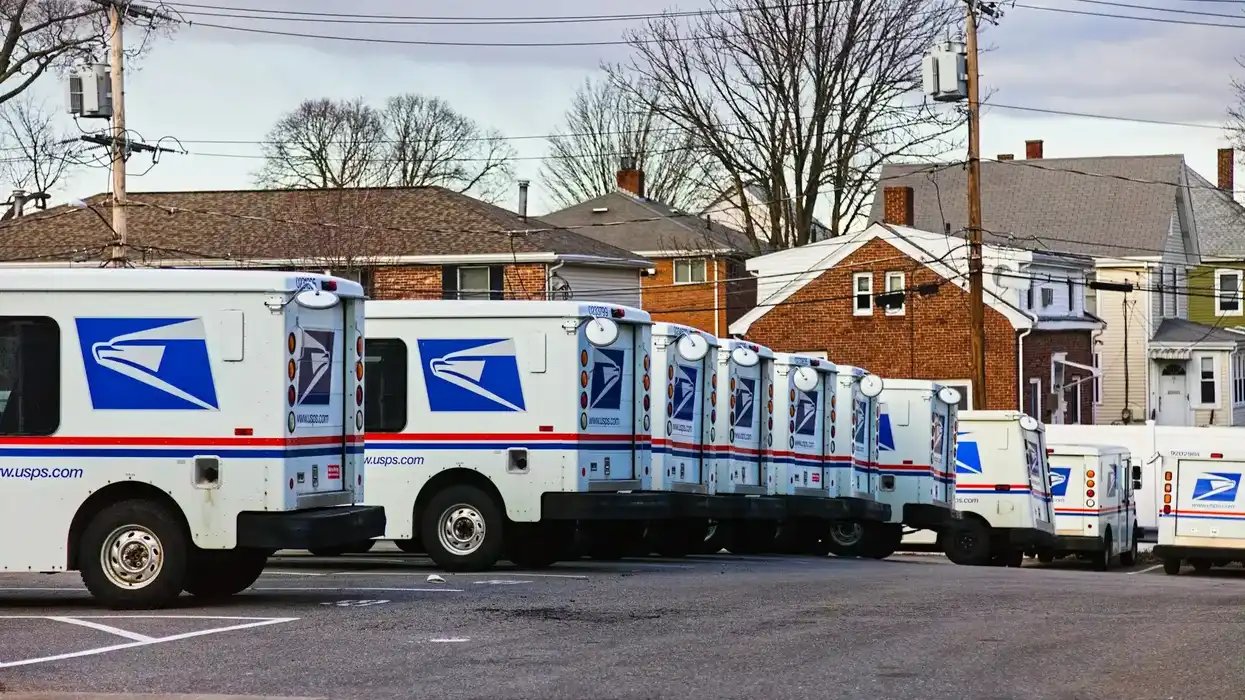
The rule went into effect on Christmas Eve and has largely flown under the radar, with the exception of some local coverage, a report from PBS News, and Independent Voter News. It states that items mailed through USPS will no longer be postmarked on the day it is received.
Instead, items will be postmarked on the day they are processed, which will take longer under USPS restructuring.
- YouTube youtu.be
The reason this is so impactful going into an election year is because many states have absentee and mail-in voting rules that explicitly state that as long as a ballot envelope is postmarked by election day, it will count.
However, in order for a ballot to count in 2026, voters will have to be aware of this rule change and not procrastinate their vote.
PBS reports that the Postal Service is undergoing reorganization, “including the consolidation of nearly 200 sectional facilities – where mail is typically postmarked – into 60 regional processing locations, which are likely to receive fewer truck dropoffs per day.”
“More than 70% of post offices will now be more than 50 miles away from a regional processing center, according to an analysis from the Brookings Institution. More than 25% of post offices will be 150 miles or more away.”
Across the board, from ballots to bills to taxes and anything else that is time sensitive, this means there is going to be a delay in postmarking items.
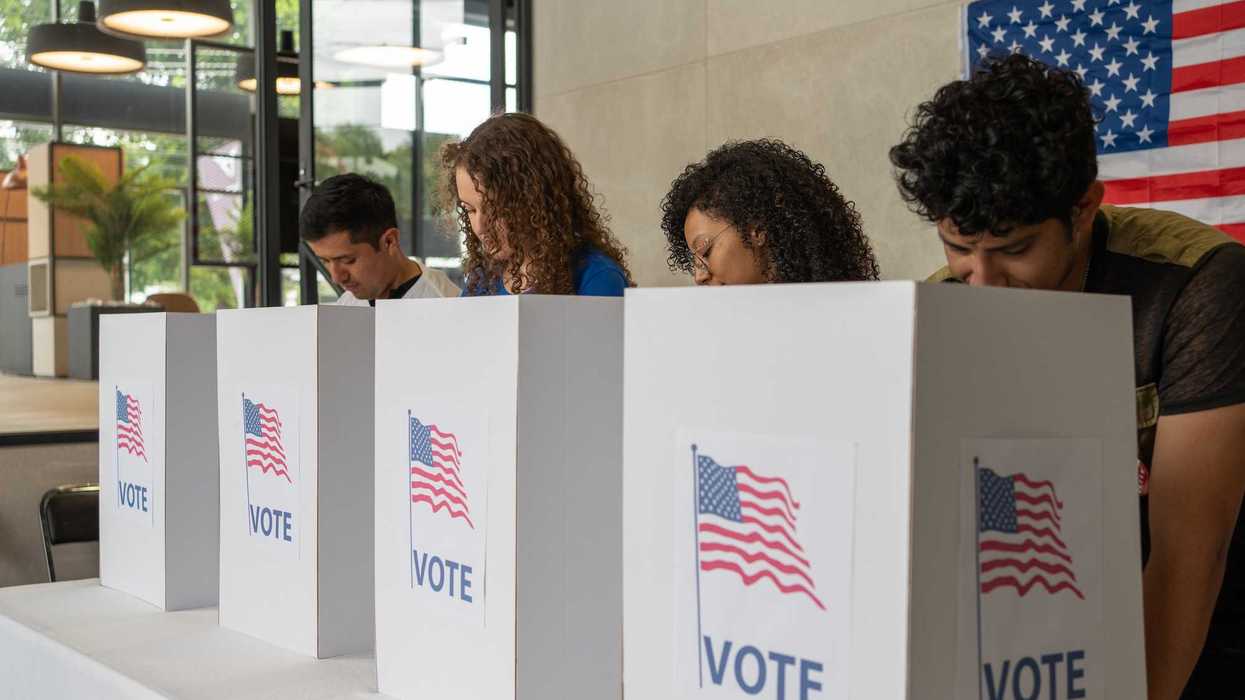
In 2024, nearly 1-in-3 voters across the U.S. cast a ballot by mail. But where this will have the biggest impact are states that send absentee ballots to all voters, like California, and states that conduct their elections entirely by mail-in voting – like Colorado and Washington.
President Donald Trump has repeatedly criticized mail-in voting, claiming that it is ripe with fraud and abuse.
- YouTube youtu.be
According to data from the California secretary of state’s office, nearly 1% of ballots received by mail in 2024 were rejected. This accounts for nearly 123,000 ballots. An in-depth analysis by USC’s Center for Inclusive Democracy found that 27% of these ballots arrived late.
This will also make it more difficult for voters to “cure” their ballots on time in the event of another type of discrepancy, like a mismatched signature or no signature provided at all.
Californians can ensure same-day delivery of their ballot by taking it directly to the office of their county’s registrar of voters on election day or during early voting. The USPS also says people can go to a staffed retail location and ask for a manual postmark, but it must be requested.
Voters left uninformed of these options may be impacted by the change, and it’s likely California and other states will see at least some increase in ballots rejected as a result of being late.
More Choice Opponents in Alaska Are Putting Repeal on the Ballot – Again
Alaska voters have been asked to weigh in on the state’s new nonpartisan, top four primary system with ranked choice voting (RCV) in the general election twice. In 2020, a majority of voters approved the election model. Then, in 2024, they rejected repeal.
But reform opponents are not giving up and will put repeal on the ballot again in 2026.
The Alaska Repeal Top-Four Ranked-Choice Voting Initiative will appear on the November 3 ballot at the same time voters will use RCV in statewide elections unless the Alaska Legislature passes similar legislation while in session.
The initiative repeals 3 things:
- The state's nonpartisan primary system that allows all voters, including the state's independent majority, to participate in taxpayer-funded primaries
- RCV used in the general election that allows voters to rank candidates in order of preference
- A campaign finance rule adopted with these two other reforms that requires the source disclosure of political contributions over $2,000 that were derived from donations, gifts, dues, etc. (i.e. if someone makes a contribution from money they collected from someone or something else, they need to disclose the original source.)
The state’s Top Four model is the first-of-its-kind. Like nonpartisan primary systems in Washington and California, all voters and candidates participate on a single primary ballot, regardless of party.
The difference in Alaska is that the top four vote-getters, rather than the top two, advance to the general election where RCV is used to determine a majority winner. Voters can rank candidates in order of preference (1st choice, 2nd choice, 3rd choice, etc.)
Narrow majorities have approved and protected the adoption of this system. The vote to reject repeal was narrower in 2024 -- 50.1% to 49.9% -- which saw a lower turnout than 2020. Advocates of repeal hope a lower turnout in the midterms will lead to success.
These supporters include Republican Gov. Mike Dunleavy, who has said RCV “was pitched as a reform to solve a problem that, frankly, didn’t exist in Alaska.”
We were told it would reduce partisanship, promote consensus candidates, and make elections more fair. In reality, what we got was a system that confused voters, made outcomes less transparent, and created deep concerns about how votes are tabulated and who ultimately decides an election."
Multiple outlets, including the Alaska Beacon and Anchorage Daily News, have reported on an increase in bipartisan and nonpartisan coalitions on the campaign trail and in the legislature under RCV. A recent study also found an increase in turnout among underrepresented groups.
Notably, Dunleavy does not mention the nonpartisan primary system, which also faces repeal under the initiative. This may be because repealing nonpartisan primaries means going back to a closed partisan primary system that shuts out 60% of the electorate that is registered independent of the two parties.
An academic paper from December 2025 found what independent reformers have said for decades and that is closed primary systems create a system of political inequity that is designed to only benefit two private political groups, the Republican and Democratic Parties.
"Consequences of this political inequality include the distortion of public policy where the preferences of certain groups are amplified by closed primary elections, and the resulting policies and candidates reflect the interests of the more powerful groups,” the paper found.
Advocates of nonpartisan primary reform assert that limiting voter participation and denying independents equal voting rights allows private political groups like the two major parties and aligned special interests to have outsized influence and control over election results.
Rebecca Braun, who is a member of Alaskans for Better Elections – the campaign that spearheaded Top Four with RCV in the state – said there’s no such thing as a perfect election system, but she thinks the new system is better.
“Mathematicians study this, and there’s almost nothing where you have 100% perfect outcomes. But this seems like to me a better system,” she said.
Santa Clara Holiday Runoff: Double the Cost with Half the Turnout
Santa Clara County, California, conducted a special election on December 30 to fill in a vacancy for county assessor following the resignation of Larry Stone. A general election was held on November 30 but because no candidate got a majority of the vote a runoff was triggered for the following month.
The runoff election cost an estimated $13.1 million. This is on top of the $13 million price tag for the general election. Meanwhile, turnout in the runoff compared to the general elections dropped by 53%. So... same cost, half the turnout.
- YouTube youtu.be
Early voting was conducted over Christmas week, and the election was held right before New Year’s Eve, so few are surprised by the low turnout.
The better elections group FairVote, a national advocate for ranked choice voting, reports that “the winner of the runoff, Neysa Fligor, received 33,332 fewer votes in the runoff than in the general election.”
Ranked choice voting (RCV) advocates say that their reform could save taxpayers money and ensure elections are decided when the most voters participate by eliminating the need for a separate runoff election.
Under the reform, voters can rank the candidates on the ballot in order of preference. If no candidate gets a majority of first choice selections, the last place candidate is eliminated and their voters’ next choices are applied to the tally.
This process continues until a single candidate has a majority. This instant runoff process serves the purpose of a regular runoff process, but without the added time, resources, and expense of a separate election.
It is possible for Santa Clara County to adopt RCV. County voters approved its use in a 1998 ballot measure. The county purchased new voting machines in 2019 capable of using RCV. And, the California Legislature approved AB 1227, which allows Santa Clara to adopt it.
On December 2, a county advisory committee recommended adopting RCV for special elections to start in order to save money. Whether the county adopts this recommendation remains to be seen.
It’s An 80-20 Issue: Maryland Voters Demand Equal Treatment and Fair Representation
In December, Maryland Governor Wes Moore’s Redistricting Advisory Commission voted 3-2 to move forward with a mid-cycle congressional gerrymander. However, this is something most Maryland voters don’t want.
Moore convened the commission following the passage of Prop 50 in California, which gives the Democratic Party an advantage in 92% of the state’s congressional districts.
A survey from the Institute of Politics at the University of Maryland, Baltimore County, found that 81% of respondents in the state said redrawing electoral districts to benefit a single party is “a major” problem for American democracy.
Only 1-in-10 respondents supported a redistricting process in which state legislators redraw districts.
But this isn’t the only survey that shows such a massive rejection of gerrymandering efforts in the state. The nonpartisan better elections group Open Primaries also released the results of its own survey this week which found that 80% of independent voters in the state oppose gerrymandering.
Partisan gerrymandering ensures that districts remain safe for a single party, which makes independents feel double penalized in Maryland because they are shut out of taxpayer-funded closed primary elections where most political contests in the state are effectively decided.
Open Primaries reports that its poll also found that 84% of independents believe that all voters should be able to vote in the primaries.
"There is a widening gap between how Independent Marylanders view fair representation and how our elections are actually conducted," said Cathy Stewart, National Organizing Director of Open Primaries."
"When you shut out independents, a quarter of the state's electorate, from the contests where 85% of elections are decided, gerrymandering creates a double penalty. We are barred from the primaries that matter, and gerrymandering makes the races uncompetitive in November, effectively rendering the voices of independent voters irrelevant."Open Primaries has spearheaded a lawsuit challenging the constitutionality of closed primaries used in the state. There are about 1 million registered voters in the state who are denied access to these elections each election cycle.
2026 Will See an Increase in Rejected Mail-In Ballots - Here's Why was originally published by Independent Voter News and is republished with permission.










The President Invited Iran to Bomb My Home