



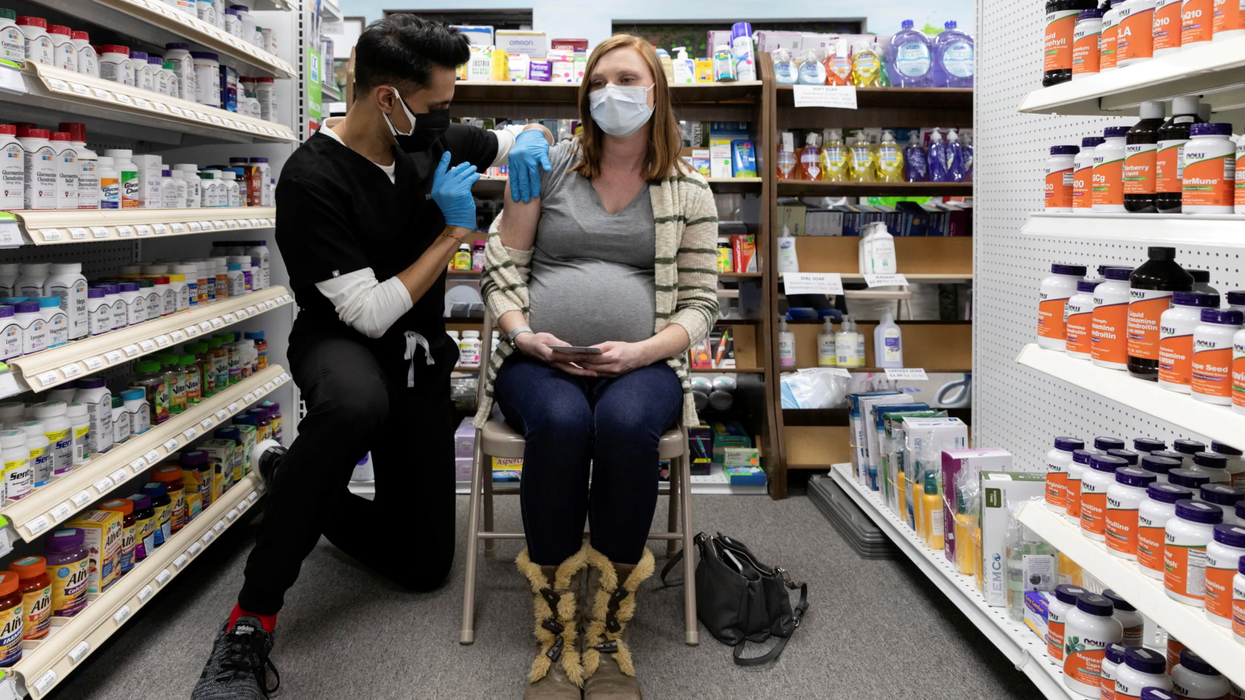

In the first 18 months of the COVID-19 pandemic, tens of thousands of pregnant women were wheeled into hospitals where they fought for their lives and the lives of the babies they carried.
It took the Centers for Disease Control and Prevention until August 2021, eight months after the first vaccine was administered, to formally recommend the COVID-19 shot for pregnant and breastfeeding mothers. The CDC had found that pregnant women with COVID-19 faced a 70% increased risk of dying, compared with those who weren’t. They also faced an increased risk of being admitted to the intensive care unit, needing a form of life support reserved for the sickest patients, and delivering a stillborn baby. In recommending the vaccine, the CDC assured them that the shot was safe and did not cause fertility problems.
ProPublica examined the harm caused by the delay in rolling out and endorsing the vaccine for pregnant mothers. Federal officials at the time told us that they wanted to ensure “an abundance of evidence” before issuing guidance.
But a surprising turn of events this summer reversed that guidance.
In May, Robert F. Kennedy Jr., the Health and Human Services secretary and a longtime vaccine critic, announced on X that “the COVID vaccine for healthy children and healthy pregnant women has been removed from @CDCgov recommended immunization schedule. Bottom line: it’s common sense and it’s good science. We are now one step closer to realizing @POTUS’s promise to Make America Healthy Again.”
The next month, Kennedy fired all 17 sitting members of the CDC’s Advisory Committee on Immunization Practices and replaced them with a selection of hand-picked members. The committee has since shifted its guidance, encouraging people to decide on their own whether to get the shot and to consider individual risk factors.
Doctors and national medical organizations said the new guidance from the CDC has caused confusion among patients and could put pregnant women and their babies at risk of severe illness or hospitalization.
“COVID-19 infection during pregnancy increases the risk of preterm birth, preeclampsia, and stillbirth,” read a statement from the Society for Maternal-Fetal Medicine.
The organization, as well as the American College of Obstetricians and Gynecologists, the nation’s leading professional organization for OB-GYNs, reiterated their recommendations that all those who are pregnant or breastfeeding receive the updated vaccine and booster, regardless of the trimester they’re in.
ProPublica found that though unvaccinated women faced devastating risks, the COVID-19 vaccine had been commandeered by disinformation and doubt. Pharmaceutical companies and government officials had not ensured that pregnant women were included in the early development of the vaccine, despite federal guidance on how to safely include pregnant and breastfeeding people in biomedical research.
The HHS’ communications director, Andrew G. Nixon, defended the federal government’s actions, saying in a statement: “ACIP’s recommendation applies to all individuals six months and older. It includes an emphasis that the risk-benefit of vaccination in individuals under age 65 is most favorable for those who are at an increased risk for severe COVID-19 and lowest for individuals who are not at an increased risk, according to the CDC list of COVID-19 risk factors.”
Pregnancy is listed as a condition that can increase risk.
In the midst of the backlash against the CDC’s guidance, a recent Harvard University study highlights a new risk of COVID-19 during pregnancy. In a rare look at the children of women who contracted COVID-19 while pregnant, the study found that they may be at increased risk for autism and other neurodevelopmental diagnoses by age 3.
Researchers, who followed the children via their medical records from birth through their toddler years, observed some initial developmental delays at 12 months and again around 18 months, said Dr. Andrea Edlow, one of the study’s senior authors and an OB-GYN at Harvard Medical School.
“We were seeing speech and motor delays, but we really didn’t know if they were going to be persistent or evolve into other diagnoses like autism, or if children were maybe going to catch up,” Edlow said. “But that, unfortunately, hasn’t been the case.”
Edlow treated many pregnant patients during the pandemic, including some who experienced a life-threatening condition known as a cytokine storm. They often had high fevers and severe inflammation for several days. The condition, she remembers thinking, couldn’t be good for the placenta or the developing fetal brain.
Edlow and her team studied more than 18,000 live births to mothers who delivered between March 2020 and May 2021. Of those, more than 800 had been diagnosed with COVID-19. What surprised them was that 16.3% of those babies received a neurodevelopmental diagnosis by three years, compared with 9.7% of the babies who were not exposed to COVID-19 in utero. That was a statistically significant finding. During the period covered by the study, the CDC had not yet come out with its formal recommendation for pregnant women to get the COVID-19 vaccine, and as such, most of the mothers were unvaccinated.
The children of mothers who contracted COVID-19 in the third trimester, a critical time for fetal brain development, and boys had an even higher risk. The male placenta and fetal brain, the researchers wrote, are more susceptible to a mother’s immune response to COVID-19 and other infections.
“I know it’s alarming,” Edlow said.
The researchers, she said, are not out to stoke fear. While the risk of autism is increased, Edlow said, the overall risk still remains low. The study underscores the importance of monitoring children born to mothers who had COVID-19 while pregnant for neurodevelopmental conditions.
Edlow encouraged pregnant women to do everything they can to avoid getting COVID-19, including wearing masks, avoiding crowded indoor spaces and getting vaccinated and boosted.
“COVID is a real problem that poses risk to the mom in pregnancy and to the child,” she said. “And it’s still worth preventing, even at this point.”
Dr. Naima Joseph worries about how the reversal of the COVID-19 vaccine recommendation for pregnant patients will affect the health of the country, particularly its most vulnerable residents, women and children.
She remembers standing in line during the pandemic to get her COVID-19 vaccine when her husband, who is also a doctor, turned to her.
“Are you sure you should be doing this?” he asked.
Joseph, a maternal fetal medicine doctor at Boston Medical Center who serves on ACOG’s Immunization, Infectious Disease, and Public Health Preparedness Expert Work Group, paused. She was pregnant with twins. Like so many mothers, what she cared about most in this world was protecting her babies, but she also treated many pregnant patients sick with COVID-19 who spent months fighting for their lives from a hospital bed. Some died or lost their babies.
“Yes,” she replied to her husband before getting the shot.
Amid Confusing CDC Guidance About Vaccines, Study Highlights New Risk of COVID-19 During Pregnancy was originally published by ProPublica and is republished with permission.












The President Invited Iran to Bomb My Home