

Skip to content
Search

Latest Stories

Follow Us:
Top Stories

‘Women Will Die’: How the Mifepristone Ban Will Affect Women across the Country

News

‘Women Will Die’: How the Mifepristone Ban Will Affect Women across the Country

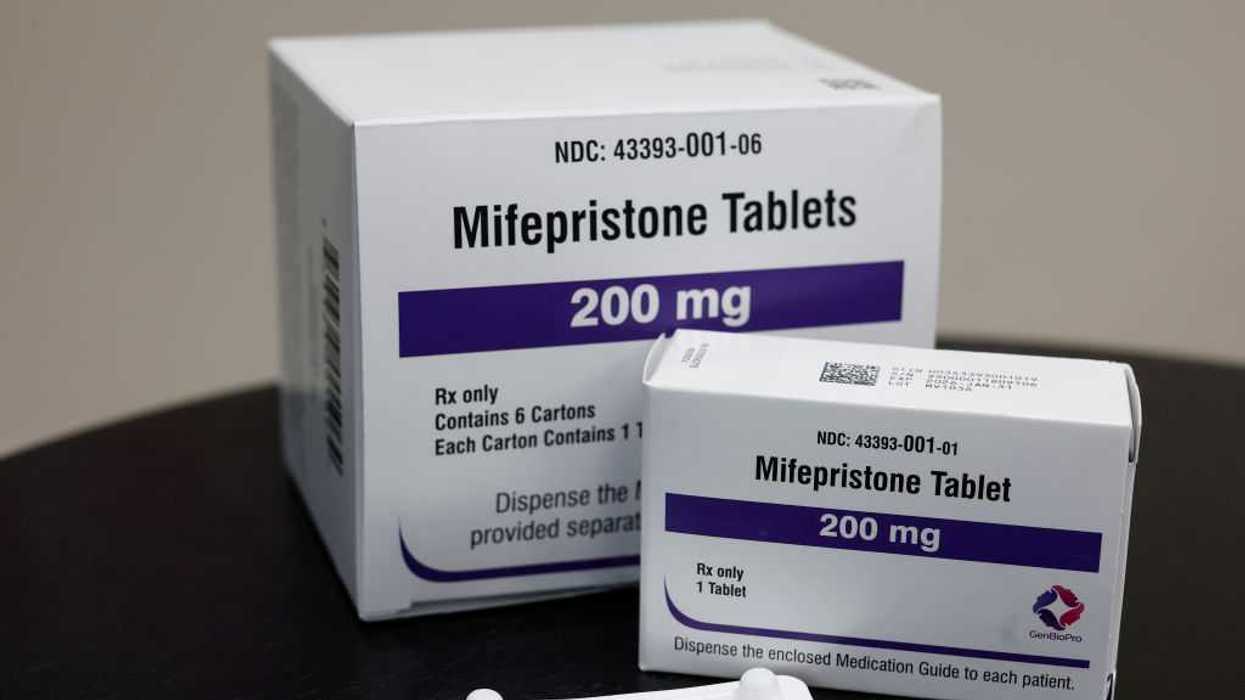
In this photo illustration, packages of Mifepristone tablets are displayed at a family planning clinic.

(Photo illustration by Anna Moneymaker/Getty Images)

WASHINGTON–Maternal health advocates and a Virginia state legislator warned that women’s health would suffer even in states that allow abortions if the Supreme Court fails to block a ban on mail deliveries of mifepristone, a drug used in abortions.

Jennifer McClellan, a representative for the state of Virginia and long-time advocate for reproductive rights, experienced a high-risk pregnancy and an emergency C-section 9 weeks before her due date. She said that she worried about the risks to individuals if they lose easy access to Mifepristone for abortions, miscarriages, or other reasons.


“I almost became the statistic of someone, a black woman, who was three times more likely to die of pregnancy or pregnancy-related complications, and many of those are because of miscarriages,” McClellan said during a webinar on Tuesday. “This is what is going to happen: women will die.”

An abortion advocacy group, Free & Just, held a webinar on Tuesday after the Supreme Court approved an emergency request from two Mifepristone manufacturers to continue the mailing of the abortion drug until Thursday, May 14. Mifepristone is a proven safe and effective drug to induce medical abortions.

On May 1, the U.S. Court of Appeals for the 5th Circuit ruled that mifepristone must be picked up in person. For residents of Louisiana, where there is a strict ban on abortion, including cases for rape and incest, receiving Mifepristone in the mail remained the most effective form of terminating a pregnancy at home.

The state of Louisiana, which brought the case, argued that allowing the medication to be mailed to Louisiana residents contradicted the state’s ban on most abortions.

Sarah Zagorski, a spokesperson for Americans United for Life, an anti-abortion advocacy group headquartered in Washington, said mifepristone has side effects that need further study, and banning remote access to the drug would protect women.

“It’s definitely a huge milestone. It’s an opportunity for the court to affirm the importance of the safety measures for women,” Zagorski said in an interview.

A 2026 study on miscarriages from the American Public Health Association states that where abortion is banned or has gestational limits showed that from 2016 to 2023, maternal or pregnancy-related mortality rates increased 9.9%, with additional evidence showing that Black women were 3.3 times more likely to die from similar complications than white women in these states.

Activists said the ability to get Mifepristone by mail is important for women across the country, even in states that allow abortions.

"Even in states where abortion is legal, as I said, this effectively ends access entirely for people in rural communities, survivors of domestic violence, and anyone who cannot take a day off of work or arrange childcare to get access to an abortion clinic," said Mini Timmaraju, president of Reproductive Freedom for All, an abortion rights organization headquartered in Washington.

Doctor Kristin Lyerly, who works as an OB-GYN in Minnesota, said that despite practicing in a state that allows abortion, if her rural patients must pick up mifepristone from a pharmacy in person, they may have to travel an hour in each direction.

Lyerly said she sends her patients to telehealth to get prescriptions for mifepristone for more than abortions, and to treat miscarriages.. “It’s the same procedure, I send them to telehealth because they can’t access mifepristone in our rural community,” Lyerly said.

Mifepristone has multiple uses other than abortions, such as hyperglycemia or endometriosis. If the shipment ban becomes law, individuals who use mifepristone for these other medical purposes also would no longer be able to have the medication delivered. She compared the recent 5th Circuit ruling to the Supreme Court decision that overturned Roe v. Wade.

“This is truly as impactful as Dobbs was for the entire country. In states like Louisiana and Mississippi and Tennessee because they just will not have access to fundamental healthcare not just for abortions, but also for managing miscarriages,” Lyerly said.

Jaylyn Preslicka is a reporter for Medill News Services.


Read More

stethoscope and us dollar bills on blue-colored background.

As debate over universal health care intensifies in the United States, rising medical costs, insurance complexity, and international comparisons are fueling renewed calls for a transparent, accountable system that guarantees basic care for all Americans.

Getty Images, aaaaimages

The United States May Be the Best Place to Build Universal Health Care

The debate over health insurance in the United States has returned to the forefront as the Affordable Care Act faces political pressure, insurance premiums continue to climb, and physicians experience increasing restrictions from insurance companies. A recent poll shows that roughly 62 to 68 percent of Americans believe the government has a responsibility to ensure health care coverage for all. Yet after more than a century of debate, the federal government has taken only small steps toward universal coverage. Today, the United States spends a relatively high amount per person on health care, but Americans die younger and are less healthy than residents in other high-income countries.

Having experienced different health care systems firsthand, I am deeply aware of how universal health care can impact life. Surprisingly, I have also realized that the United States may actually have one of the systems best suited to making it work.

Keep Reading Show less
Person at home feeling tired and stressed.

How positive male leadership is critical to the mental health and development of young men.

Getty Images, kieferpix

The Problem isn’t Masculinity – It’s the Men Modeling It

From the White House to Harvard to Buckingham Palace, 2026 has become a masterclass in how men should not behave. Donald Trump tweeted in expletives on a religious holiday, threatening to decimate “a whole civilization.” Larry Summers—one of the world's most powerful academics—resigned in disgrace from Harvard. Before that, Prince Andrew was arrested. This year alone, Bill Gates, George Mitchell, and other prominent men have been exposed for inappropriate, abusive, or generally shameful behavior.

In short, men aren't looking good right now—especially as role models for young men. Now more than ever, we need good men to step up for our boys.

Keep Reading Show less
Reduce Barriers That Delay Care
a doctor holding a stethoscope
Photo by Nappy on Unsplash

Reduce Barriers That Delay Care

Today, administrative complexity continues to shape access to care, affecting both patients and providers. For individuals seeking timely treatment, delays and uncertainty remain common. For providers — especially community and rural hospitals — the burden of navigating these processes continues to strain already limited resources.

Prior authorization requirements are one of the most visible examples of this dynamic, and a 11% reduction in such reviews over the last year following an insurance industry pledge offers a welcome sign of progress. At a minimum, this shift suggests that some of the administrative burden embedded in the system can be reduced without compromising its core functions. But it also underscores a more persistent issue.

Keep Reading Show less
Children sitting down, holding signs that read, "Let Trans Kids Be," and "Gender Liberation Now."

Children hold signs during a “Rise Up for Trans Youth” demonstration in New York City on February 8, 2025. Patients, families and doctors rely on medical guidance in an increasingly hostile landscape, but recent statements — and how politicians interpret them — have only deepened uncertainty.

KENA BETANCUR/AFP/Getty Images

How Gender-Affirming Care Is Becoming a Political Test for Top Medical Groups

The largest medical association in the United States supports gender-affirming care — a stance it has reiterated in different ways over the last 10 years. But as Republicans press leading medical organizations on health care for transgender youth, the American Medical Association (AMA) is the latest group caught between political rhetoric and the complex realities of specialized care that few people receive.

As patients, families and doctors navigate this care in an increasingly confusing and hostile landscape, what medical groups say matters. But lately, what they’ve had to say — and how politicians interpret it — has only caused more uncertainty.

Keep Reading Show less