


Skip to content
Search

Latest Stories

Follow Us:
Top Stories

May 5 primary ballot issues affect Ohioans' daily lives

News

May 5 primary ballot issues affect Ohioans' daily lives

In 2024, 87% of Congressional races were decided in primary elections – meaning the 7% of voters who participated in these elections effectively chose the majority of the U.S. House, according to data from the Unite America Institute.

(Adobe Stock)

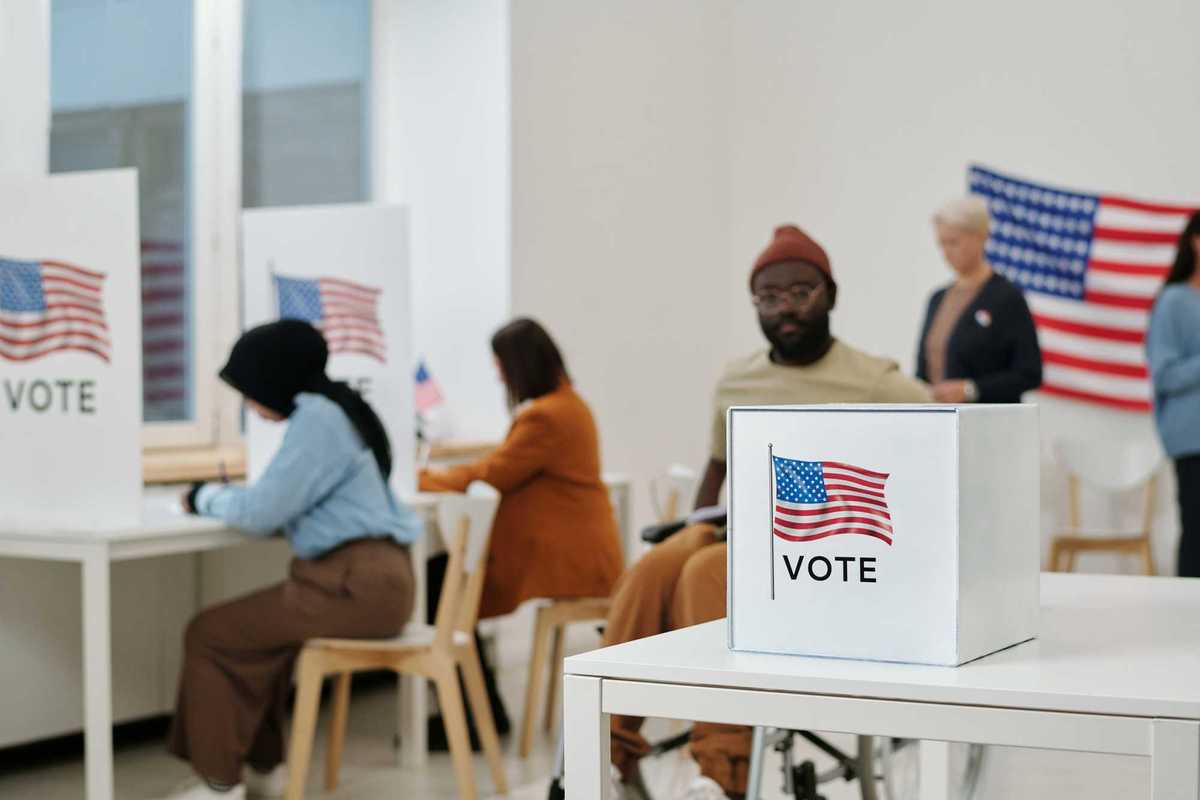
Ohio voters often skip primary elections but one expert said decisions on the ballot affect residents' daily lives.

Ohio’s primary election will be held May 5. According to research from the Bipartisan Policy Center, only 19% of voters cast ballots in the 2022 midterms.


Jen Miller, executive director of the League of Women Voters of Ohio, said primary ballot issues and candidates can affect everything from public school and fire department funding to how local governments tackle housing affordability.

"Last year in Middletown, voters were trying to fund their school district and they lost by five votes," Miller pointed out. "What this shows us is that a lot of times voters are not showing up to primaries."

This year, voters will elect a new governor and select officials for state-level executive positions. Polls are open from 6:30 a.m. to 7:30 p.m. on Primary Election Day. Voters will need to bring valid photo ID.

Miller added voters in the Buckeye state now have more options when it comes to requesting primary ballots.

"This year, Ohio voters can choose a Republican, Democratic, Libertarian or issues-only ballot," Miller outlined. "When you go to vote, as long as you're registered, you can ask for any of those four ballots to make your voice heard."

April 28 is the deadline to submit absentee ballot applications to local board of elections, either by mail or by delivering in-person. Early voting has already begun and will continue through May 3. A full list of early voting locations and dates can be found on the Ohio Secretary of State’s website.

May 5 primary ballot issues affect Ohioans' daily lives was first published by PNS and was republished with permission.

Nadia Ramlagan is a producer with Public News Service. She covers the Ohio Valley and Appalachian region for Public News Service (Kentucky, Ohio, West Virginia).
Read More

The Dems need this redistricting battle

Larkin, Democratic candidate for Congress in Florida’ s 23rd district, speaks during an emergency town hall that he held to address Florida Republicans’ newly approved congressional redistricting map on May 4, 2026, in Coral Springs, Florida. Ron DeSantis announced he signed a redistricting bill that could help Republicans pick up four more House seats.

(Getty Images)

The Dems need this redistricting battle

Over the past six months, Democrats have been more than happy to let President Trump be their best campaign ad. From his ill-advised war in Iran to his ill-advised tariffs, his obvious declining mental acuity to his increasing desire to spend taxpayer money on wasteful vanity projects, Dems know that Politics 101 dictates you never interrupt your enemy when he’s making a mistake.

With politicos predicting a midterm election bloodbath for Republicans, Dems were riding high. That is, until Trump unleashed his redistricting wars.

Keep ReadingShow less
The Paradox of Young Voters: Disillusioned and Divided
person in blue denim jeans and white sneakers standing on gray concrete floor
Photo by Phil Scroggs on Unsplash

The Paradox of Young Voters: Disillusioned and Divided

In 2024, young Americans were expected to be the stabilizing force in U.S. politics. But instead, they emerged as one of its most paradoxical constituencies: increasingly disillusioned, economically anxious, and sharply divided. Millennials and Gen Z are rapidly becoming the demographic center of political power: by 2028, they may account for nearly half of the electorate. Yet, according to the Spring 2025 Harvard Youth Poll conducted by the Harvard Kennedy School Institute of Politics, only 19% of young Americans trust the federal government to do the right thing most or all of the time. Just 13% believe the country is headed in the right direction. The question arises: will this generation accelerate democratic fragmentation, or help rebuild a more resilient civic culture?

This growing pessimism is not confined to one party. Young Americans rate both major political parties poorly, displaying chronically low approval of national leadership, and increasingly question whether democratic institutions are responsive to their needs. The result is not apathy–it is polarization.

Keep ReadingShow less
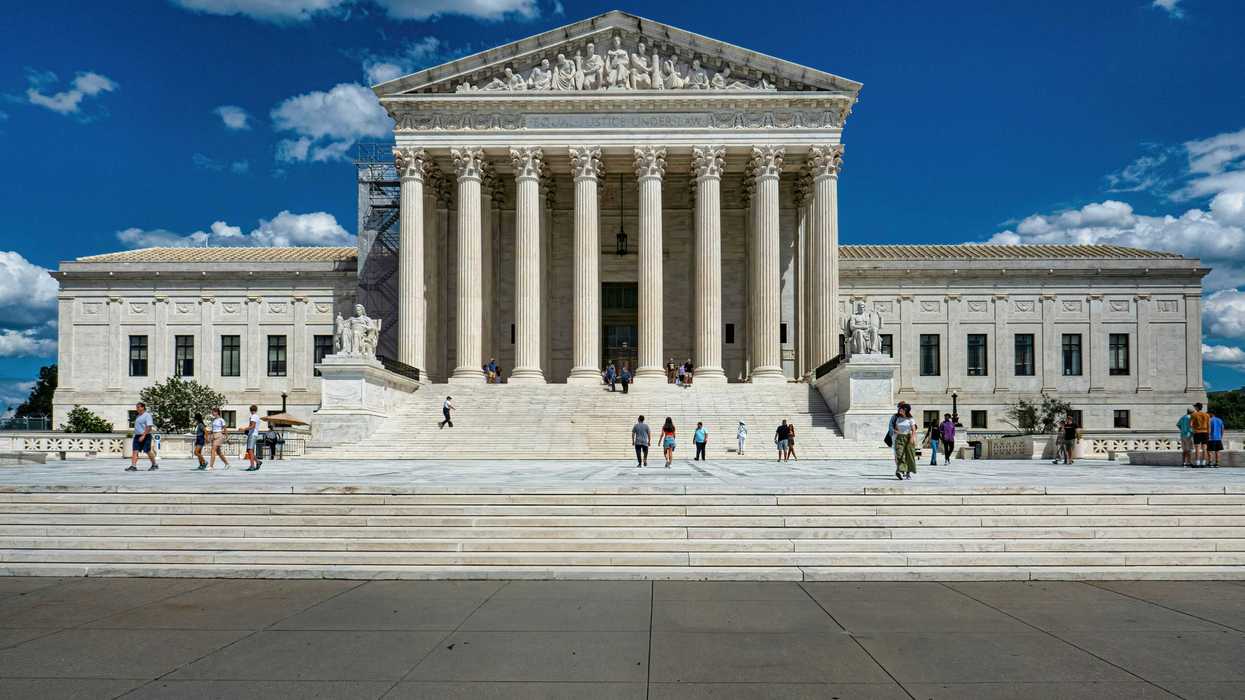
After the Court's Voting Rights Decision - How to Protect Black-Majority Districts
a large white building with columns with United States Supreme Court Building in the background

After the Court's Voting Rights Decision - How to Protect Black-Majority Districts

The Supreme Court recently ruled that Louisiana violated the Constitution in creating a new Black-majority voting district. This was after a Federal court had ruled that the previous map, by packing Blacks all in one district, diluted their votes, which violated the Voting Rights Act.

The question is what impact the decision in Louisiana v Callais will have on §2 of the Voting Rights Act ... and on the current gerrymander contest to gain safe seats in the House. The conservative majority said that the decision left the Act intact. The liberal minority, in a strong dissent by Justice Kagan, said that the practical impact was to "render §2 all but a dead letter," making it likely that existing Black-majority districts will not remain for long.

Keep ReadingShow less
Election Officials Have Been Preparing for AI Cyberattacks

People voting at a polling station

Brett Carlsen/Getty

Election Officials Have Been Preparing for AI Cyberattacks

Since ChatGPT and other generative artificial intelligence systems first became widely available, the Brennan Center and other experts have warned that this technology may lead to more cyberattacks on elections and other critical infrastructure. Reports that Anthropic’s new AI model, Claude Mythos, can pinpoint software vulnerabilities that even the most experienced human experts would miss underline the urgency of those risks. Fortunately, election officials have been preparing for cyberattacks and have made significant progress in securing their systems over the past decade, incorporating improved cybersecurity practices at every step of the election process.

Anthropic claims that its new model can autonomously scan for vulnerabilities in software more effectively than even expert security researchers. If given access to this new model, amateurs would theoretically be capable of identifying and exploiting vulnerabilities in a way that previously only sophisticated actors, such as nation-states, could do. For this reason, Anthropic chose not to release the Mythos model publicly. Instead, under an initiative Anthropic is calling Project Glasswing, it has offered access to Mythos to a number of high-profile tech firms and critical infrastructure operators so that these companies can proactively identify and address vulnerabilities in their own systems. Although Anthropic is currently controlling access to its model to prevent misuse, experts believe it is only a matter of time before tools advertising similar capabilities are broadly available.

Keep ReadingShow less