
Skip to content
Search

Latest Stories

Follow Us:
Top Stories

Voters Want Progress. The Parties Want Control

Opinion

Voters Want Progress. The Parties Want Control
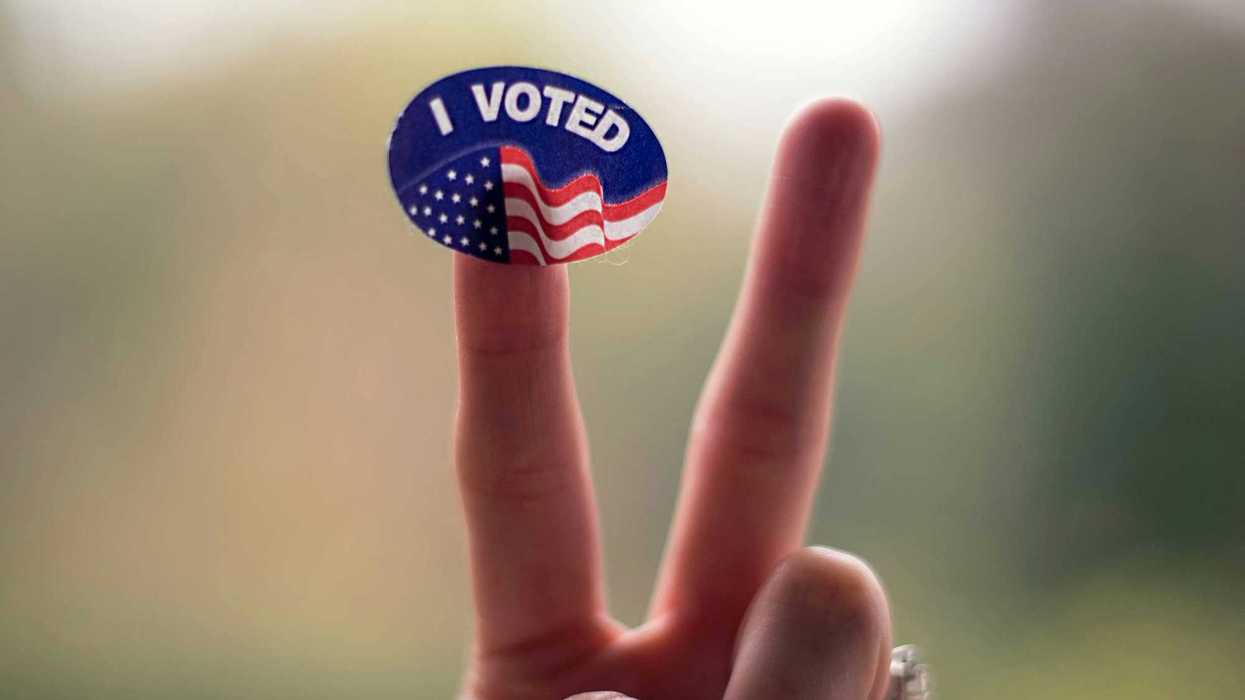
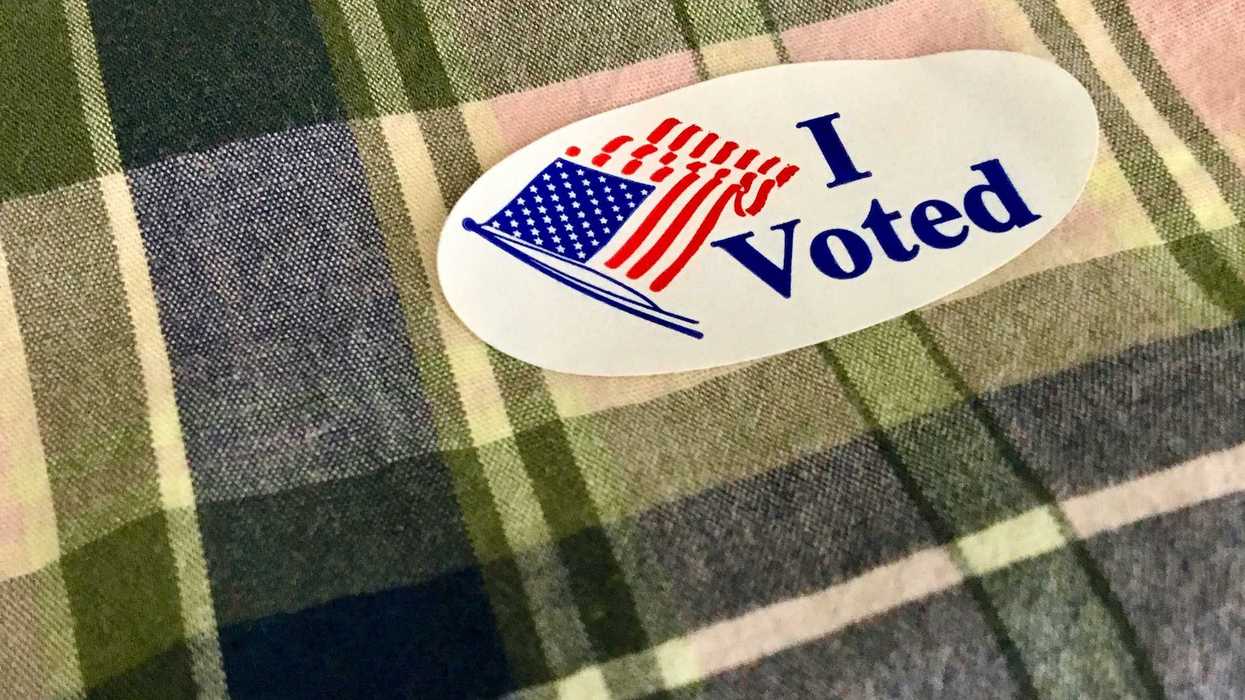
person holding blue and white UNK pin back button
Photo by Jennifer Burk on Unsplash

Advocates for closed primaries believe that political parties should be allowed to limit participation to registered party members. Their logic is…logical. Why should Elks Club Members have a say in Rotary Club Business?

But Americans are looking for ways to make our country better, logical or otherwise. They don’t care about the self-serving rules and arguments that the two-party cartel has set up to keep us siloed. They want to vote. They want to impact. They want to be heard.


So let’s dive deeper into what is really going on in states that legally bar independents from voting. It’s wild!

Open Primaries and the Independent Voter Project conducted a poll in early July of 1400 registered Democrats in New York City. We asked them a simple question: “Why did you decide to register to vote as a Democrat?”

The answers will astound you.

48% said that they registered to vote as a Democrat because they are a proud member of the Democratic Party, or because they usually vote Democratic, and so it made sense to join the party. 39% said I’m not a Democrat, I’m an independent; I registered to vote Democrat to be able to vote in primaries. The remaining 13% were either Republicans or unsure.

Almost half of Democrats in New York City…are not Democrats.

If the goal is to ensure that only party members are involved in selecting party nominees, then the closed system is a complete failure. Hundreds of thousands of independents have registered as Democrats simply because they want a say in who will represent them.

And New York is not an anomaly.

I was talking with my friend Joe Kirby about these numbers, and he brought me up to speed on what’s happening in real time in South Dakota. Joe is a lifelong Republican, a conservative businessman, and a staunch advocate for nonpartisan primaries. We’ve worked together for a decade to advance the open primary conversation in the Mt. Rushmore State - and we both have the scars to show for it.

The South Dakota GOP primary for Governor was on June 2. No candidate cleared 35%, so a runoff was held on July 28 to decide the winner. Between June 3 and July 13 - the deadline to change your registration - thousands of South Dakota independents and Democrats changed their voter registration to Republican in order to vote in the runoff, which is the de facto General Election.

“They didn’t suddenly become Republicans,” Joe told me. “They simply wanted a meaningful voice in choosing the person who will likely become South Dakota’s next governor. And the biggest lesson isn’t simply who won. It is that thousands of South Dakotans wanted a voice in the election that really mattered. For one election, South Dakota experienced something resembling an open primary. Participation broadened. The winning candidate earned support from a larger and more representative electorate. The process worked much as advocates of open primaries have long argued it would.”

Both New York and South Dakota exposed that our crazy system of partisan voter registration and closed primaries forces millions of Americans to join private organizations that don’t believe in just to participate and have a voice.

And party activists claim that closed primaries keep their parties pure! It’s actually the exact opposite. If political parties want to limit membership to true believers, they should a) embrace open and nonpartisan primaries and nonpartisan voter registration. Then the only reason to join a party is that you believe in it, not because you’ve been coerced into joining just to vote.

John Opdycke is the president of Open Primaries, a national election reform organization.

Read More

Kevin Kiley Left the Republican Party Over Gerrymandering. Now He's Testing Whether an Independent Can Beat the Map Drawn to Defeat Him.

U.S. Rep. Kevin Kiley (R-CA) on Capitol Hill on January 22, 2026 in Washington, DC.

(Photo by Al Drago/Getty Images)

Kevin Kiley Left the Republican Party Over Gerrymandering. Now He's Testing Whether an Independent Can Beat the Map Drawn to Defeat Him.

Independent voters now represent the largest share of the American electorate, and yet they remain almost entirely unrepresented in Congress. Both major parties have spent decades optimizing for their bases, leaving the near majority of Americans who identify as independent with the choice of either voting for a party candidate they don't fully support or staying home.

A handful of high-profile independent candidates are trying to change that in 2026. They are often covered as fringe candidates whose stories are told through the lens of how they'll impact the outcome between a Republican and a Democrat, rather than on their own terms. This series exists because independent voters deserve better than that.

Keep Reading Show less
CT election security group honors 10 years of fighting for democracy

A 2021 poll shows 73% of Connecticut voters supported the amendment giving all voters the option to vote by absentee ballot without needing an excuse.

(Adobe Stock)

CT election security group honors 10 years of fighting for democracy

A Connecticut voting-rights group is celebrating its 10th anniversary.

Bridgeport Generation Now has worked to broaden voting access and ensure fairer elections for city residents. Some of its most important work came at a time when many Bridgeport residents felt their votes didn't matter, pointing to absentee ballot fraud as the cause.

Keep Reading Show less
Voting Is Not a Closed-Book Test
white and black labeled box

Voting Is Not a Closed-Book Test

The Supreme Court closed out its term and issued decisions that could affect millions of Americans. Among them is Watson v. Republican National Committee, in which the court decided in a 5-4 decision to uphold longstanding Mississippi law and allow mail-in ballots received post-Election Day to be counted.

The legal implications of the decision will be analyzed for months, if not years. But beyond the legal questions is a practical one: What role does mail voting actually play in helping Americans participate in elections?

Keep Reading Show less
The New Fight Over Election Observation
A pole with a sign that says polling station
Photo by Phil Hearing on Unsplash

The New Fight Over Election Observation

As a member of the Organization for Security and Cooperation in Europe (OSCE), the U.S. has signed the foundational agreement committing all participating states to open elections to external scrutiny and inviting fellow members to observe through the Office for Democratic Institutions and Human Rights (ODIHR). The 2024 ODIHR observation mission to the U.S. found the fundamentals reassuring—a well-run process, active engagement, free campaigning—but issued 31 recommendations to align U.S. elections with international standards and commitments. Four stand out: federal pre-clearance legislation against discriminatory election-law changes; reassessing the Electoral College; balanced representation in election administration; and guaranteed access for international and nonpartisan observers—notable, since 17 states still legally bar international observation, which is at odds with commitments made by all 57 OSCE states. Yet over a year later, follow-through is thin: no pre-clearance restoration, no Electoral College review, unchanged observer-access laws. Where movement exists—in disinformation tools, in financial disclosure—it remains piecemeal.

An uncomfortable convergence

Keep Reading Show less