




Gerrymandering, the strategic manipulation of voting district boundaries to benefit certain political parties or candidates, has once again taken center stage as this year’s primary elections approach. Though redistricting is typically marked by the decennial census, mid-decade redistricting has become more common across the U.S. since the early 2000s.
The aim of redistricting is to ensure that representative assemblies within a state continue to accurately represent their constituents as population demographics shift over time; however, since the early 1800s, this system has been exploited by U.S. political parties seeking to manipulate voting outcomes in their favor. The same can be said about the current election cycle.
Ahead of the 2026 Midterms, five states have proposed and passed new congressional maps to date. Virginia is poised to be the next state, if the state’s Supreme Court approves its new congressional maps.
On Monday, the Virginia Supreme Court heard oral arguments about the legality of the congressional maps the state’s Democrats proposed. The maps were approved by voters last week with a slim 51.45% majority, but Republicans challenged their plan. If the new maps are approved, it could grant Democrats four additional seats in the U.S. House.
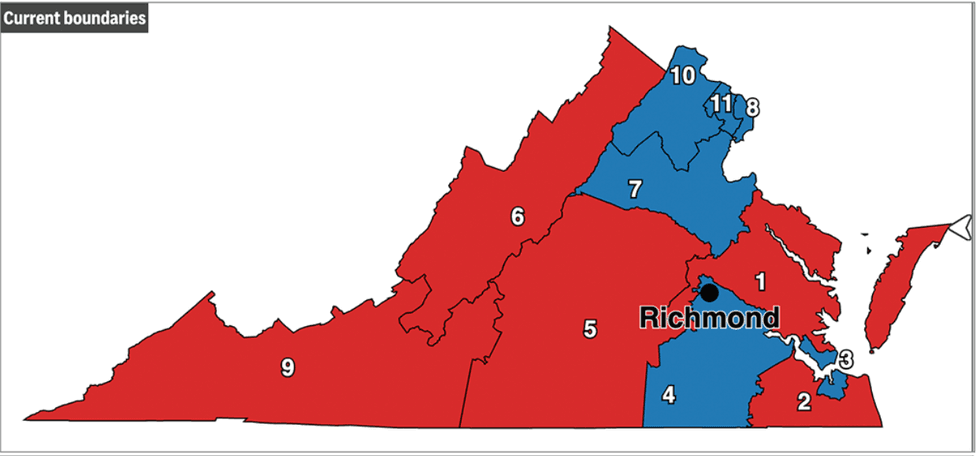
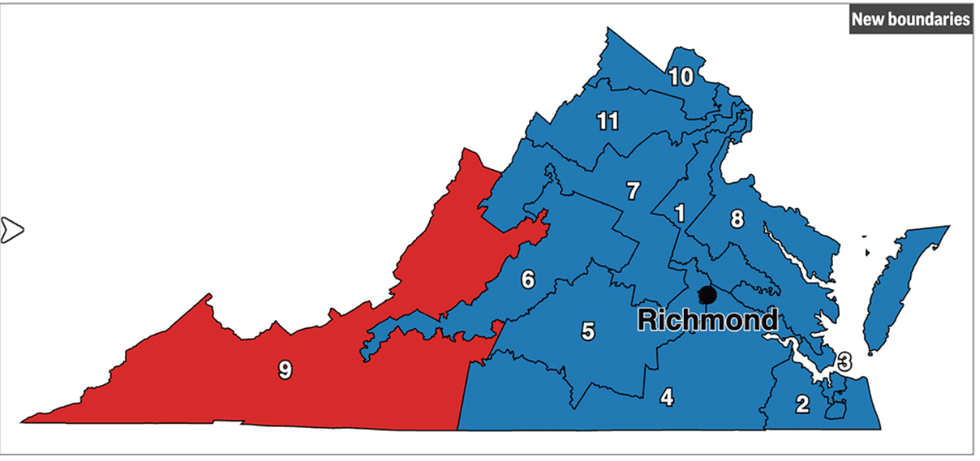
Current (top) versus new (bottom) boundaries for Virginia’s congressional districts. The new map would reflect 10 strong Democrat seats and 1 strong Republican seat, whereas the current map has 7 strong Democrat seats, 3 strong Republican seats, and 1 flip. See here for more comparisons. Image source: AP News.
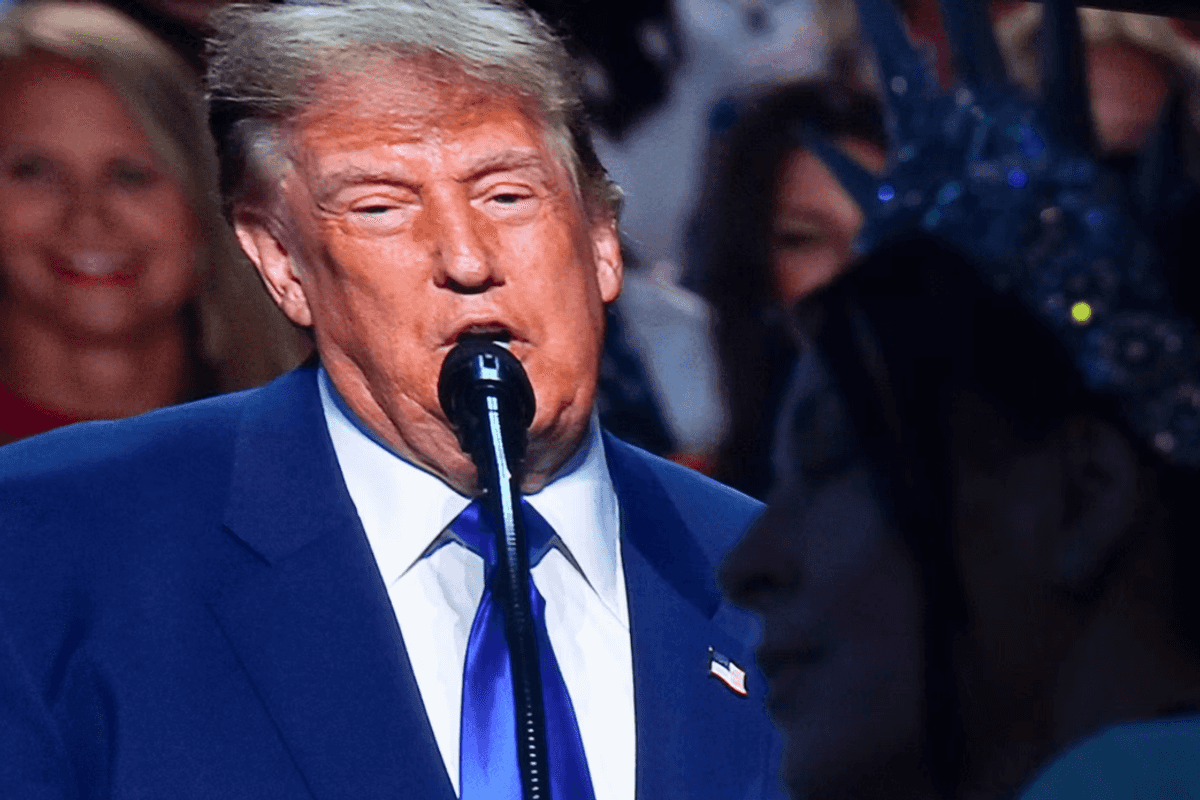
This is just the latest in the national redistricting battle, with both Democrats and Republicans fighting for control of the chamber come November. Though North Carolina and Ohio were the first to pass new congressional maps in October 2025, the GOP’s bid to retain control kicked off after President Donald Trump pressed Texas Republicans to redraw their congressional maps. Texas did so, and in return, the GOP hopes to flip five seats in the House following the 2026 Texas Midterms.
Florida will be the next to participate, as Gov. Ron DeSantis (R ) called for a special session to address congressional redistricting. This is set to begin on Tuesday, April 28.
Nationwide gerrymandering has created the potential for nine extra seats Republicans are poised to win across Texas, Missouri, North Carolina, and Ohio. Democrats are expecting to win six seats from redistricting efforts in California and Utah, and a grand total of 10 if the new congressional maps are approved in Virginia.
Though the legal situation is complex and ongoing, the stakes are high for both parties: the GOP, egged on by President Trump, is fighting to retain the slim majority it holds in the House, while the Democrats are doing whatever they can to flip it.
This goes to show that gerrymandering is more than the way district lines are drawn. It is the product of a power-and-control struggle that can impact everything from political priorities to the strength of the public’s vote, and for voters trying to understand why election outcomes sometimes feel inconsistent with public opinion, the answer may lie not in the ballots but in the boundaries.
- YouTubewww.youtube.com
Britton Struthers-Lugo is a journalist and visual storyteller. She currently works as a Digital Content Producer across The Fulcrum and the Latino News Network.













The President Invited Iran to Bomb My Home