

Skip to content
Search

Latest Stories

Follow Us:
Top Stories

Dem’s Favored To Win Midterms-Will They Run the Candidates Voters Want?

A rising electorate demands candidates who answer to citizens, not political insiders.

Opinion

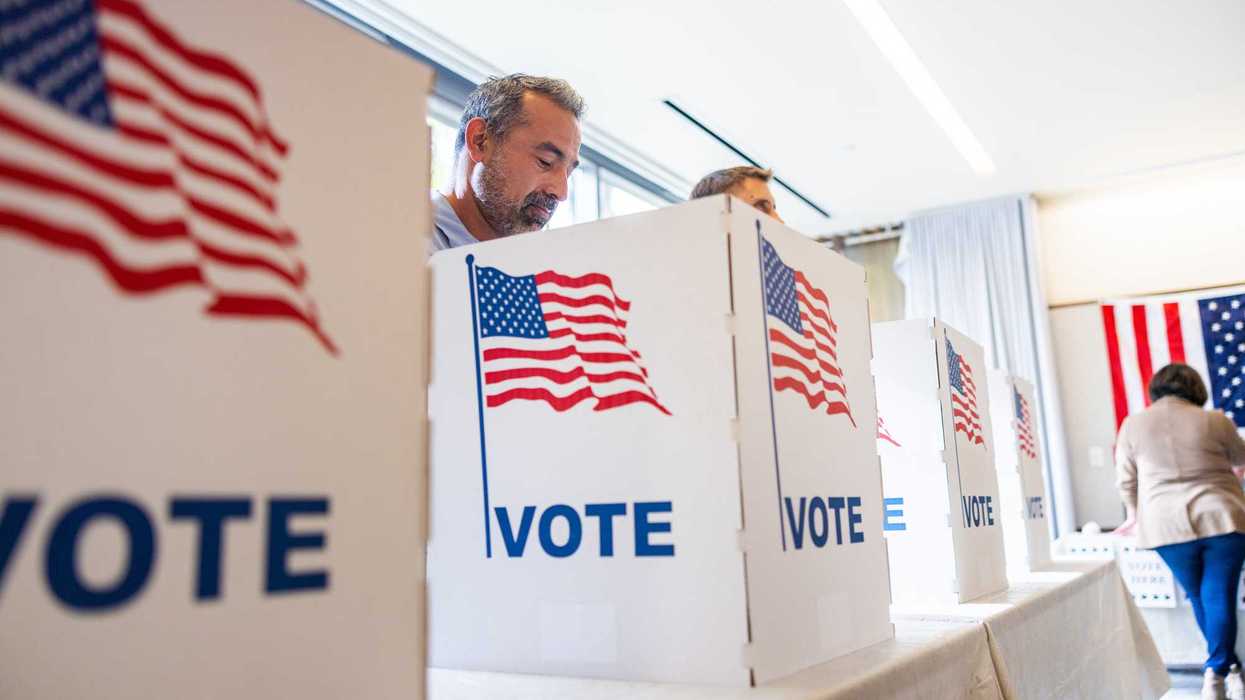
Voters standing at voting booths.

As midterm elections approach, betting markets favor Democrats—but voter distrust, anti-establishment sentiment, and demand for reform could reshape the party’s future.

Getty Images, adamkaz

Donald Trump can dismiss his dismal approval ratings and the GOP’s sinking midterm odds as fake news – but he can’t ignore the betting markets. More accurate in predicting political elections than traditional opinion polls, Democrats are a heavy midterm favorite, with an 87% chance of taking the House, and winning the Senate, 52 seats to 48.

But for any Democratic victory to be more than a temporary restraining order on Trump and the GOP, the Democratic Party needs to start placing voters front and center, building a way forward focused on what millions of voters have made clear they need: a new type of candidate with character who will fight, not fold with a new agenda that puts them first – an agenda untethered to the political class(Democrat and Republican) who put the needs of special interests and billionaires over ordinary citizens. In short, they want candidates who are voter-centered, not donor-centered.


As a lifelong Democrat and political activist, I stand with them. Specializing in the rhetoric of social movements, I know that economic instability, social chaos, and efforts to deny some groups their fundamental rights are conditions currently in play that have historically triggered powerful social change.

More than eight million people took to the streets on March 28th for the Third No Kings March, the largest protest gathering in US history, calling for an end to Donald Trump’s assault on our democracy and economy, disastrous foreign policy, and most critically, his war on Iran. These public demonstrations are part of a larger political climate of disillusionment where, according to 2025 Pew Research Center data, just 17% of Americans express trust in their government.

During the past year, millions of American voters, through polling research, focus groups, and protests, have voiced their dissatisfaction and belief that the system is broken, our politicians are owned, and public policies favor billionaires over voters.

Regarding the Democrat Party in particular, just 27% of registered voters have a positive view of them; this includes the many Democrats who are angry and dissatisfied with their party’s leadership. Not only were the 2024 election results a dismal failure, but so too were their tepid efforts to oppose Trump’s policies. Elected Democrats left that job to ordinary citizens: Minnesotans, millions of No-Kingsprotestors, and community groups.

A recent poll of double haters – voters with unfavorable impressions of both major parties -- now favor Democrats by 6% in the midterms, “driven more by opposition to the GOP rather than enthusiasm for the Democrats.” Most importantly, 70% of Independents now disapprove of Trump. As the largest voter group, 45% compared to 27% Republican or Democrat, Independents have enormous clout and were a significant force behind Trump’s sweeping electoral victory.

Democrats have a rare opportunity to reinvent themselves, rather than gain the temporary upper hand in a broken system - to seize the moment by supporting new types of candidates pursuing a new agenda. For example, there is a preponderance of information on voters' beliefs that their representatives are “owned.” A voter-centered candidate would directly acknowledge this core problem and provide PLANS to fix it. What immediate steps can be taken to curb billionaires’ power in our elections? What long-term strategy do they propose for comprehensive campaign finance reform? Are they willing to fully disclose their own campaign contributions and financing? According to Pew Foundation research, there is strong support among voters for curbing career politicians by imposing term limits. How will a candidate work to make that happen?

Other issues, regardless of urgency, like the impact of AI on the workforce, are secondary to establishing a voter-centered agenda that drives solutions to specific problems. In the case of AI, how does the fix primarily benefit ordinary citizens rather than tech companies?

Occasionally, new types of candidates slip through the Democratic machine, but they are quickly sidelined if challenging the Old Guard, even though it’s under the Old Guard that the Democratic Party’s credibility has sunk to a new low.

Democrats have the odds going for them in November. Whether the party will seize this opportunity to get beyond the lesser of two evils and redefine itself with a voter-centered agenda is anybody’s guess.


Trudy Bayer is a specialist in the rhetoric of social movements. She was the founding director of the Oral Communication Lab at the University of Pittsburgh.

Read More

The Hidden Infrastructure of Democracy: Professionalizing and Diversifying Election Staff

Dr. Shaniqua Williams, assistant professor of political science

The Hidden Infrastructure of Democracy: Professionalizing and Diversifying Election Staff

Earlier this year, the Bridge Alliance and the National Academy of Public Administration launched the Fellows for Democracy and Public Service Initiative to strengthen the country's civic foundations. This fellowship unites the Academy’s distinguished experts with the Bridge Alliance’s cross‑sector ecosystem to elevate distributed leadership throughout the democracy reform landscape. Instead of relying on traditional, top‑down models, the program builds leadership ecosystems—spaces where people share expertise, prioritize collaboration, and use public‑facing storytelling to renew trust in democratic institutions. Each fellow grounds their work in one of six core sectors essential to a thriving democratic republic.

Below is an interview with Dr. Shaniqua Williams, Assistant Professor at West Virginia University. Her research focuses on state politics, race and ethnicity, Black political behavior, Black women’s descriptive and substantive representation, and election administration. She is also a Research Fellow with the Center for Election Innovation and Research, where her work focuses on election administration, workforce development, infrastructure, and policy.

Keep Reading Show less
Macbeth’s Warning: How Ambition and Power Threaten Our Democracy

Engraving of three witches around a bubbling cauldron in a cave summoning an apparition of a rising demon in the background recalling a scene from Shakespeare's Macbeth..Image found in an 1881 book: "Zig Zag Journeys in the Orient" Published by John Wilson & Son, Cambridge, Massachusetts.

Getty Images, KenWiedemann

Macbeth’s Warning: How Ambition and Power Threaten Our Democracy

“Something wicked this way comes…” chant the three witches in Shakespeare’s Macbeth, hailing the former general, now the new king of Scotland.

And indeed, something wicked this way has come to us, in the threat that we are facing to our democracy.

Keep Reading Show less
Protestors standing in front of government military tanks.

People attend a pro-government rally on January 12, 2026 in Tehran, Iran. Tens of thousands of demonstrators gathered in Tehran's Enqelab Square on Monday, as Mohammad Bagher Ghalibaf, speaker of the Iranian parliament, made a speech denouncing western intervention in Iran, following ongoing anti-government protests.

Getty Images

Changing Iran: With Help from Political Geographers on the Ground

INTRODUCTION

This article suggests a different path out of the present excursionist war. This would be a diplomatic effort with ample incentives to MAGA-Israel and the Conservative Shia Theocratic Khamenei Regime (CSTKR) to stop the war. In exchange for the U.S. and Israel stopping the bombing in Iran, this effort would allow the CSTKR to survive and thrive. They could keep and promote their belief that the return of the Muhammad al-Mahdi, the 12th Imam, who disappeared in 874 CE, is key to bringing on the end times to establish peace and justice on earth. While most people would endorse the attainment of peace and justice on earth, they would strongly object to its connection to try to actualize it through violent struggle.

This effort would assist Iran to thrive via the removal of sanctions, substantial technical and economic assistance, help in developing its civilian nuclear program, and letting them keep and maintain a mine-cleared Strait of Hormuz and charge tolls, similar to what Egypt levies for the Suez Canal. Charging tolls provides a strong incentive to keep that waterway open, maintained, and safe. It becomes an additional opportunity cost to keep it closed. The CSTKR and its proxy militias, in turn, must stop their bombing and terror campaigns and, in addition, the CSTKR must let the Strait of Hormuz be quickly opened, give up materials that can be used to build nuclear weapons, and accept the political reconfiguration of Iran as outlined here.

Keep Reading Show less
A protestor holding a sign that reads "Hey Congress Do Your Job."

Omayra Hernadez holds a sign reading, "Hey Congress Do Your Job" as she and others gather in front of the office of Rep. Mario Diaz-Balart (R-FL) and Sen. Marco Rubio (R-FL) to protest against the partial government shutdown on October 15, 2013 in Doral, Florida.

Getty Images, Joe Raedle

Congress Isn’t Failing—It’s Choosing Not to Govern

Introduction: A Fight That Wasn’t Really About Funding

“We should not be afraid of a government shutdown.”

That was the message from Rep. Chip Roy as Republicans clashed over funding the Department of Homeland Security.

Keep Reading Show less