



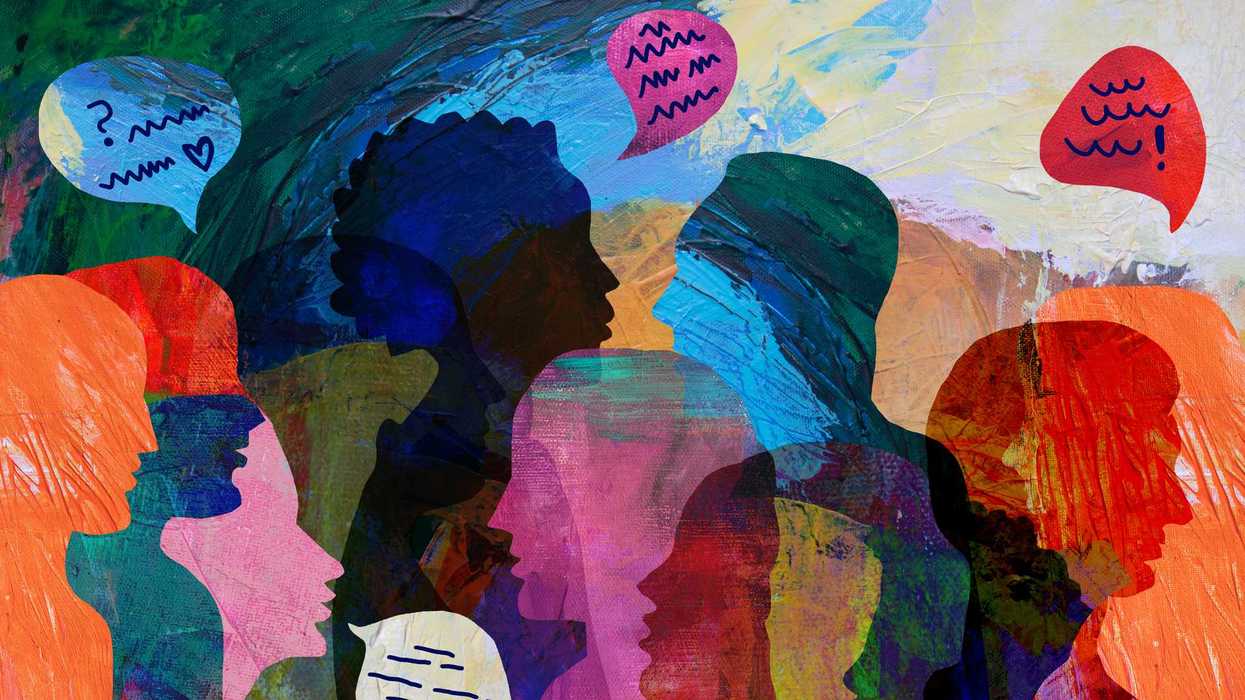

To speak of rhetoric today is to speak of a force that shapes our politics and our identities. The main argument is that the American experiment relies on words, not just to persuade, but also to build public life and connect citizens. This is not the first time the nation has faced a rhetorical crisis. Previous eras, such as the McCarthy period or the Civil Rights era, were also marked by battles over public speech, truth, and belonging. Just as then, this foundation faces serious challenges today. Public language is destabilizing, personality cults are growing, and democratic norms are eroding. As a result, speech now serves mostly to confront, not to understand.
Trump as an instructive figure matters. He matters not just for what he has said and done. He matters for what his rise reveals about our collective appetites: a desire to use sacred language and symbols for political ends. Invoking sacred language for political aims is not new. Yet, today's openness blurs boundaries between state power and religious authority. Public rallies now look like religious ceremonies. They feature hymns of allegiance and faith in a leader. The use of theological symbols in politics shows how spiritual longing and public confession sanctify power.
This dynamic is not just due to the leaders above. It rests on anxiety below. People fear that institutions are rigged and enemies are everywhere. Salvation is now something to seize, not await. The administrative state used to concern policy wonks. Now it is cast as a cosmic adversary or an ever-present villain. Each bureaucratic decision and each judicial ruling is seen through a lens of persecution and deliverance. These views turn complex realities into mythic stories. They push us to see only us or them, righteous or wicked.
Here, rhetoric takes its most insidious turn. Language stripped of nuance becomes a weapon, not a bridge. Talking about "enemies within" and "taking our country back" affects more than politics. These words echo ancient patterns of scapegoating, which often come before violence. The danger is not just excess in speech. It is the creation of a climate in which cruelty is justified, and dissent is betrayal. In this context, humane engagement is urgent, not optional.
Digital technology makes the challenge harder. Social media was once seen as democratizing. Now it is a source of outrage and affirmation. Algorithms curate our feeds. They do not reward careful reasoning or honest doubt. They reward vivid loyalty and contempt. Performance and participation blur together. The loudest voices drown out quieter wisdom. Conflict is a spectacle, often confused with civic life. The digital square was imagined as a new commons. Now it often feels more like an arena. Here, the stakes involve not just ideas, but identities.
Against this backdrop, rhetoric informed by theology is not abstract. It is a call for rehumanization. We are urged to treat each person with respect and to remember their vulnerability. At their best, theological traditions teach that truth is not the property of any one group. The work of theologians like Reinhold Niebuhr, Martin Luther King Jr., and Dietrich Bonhoeffer illustrates how prophetic speech questions the powerful and avoids self-righteousness. Niebuhr emphasized humility and the limits of certainty in public life, while King drew on the tradition of love and redemptive suffering as a critique of injustice. Bonhoeffer, resisting totalitarianism, called for truth-telling and repentance even when it was risky. True prophecy means truth-telling and repentance. It resists the pull of certainty.
This work is slow and often lonely. It demands counter-cultural habits. Practice patience when provoked. Be curious about those you distrust. Show a willingness to change. Resist tribal loyalty and moral superiority. Cultivate silence not as escape, but as preparation. Employ it for honest, generous speech that faces reality’s complexity.
These practices do not happen by accident. They are taught, learned, modeled, and copied. Leaders in government, media, and the pulpit must show the virtues they want to see. This means doing more than denouncing others’ excesses. It includes facing our own faults and admitting our part in damaging patterns. We must name the idols in our own camp. Civic and spiritual reconciliation start with humility. Admit you might be wrong. See that opponents might teach you. The world is more complex than our slogans.
None of this is glamorous. It rarely goes viral. It will not please those who want quick victories or clear defeats. Some argue that strong, even divisive, rhetoric is necessary to rally supporters, build solidarity, and energize movements. Particularly when urgent injustices seem to demand bold action and clear lines. There is truth in the power of language to mobilize, and a longing for clarity when the stakes feel high. Yet, history shows that when confrontation becomes the norm, it often deepens polarization, hardens identities, and risks justifying cruelty in the name of righteousness. Even in moments that call for urgent action, we must ask what kind of public life we are creating. Only by pursuing a rhetoric that honors truth and love can we build politics that endure beyond momentary victories. Reviving rhetoric is not a return to any golden age. It means forging new habits in speech and listening. These habits can support our differences without leading to enmity.
Persisting in this work is an act of hope. Hope that words can still heal. Hope that public life can show neighborliness instead of animosity. Hope that dignity exists in others, never erased by political difference. Such hope is not naive, I believe. It is a radical kind of realism. If we lose humble speech and listening, we lose more than democracy. We lose our common humanity.
Rev. Dr. F. Willis Johnson is a spiritual entrepreneur, author, scholar-practioner whose leadership and strategies around social and racial justice issues are nationally recognized and applied.











The President Invited Iran to Bomb My Home