


Libraries spark joy, sometimes in surprising ways.
As the director of the top-ranked MSLIS program in the United States, I have a news alert set up for “libraries,” and every day I learn about some surprising, deeply needed effort that libraries are doing for their communities.
In spite of this, all 17,000 libraries in this country are under attack by the federal government.
April 19-25 is National Library Week, an annual event sponsored by the American Library Association to celebrate and promote that libraries are reaching out to the communities they serve to encourage their members to “explore and discover what sparks joy in them at the library.” The ALA reports that people visit libraries more than 800 million times a year.
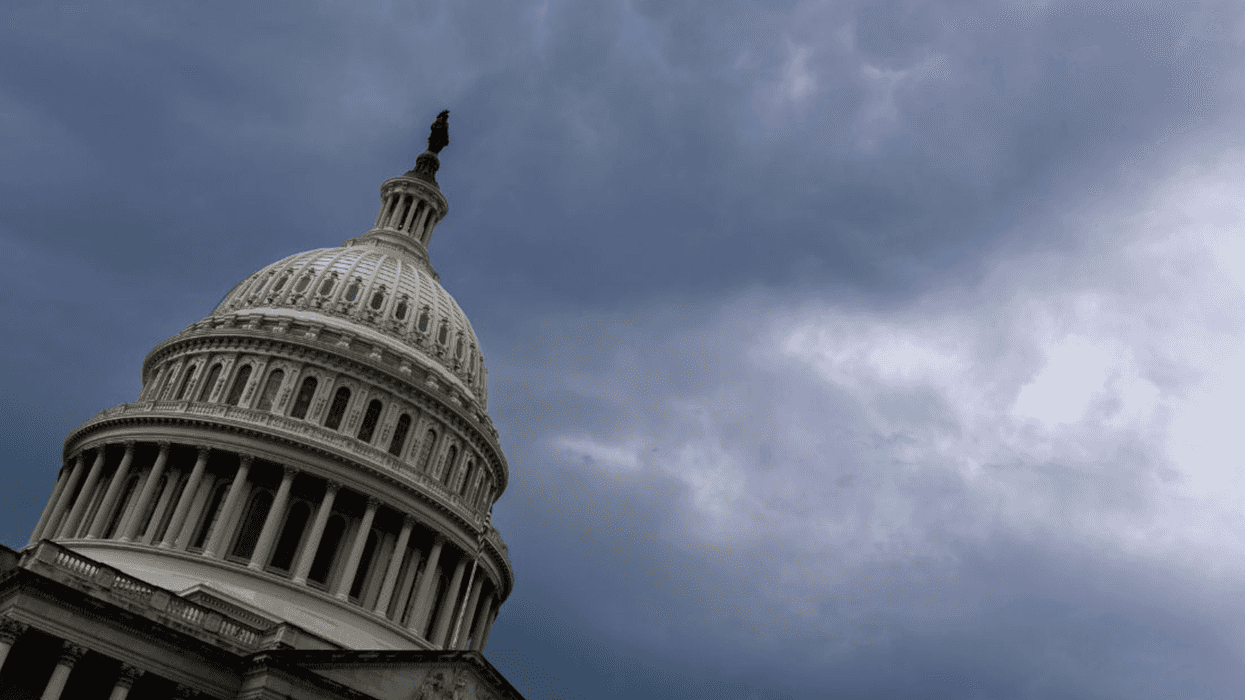
And yet, President Donald Trump says he does not believe in building libraries or museums. Last year, Trump issued an Executive Order intended to dismantle the only federal agency dedicated to funding library services, the Institute of Museum and Library Services.
Through an ensuing year-long battle waged by state attorneys general and library advocacy organizations, the closure of IMLS was staved off and then rescinded. Recently, the Trump administration withdrew its appeal of the reinstatement. Libraries won. For now. The Trump administration's proposed FY 2027 budget, released in April 2026, once again allocates no funds to IMLS.
Threats aren’t just to funding.
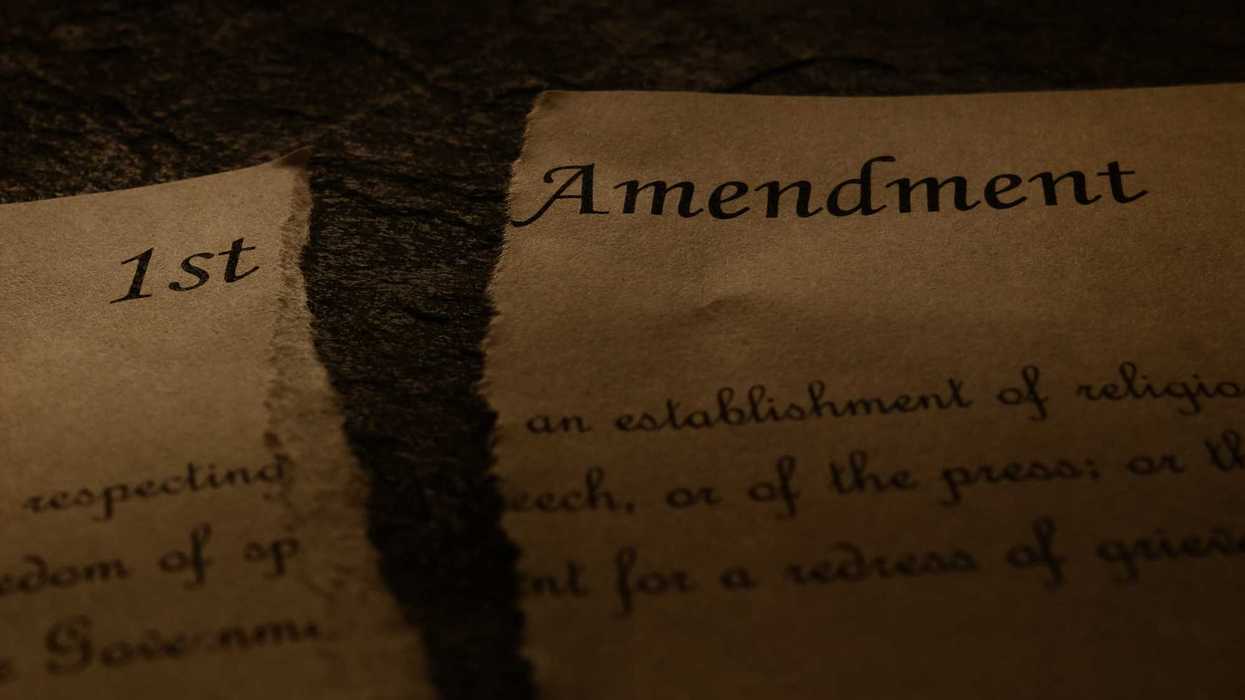
The core work of libraries in promoting and supporting intellectual freedom and access to information is also under government threat.
House Bill 7661, “The Stop the Sexualization of Children Act,” now making its way through committee in Congress, is intended “to amend the Elementary and Secondary Education Act of 1965 to prohibit the use of funds provided under such Act to develop, implement, facilitate, host, or promote any program or activity for, or to provide or promote literature or other materials to, children under the age of 18 that includes sexually oriented material, and for other purposes.” Providing literature is, after all, the core work of school libraries.
The bill reports that sexually oriented material “exposes . . . children to nude adults, individuals who are stripping, or lewd or lascivious dancing.” It then details exceptions, such as classic works of art and literature, as well as texts of major world religions. It concludes with what may be the heart of the matter, underscoring that sexually oriented material includes any material that “(ii) involves gender dysphoria or transgenderism.”
Of course, people know libraries are places to get books. Most people know they can also get help finding information. People are less aware that they can go to the library for a trowel or hoe, or to join a poetry reading or a cookbook club where they can share recipes, experience, and sometimes a dish or two while they learn about historical food traditions.
People do love their libraries. And they love their librarians.
People get married in libraries. From toddler story times to help in elementary school classrooms, to a place for the bridal altar or tax help for seniors, libraries offer something for all ages.
The Dartmouth Public Library in Massachusetts is one of many that hosts a seed exchange library, promoting food security and environmental sustainability.
The Johnson County Public Libraries in Kansas provide a program called “Justice Involved” that supports individuals who are currently or previously involved in the justice system, as well as a program for Language Learners.
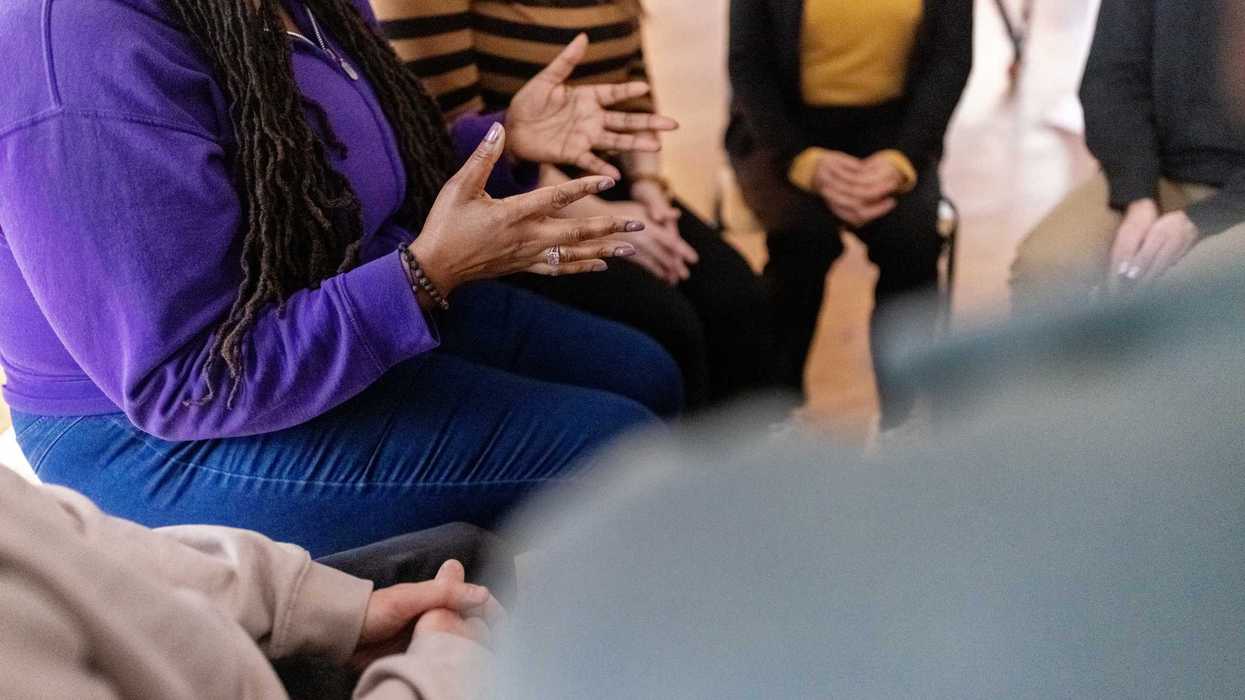
In Illinois, the Bellwood Public Library hosts a Banned Book Club, encouraging its community to read and engage in constructive dialogue about controversial books.
School Librarians support young learners, helping them achieve higher literacy rates than students who attend schools that do not have a librarian.
For many years, libraries distributed tax forms with a “tax forms, not tax advice” warning. Many now offer help in navigating the IRS site, or host verified IRS volunteers who help people complete their tax forms. It’s a good use for library space when that space isn’t being used for things like adaptive Tai Chi classes intended for people with limited mobility.
If you want to go to a library to borrow a clam rake, or to do some yoga or have access to resources that might help you or your child understand questions you have about sexual identity, it’s time to speak up for libraries.
Despite all the ways in which libraries serve their communities, some Congressional leaders express that they are skeptical that libraries deserve our respect or funding. Policymakers need to acknowledge, fund and speak up for libraries and the work that they do.
Any consideration of HR 7761 is unacceptable. Especially during National Library Week, it is crucial to support the right to read and the library workers who help anyone read. That is how joy arrives.
Maria Bonn is an associate professor of Information Science at the University of Illinois Urbana-Champaign, where she directs the masters of science in library and information science degree program. She is a Public Voices Fellow of The OpEd Project.

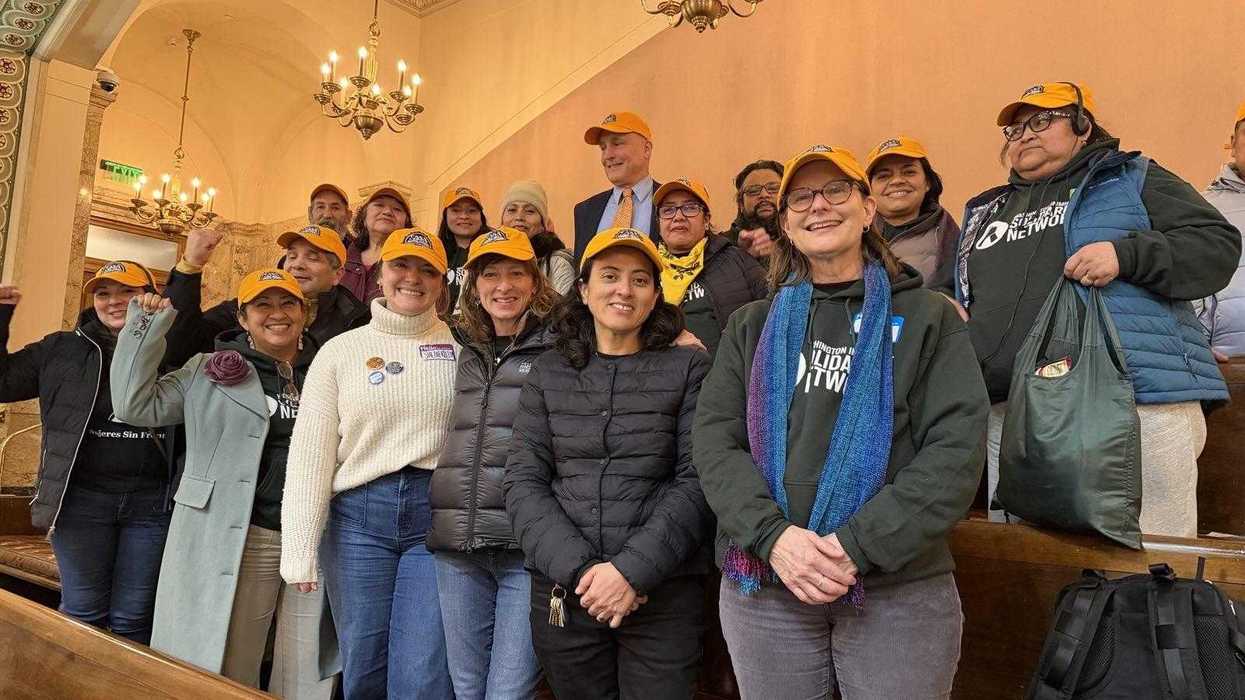
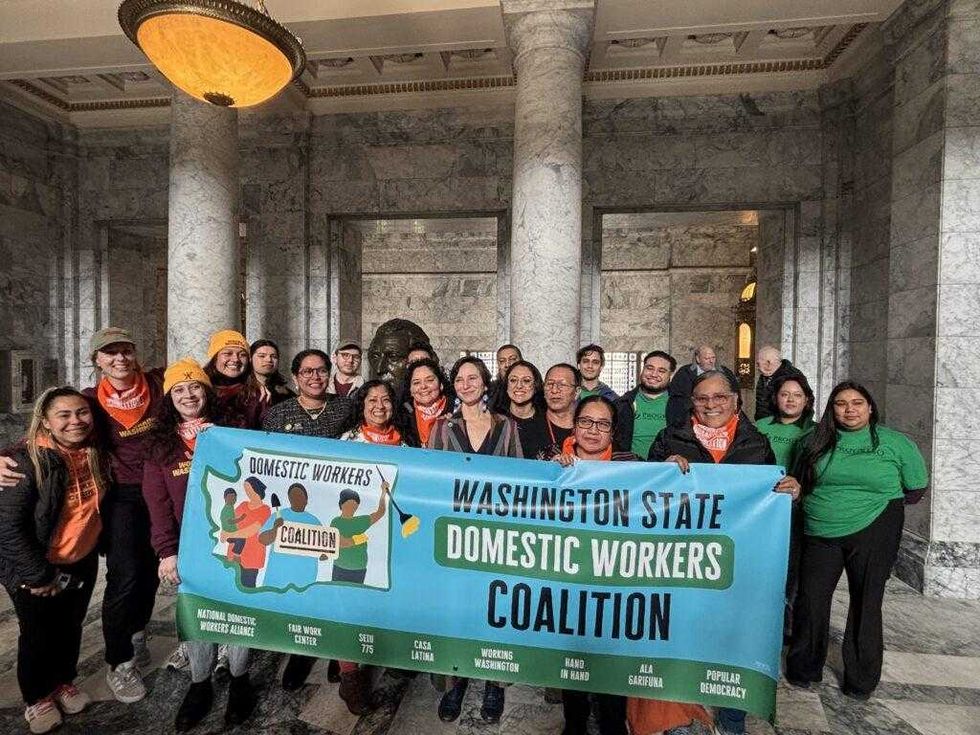 State Sen. Rebecca Saldaña, center, stands with members of the Washington State Domestic Workers Coalition at the state Capitol on Feb. 28, 2026. The Domestic Workers Bill of Rights passed in the House that day, before being signed into law in March. (Photo courtesy of Casa Latina)