



Rep. Cherfilus-McCormick (D-FL20) has been charged by the federal government with “stealing federal disaster funds, laundering the proceeds, and using the money to support her 2021 congressional campaign.” The House Ethics Committee additionally is investigating her for incorrectly filing financial disclosures, accepting voluntary services for work that should have been paid, and of using her position to direct community project funding requests.
It all started with two extra zeros. Cherfilus-McCormick’s family business Trinity Health Care billed the state of Florida for $50,578.50 but mistakenly received $5,057,850.00. Rather than return the overpayment, she and other family members seem to have used most of that overpayment to fund her election campaign. She is also accused of setting up straw donor systems and filing false 2021 tax returns.
The House Committee on Ethics’s Statement of Alleged Violations runs 59 pages long, but is summarized in this Ethics Committee slide (apologies that the text is not very legible here):

Investigations Timeline
2023: The Office of Congressional Conduct (OCC), a separate group from the House Committee on Ethics, forwarded to the Ethics Committee in September 2023 a report in which the OCC had concluded there was substantial reason to investigate Cherfilus-McCormick for accepting voluntary work that should have been paid and routing funds to a state political action committee, both violations of House rules. In November and December 2023, Ethics announced the existence of an investigation and the creation of an Investigatory Subcommittee.
2024: The Ethics Committee expanded its investigation to include new allegations in a 2024 OCC report. This report alleged that Cherfilus-McCormick may have accepted campaign contributions in exchange for community project funding (aka earmarks), may have misreported campaign contributions and may have tried to direct earmarks to for-profit companies. All are violations of House rules and probably also criminal violations.
2025: The Ethics Committee continued its investigation. In November, the Department of Justice indicted Cherfilus-McCormick for having kept, and used in campaigns, the $5 million dollar overpayment to her family company as well as for setting up straw donors and filing false tax returns.
2026: The Ethics Committee announced the creation of an Adjudicatory Committee to assess the Investigative Subcommittee’s formal Statement of Alleged Violations and in March held an Adjudicatory Hearing (part 1 and part 2). The Adjudicatory Committee voted to sustain all but one of the statements of alleged violations.
On Tuesday, April 21, the Ethics Committee is expected to decide on what kind of discipline Cherfilus-McCormick should face. She might only be censured, but there’s a good chance that the Ethics Committee will recommend expulsion. (Some legislators are also seeking the expulsion of three other legislators. More on that below.)
What Were the Issues Argued at the Hearing?
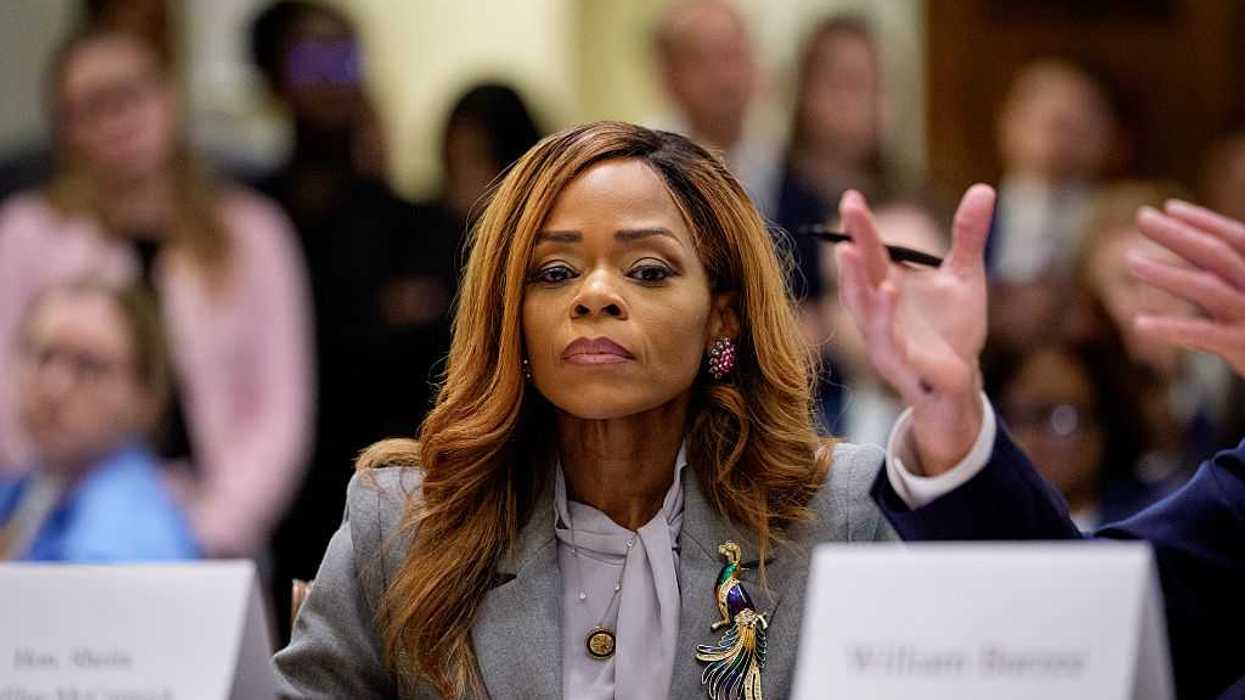
Cherfilus-McCormick’s attorney, William Barzee, argued that having this hearing at all, but especially in public, would harm Cherfilus-McCormick’s constitutional right to a fair trial (coming up probably this summer) by prejudicing potential jurors and harming her Fifth Amendment right against self-incrimination. Were the committee to find that Cherfilus-McCormick had committed the violations described above, the use of “guilty” to describe the outcome would be especially problematic in advance of the trial, he argued.
Committee staff argued that because a) only the House can enforce its own rules and b) they have different standards of proof, c) the sanctions, at most, will mean expulsion from Congress and no loss of personal freedom via incarceration and d) they’ve been investigating since 2023, they will not harm her rights with respect to the criminal case.
While many elements do overlap, just because Chefilus-McCormick is found to have violated House rules on campaign contributions, say, by using that $5 million dollar overpayment, that doesn’t mean a jury would agree given standards of evidence in criminal cases. Further, for allegations that don’t overlap, such as failure to properly disclose finances and a lack of candor, there is no other venue to sanction her.
Barzee also argued that Cherfilus-McCormick, by virtue of how Trinity Health Care was structured, was entitled to whatever profits the company made, even if the profit was a mistake. We found this argument bizarre.
What Happens Next?
Since Friday April 10, things have gotten a bit more complicated. There have been ongoing complaints among House members about the lack of action in Ethics Committee investigations of Rep. Gonzales (R-TX23) and Rep. Mills (R-FL7), both accused of sexual harassment as well as other House rules violations. Then on Friday, several women went public with allegations of sexual harassment and rape by Rep. Swalwell (D-CA14).
On Monday April 13, both Reps. Swalwell and Gonzales announced they would be leaving Congress, although neither indicated when and as of this writing, no official resignations have been submitted. Because Swalwell is a Democrat and Gonzales a Republican, their resignations, if simultaneous, will have no effect on the margins needed for Republicans to pass legislation. In the meanwhile, all four are facing potential expulsion.
Rep. Cherfilus-McCormick Faces Expulsion Over Pocketing Overpayment was originally published by GovTrack and is republished with permission.