
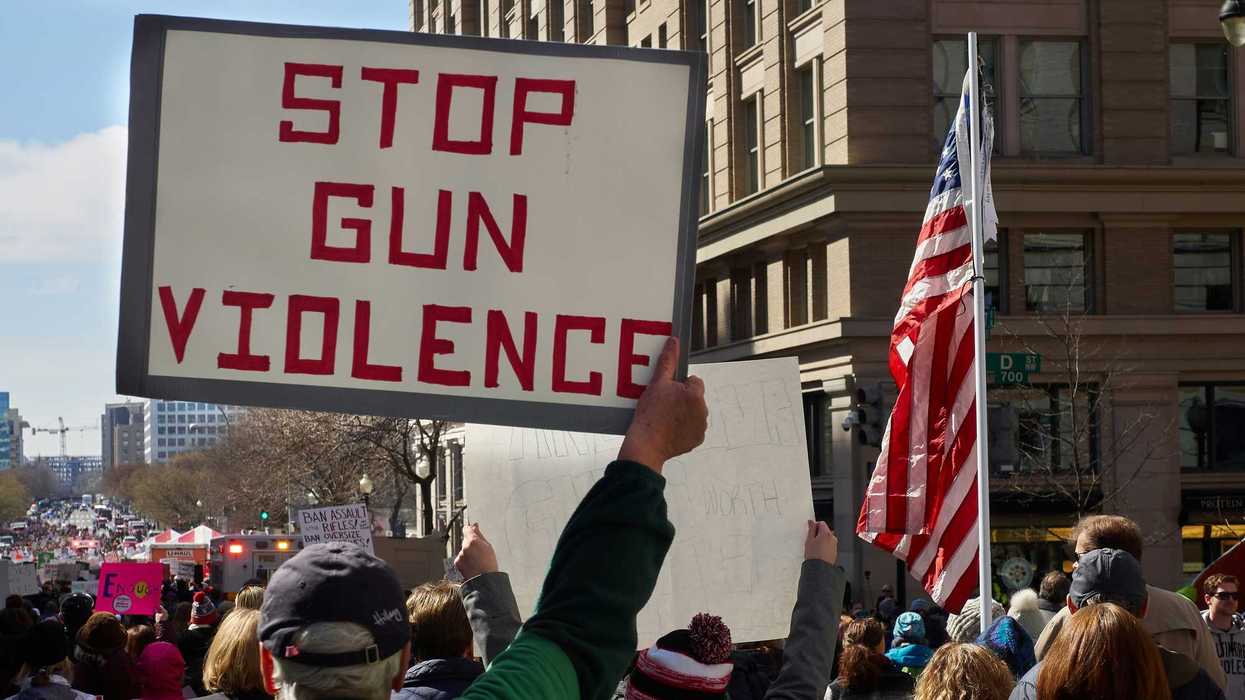
When an active shooter threat disrupted the White House Correspondents’ Dinner, the president and members of his cabinet were evacuated swiftly and efficiently. The threat ended with a shooter apprehended and a Truth Social post. Then President Trump returned to the podium, bypassing the persistence of gun violence in this country to make the case for his long-sought $400 million White House ballroom, one that would supposedly prevent criminals from entering the space. The solution to a potential mass killing was a bulletproof ballroom.
I was an elementary student when Columbine made school shootings a national emergency. The safe haven of school became a potential war zone overnight, and the fear that settled into children that year never fully left. But how could it? The Sandy Hook Elementary School shooting happened when I was a new high school teacher. Parkland when I was a doctoral student. Uvalde during my first faculty position. The shooting at Brown University happened during my fifteenth year working in education. Gun violence has followed me the entire length of my educational career, from K-12 student to high school teacher to university professor. Nearly three decades later, I am still waiting for the final straw, the moment that produces gun reform and makes school feel safe again. Instead, I have more thoughts and prayers than ever, and no gun reform in sight.
What struck me watching footage from the Correspondents’ Dinner wasn’t the chaos, but the normalcy within it. In the videos, I heard the clinks and clanks of wait staff collecting plates while journalists knelt on the floor. The familiar sound of dinner being cleared became the soundtrack for cowering humans. Attendees drifted toward the floor as if unsure whether to be alarmed, as if violence was something that happened to other people, in other rooms. Those sounds and slow movements told me everything I needed to know: the people in that room had no idea what to do.
And I knew that because I’ve spent years learning exactly what to do in those situations. Active shooter drills are now standard in schools across the country, with approximately 92% of schools drilling students and teachers on lockdown procedures. We learn to lock and barricade classroom doors. We learn to cut the lights and stay still so the shooter believes the room is empty. We learn to jump out of windows and fight back against an attacker by throwing objects. We learn to play dead in order to live. We learn that silence is survival and that even when violence surrounds us, we should not make a sound.
Part of that training is also making sure no one is left without information. Every drill I’ve been a part of has a formal or informal alert system to ensure everyone stays informed about what’s happening. Even the Department of Education recommends planning how “the school community will be notified that there is an active shooter on school grounds” through “the use of familiar terms, sounds, lights, and electronic communications such as text messages.” In a K-12 classroom, no one gets left without direction. We learn together, we shelter together, we survive together.
The drills, alongside metal detectors and clear backpack policies, are Band-Aids on a wound that policy could have closed long ago. We know what to do because we have spent decades trying and failing to do it. After San Bernardino, after Pulse, after Sutherland Springs, and after Las Vegas, numerous policy proposals existed: background checks at gun shows; bans on bump stocks; laws preventing domestic abusers from purchasing firearms. Some never made it out of committee, and others were defeated along party lines. But the knowledge of what to do has never been the problem. It’s the will to change that eludes us.
We have to want to protect children more than gun rights. We have to want to redirect the urgency and funding that would build a $400 million ballroom toward making schools safe. We have to want reform over platitudes.
But right now, even if our leadership openly states that they want safety and the protection of young people, their actions prove otherwise. President Trump had a microphone, a shaken room, and a country watching. He could have discussed how easily the shooter entered that space and shared how that same ease exists at the doors of our schools every day. He could have called for policy reform rather than a ballroom renovation. He could have praised the bipartisan unity in that room and asked us to unify in our goal to end gun violence. That didn’t happen this time. But I have to hold onto hope that one day, we’ll care enough to protect children as much as we protect the spaces where the powerful gather—that we’ll stop building ballrooms and start building policy.
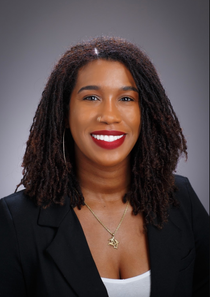
Stephanie Toliver is a Public Voices Fellow and a member of the OpEd Alumni Project sponsored by the University of Illinois.