




Across the country, adults are wringing their hands about young people’s civic disengagement. We worry about declining trust in democratic institutions, rising attraction to political strongmen, and a growing willingness to excuse—or even encourage—leaders to bend constitutional norms in the name of “getting things done.”
But before we indict a generation, we should ask a harder question: When, exactly, did we expect young people to learn how our system works—and what role they have to play?
For many students, the honest answer is: not until it was already too late.
In most American schools, social studies (which includes civics) education does not meaningfully begin until middle or high school. By that point, students are suddenly expected to care deeply about institutions they barely understand, participate in systems they have never seen themselves reflected in, and defend democratic norms they were never given time to practice. The result should not surprise us.
We are living with a civic deficit—and we created it by delaying civic learning until adolescence.
Research has been clear for decades: elementary social studies has been systematically marginalized in favor of tested subjects like math and ELA (Fitchett et al. 2014, VanFossen 2005). National studies consistently show that students in grades K–6 receive as little as 28 minutes per day of social studies instruction (some have shown as little as nine to twelve)—when they receive it at all (Tyner & Kabourek, 2021). In many classrooms, weeks go by without any sustained attention to history, civics, or geography.
This is not because educators believe social studies lacks value. Quite the opposite. Teachers regularly report that civic learning helps students build background knowledge, strengthen literacy, and make sense of the world around them (Tyner & Kabourek, 2021). The problem is structural. When accountability systems assess math and reading every year—but not social studies—schools respond rationally. Instruction follows incentives.
In New York State, this pattern is especially visible. Social studies is the only core subject not assessed at any point during the elementary grades. Math and ELA are tested annually in grades 3–8. Science is assessed in grades 5 and 8. Social studies? Nothing until high school.
That absence matters. Decades of research show that when a subject carries no accountability weight, it is the first to lose instructional time (VanFossen 2005). The message—intended or not—is clear: this content is optional. One elementary teacher I have worked with described it best: “Social studies is the first thing to go.”
And yet, by high school, we suddenly expect students to demonstrate civic competence. In my own state, I am proud that we have New York’s Seal of Civic Readiness, a promising and thoughtful initiative that recognizes civic knowledge, engagement, and action. But there’s a catch: students cannot begin earning points toward the seal until seventh grade.
By then, many students have already formed durable beliefs about school, society, and their own place within it (Hutchins, 2024). If they have spent their elementary years focused almost exclusively on test preparation—without sustained opportunities to study history, examine democratic ideals, or explore how ordinary people shape public life—why would we expect them to suddenly feel connected to civic institutions later on?
This delay has consequences.
When young people express distrust in government, search for political meaning outside democratic structures, or flirt with anti-democratic solutions, it is tempting to view this as a cultural or moral failing. But civic identity does not emerge on command. It develops gradually through repeated exposure to ideas such as shared responsibility, constitutional limits, pluralism, and collective decision-making.
Those habits take time—and elementary school is precisely when that time should begin.
Importantly, this is not an argument for turning second graders into miniature political analysts or flooding classrooms with partisan debates. It is an argument for age-appropriate civic learning that helps students see themselves as members of a community with rules, histories, disagreements, and responsibilities.
Well-designed elementary social studies does exactly that. Research shows that young children are capable of grappling with historical questions, examining evidence, discussing fairness, considering what freedom means to them, and understanding how their decisions affect others. When instruction is intentional and inquiry-driven, students build both knowledge and confidence. They learn that representative government is not something handed down from on high—it is something people participate in. These shifts can also occur beyond social studies time as well. Educators can consider how civic instruction can also fit into ELA time, which primarily focuses on skills-based instruction, and school leaders can consider other avenues, such as recess or other school-wide initiatives.
There is also a powerful equity dimension here. Students from historically marginalized communities are often the most affected by the absence of early civic learning. When curricula fail to reflect diverse experiences or connect civic concepts to students’ lived realities, disengagement deepens. Delaying civic instruction only widens these gaps (Gaby, 2016).
One concrete step in my home state of New York would be to expand the Seal of Civic Readiness so students can begin earning points at the elementary level. This would not require high-stakes testing or punitive accountability. Instead, it would signal that civic learning matters early and often. Schools could document age-appropriate civic projects, inquiry-based units, or community connections that align with the seal’s existing framework. The current New York State Social Studies Framework allows for excellent opportunities in this regard in both second and fourth grade.
Such a shift would do more than recognize student achievement. It would change instructional behavior. When districts know civic learning is valued—and visible—they are far more likely to protect time for social studies in the elementary schedule.
If we want young people to trust democratic systems, we must give them time to understand them. If we want them to operate within constitutional frameworks, we must introduce those frameworks before frustration and alienation take root. And if we want civic participation to feel meaningful, students must first see themselves as part of the story.
Democracy is not learned all at once, and it cannot be backloaded into adolescence. By starting civic education earlier, we are not asking too much of children. We are finally giving them a fair chance.
Nicholas D'Amuro is a Coordinator of School Improvement at Genesee Valley BOCES, supporting curriculum development and professional learning. In 2024, he co-founded the Civi Coalition & Awards, a statewide initiative dedicated to civic education and bridging divides. He also serves as a sector ambassador for the Listen First Project & is a former town councilman.







 Scenes from Favela Rocinha, Brazil - (R-L) Rows of brick homes, Hugo Balta on a motorcycle taxi, and steep, winding roadsHugo Balta
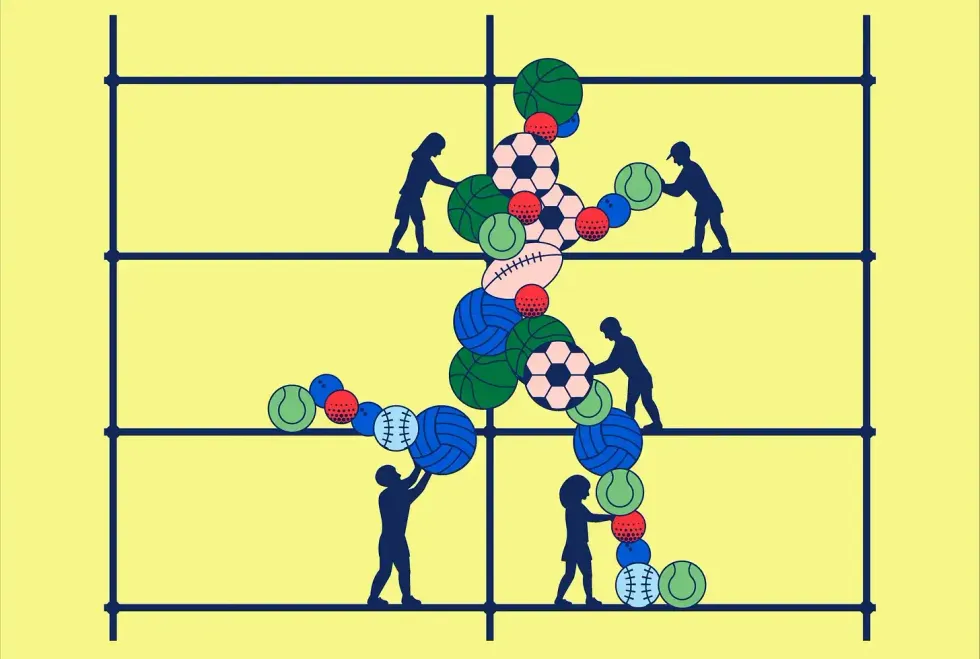 Following our HWF Civic Futures kickoff last week with Eric Liu, our design partners at Public/Official have created a unique visual to capture the “civic scaffolding” spirit of this conversation.
 Lisa, Coaches Rev and Matt Elkin, and former Stanford Men’s Basketball star Maxime Raynaud at Stanford’s “All Vote No Play” Democracy Day, 2025