




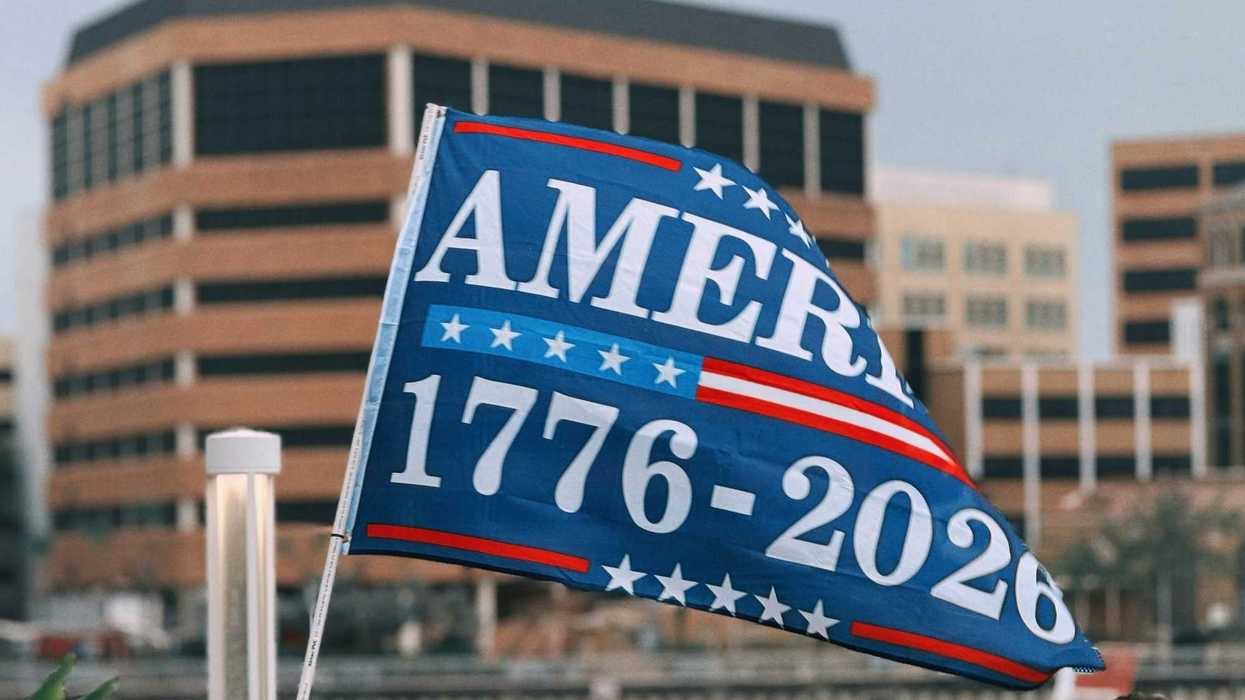
I know so many people are approaching America’s 250th anniversary with a sense of trepidation, even dread. Is there really anything to celebrate given the recent chaos and uncertainty we’ve been experiencing? Is productively reckoning with our history a possibility these days? And how hopeful will we allow ourselves to be about the future of the nation, its ideals, and our sense of belonging to something larger than ourselves?
Amid the chaos and uncertainty of 2026, I find myself returning to the words of the writer and civil rights activist James Baldwin. Just as things looked darkest to Baldwin amid the struggle for civil rights, he refused to give up or submit or wallow in despair.
Instead, he wrote: “Not everything is lost. Responsibility cannot be lost; it can only be abdicated. If one refuses abdication, one begins again.”
This is the task before us today. To “begin again”—as individuals, as communities, as a nation. Today, we must begin the next 250 years. The good news is that people across our country are open, willing—and ready.
As I’ve crisscrossed our nation the past two years on a series of civic campaigns, I have witnessed a growing energy and hunger among Americans to rally around a new moral vision for our communities and society. This new moral vision includes:
- Reckoning honestly with our past while celebrating what makes Americans good and strong.
- Putting people—and a shared sense of humanity—at the center of everything we do.
- Establishing dignity and decency as foundational to a shared society.
- Focusing on our shared aspirations for connection, belonging, and mutual reciprocity.
- Coming together to take action on a set of shared concerns and issues that people are ready to work on together—like education and youth opportunities, senior care, affordable housing, mental health, and others.
- Restoring belief in ourselves and in our nation, and a practical path for doing so.
- Living a new patriotism.
- Starting locally.
The loudest voices would have us believe such a vision doesn’t exist and won’t anytime soon. They seek to win for their side at any cost. Even people of goodwill say a new moral vision is just a utopian idea, given the state of the country. But neither division nor despair will enable us to seize the next 250 years, or even make tomorrow better.
What’s more, this new moral vision is rooted in reality. Indeed, it emerged from my deep engagement with Americans over many years—across all types of communities and all political persuasions. I am convinced it holds the power to galvanize enough of us to “begin again.” It can help us engender a sense of belief that we can get things done together. And it offers us the opportunity to make pragmatic down payments toward moving this country forward.
Numerous communities are already rallying around this vision and making it real, including some you may least expect. Take Union and Logan Counties in Ohio. They’re in Jim Jordan’s congressional district, the co-founder of the House Freedom Caucus.
In each community, leaders and residents have come together over the past two years to create deep, lasting change on youth opportunities, senior care, homelessness, healthcare, and other issues. Importantly, they are working in ways that revive the civic culture of these communities by engaging people authentically, getting leaders and organizations to work together in new ways, creating stronger norms of interaction, establishing a stronger sense of shared purpose, and ultimately taking action on what matters to people.
Their efforts bring people together across political parties, race and ethnicity, socioeconomic status, and other identity markers that so often drive us apart.
This new moral vision is also being brought about in Alamance County, NC, likely the most divided place I have worked with in 40 years. And it is coming alive in Reading, PA, about a decade ago, declared the poorest community in America, which was once predominantly White and is now 70% Latino.
All across these United States, people are choosing hope over despair, healing over trauma, and progress over division. People are finding ways to reckon with our history while celebrating what makes America good.
We need to build on this by rallying more Americans to a new moral vision that helps us “begin again.” In doing so, we can forge a more promising start to our next 250 years.
Rich Harwood is the president and founder of The Harwood Institute.







The President Invited Iran to Bomb My Home