




Along with schmaltzy movies and unbounded commercialism, the holiday season brings something deeply meaningful: the holiday spirit. Central to this spirit is being charitable and kinder toward others. It is putting the Golden Rule—treating others as we ourselves wish to be treated—into practice.
Unfortunately, mounting evidence shows that while people believe the Golden Rule may apply in our private lives, they are pessimistic that it can have a positive impact in the “real” world filled with serious and divisive issues, political or otherwise. The vast majority of Americans believe that our political system cannot overcome current divisions to solve national problems. They seem to believe that we are doomed to fight rather than find ways to work together. Among young people, the pessimism is even more dire.
The good news is, we don’t need a Christmas miracle to make things better. We know from experience that Americans can overcome deep division: it is indeed possible to work across differences in a way that fosters respect and positive relationships and achieves remarkable results in the process.
For over two decades, we have successfully addressed critical issues at the national, state, and local levels through what we and others call “collaborative problem-solving.” We’ve found that so long as people agree there is a problem to solve, they can work together productively. Even people who assume they are inalterably opposed can find ways to build durable solutions and, in many instances, surprising friendships.
For example, in 2012, the Convergence Center for Policy Resolution convened a few dozen deeply divided leaders on K-12 education and engaged them in a collaborative problem-solving project. One participant, Gisele Huff, then head of the conservative Jaquelin Hume Foundation, was a strong critic of teachers’ unions and an advocate for school choice. She said she joined the project mainly to counteract union views and “had no illusions about the work product being anything worthwhile.
When they engaged in the collaborative problem-solving process, Gisele and the union representatives were surprised to see that they agreed on a lot. Gaps remained, and still remain, on issues like school choice. But they also found that when they focused on a common problem rather than defeating each other’s agendas, and broadened their perspectives, they were able to find enough common ground to form a more creative and compelling vision for the future of K-12 education than any party had before they met.
In this process, Gisele formed a positive relationship with her former adversary, Becky Pringle, now president of the National Education Association, the nation’s largest teachers’ union. They have supported each other through family challenges and even did something previously regarded as unthinkable: they went on a joint speaking engagement to spread the gospel of “learner-centered education.”
The collaboration was so successful that in 2015, a wide array of participating groups formed a new organization called Education Reimagined. Since then, the organization has been successfully moving its vision into action through grassroots efforts across the country.
The example of Gisele and Becky is one of many similar stories. If philosophical adversaries like them can generate and work to implement shared solutions, there is no reason why others—in government at all levels, businesses, nonprofits, academia, religious institutions, community groups, and more—cannot do the same.
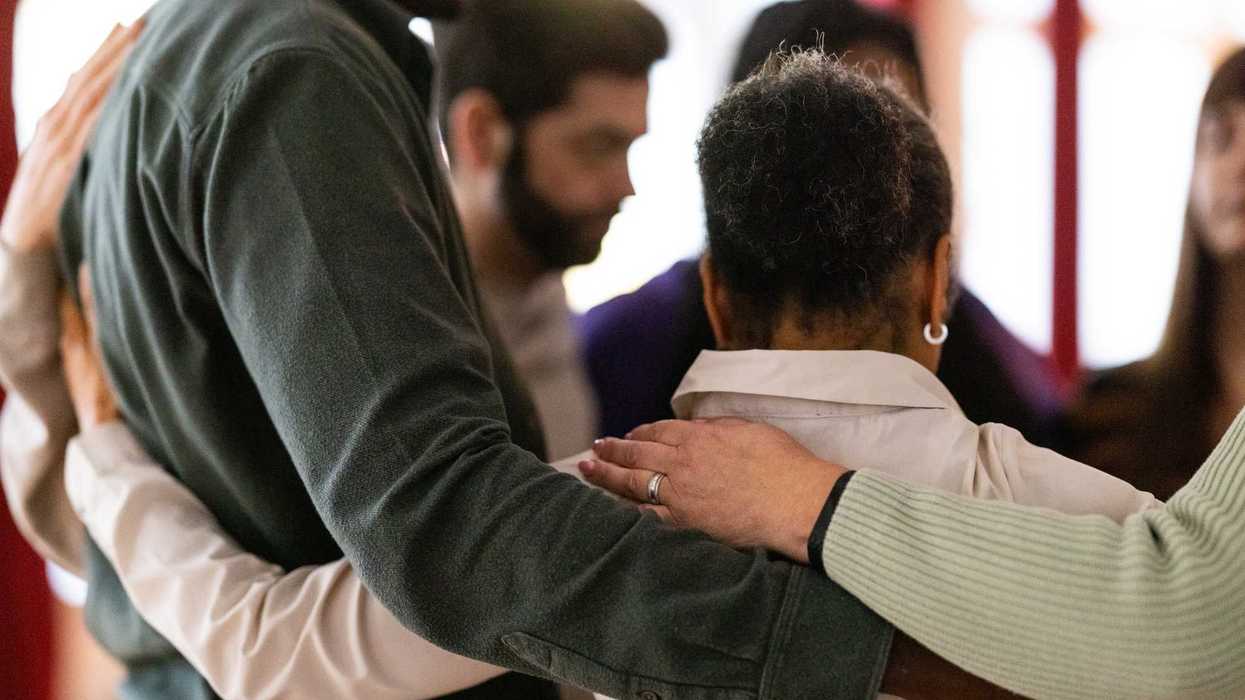
The starting point for success lies in cultivating a “collaborative mindset.” Aspects of this include: seeing that conflict can be constructive and can push thinking to a higher level; giving others the benefit of the doubt rather than making premature assumptions; cultivating a practice of genuine curiosity to really understand each other; believing that win-win solutions are possible; and entertaining the idea that no one person, perspective or ideology has all the answers and that better solutions are likely to emerge by integrating collective wisdom. People who practice this mindset, or at least stay open to it, are more likely to have success employing the key steps entailed in any collaborative problem-solving effort.
There is no reason why most people cannot try these methods in a surprisingly wide array of circumstances. With good faith and honesty, this approach can help solve tough problems far more effectively and amicably than most would ever imagine.
We know we can do better as a nation. This mindset and simple steps hold exciting potential to help foster a cultural shift toward a deeply held aspiration of the season: to bring the “holiday spirit” into our private and public lives.
Mariah Levison is the organization’s current CEO. They are co-authors of From Conflict to Convergence: Coming Together to Solve Tough Problems












The President Invited Iran to Bomb My Home