
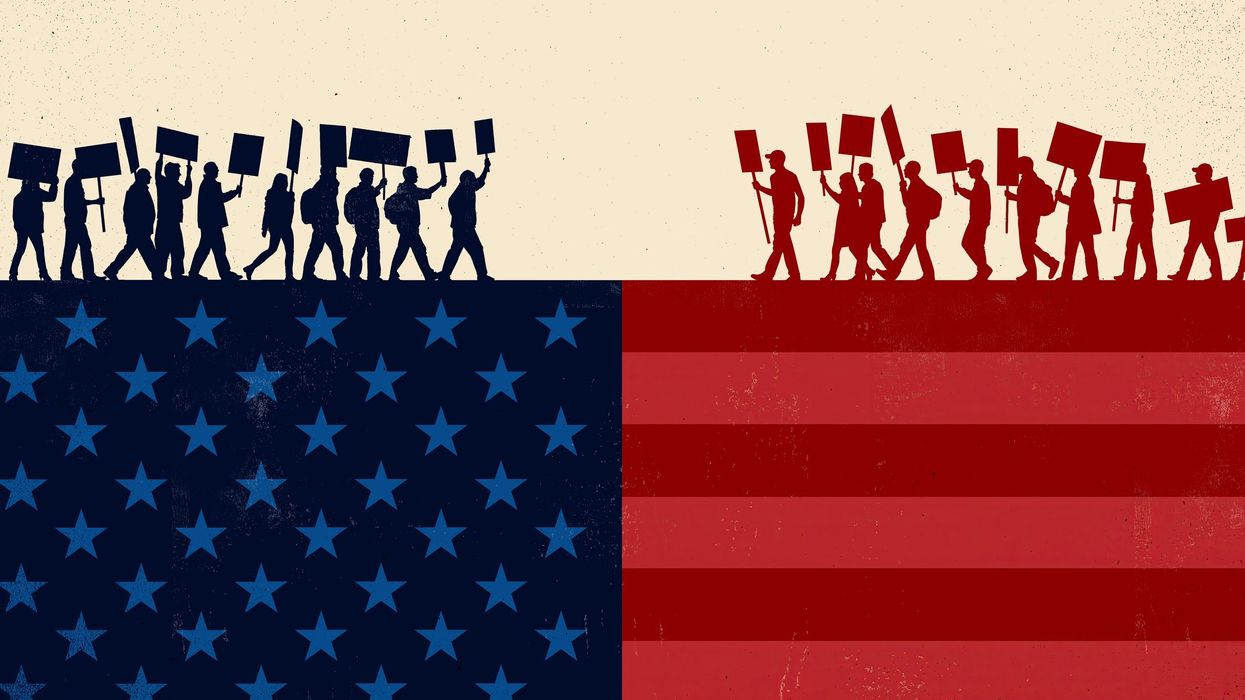

Roughly 43% of U.S. adults identify themselves as politically independent. However, according to Gallup polling, only 7-12% of Americans are considered “truly” independent, meaning they do not lean toward either the Democratic or Republican Party.
This small group of genuine independent voters is most likely the ones who see issues from both sides, such as the Hunter Biden-Ukraine business dealings versus the Trump family business conflict situation.
Let’s explore the selective outrage and partisan hypocrisy that have been going on since 2014 and the ensuing partisan divide.
Hunter Biden and Ukraine
Hunter Biden joined the board of the Ukrainian energy company Burisma in 2014 while his father, Joe Biden, was vice president. Hunter was deeply involved in Ukraine policymaking, which created the appearance of a conflict.
Republicans built a narrative that Hunter’s role represented deep corruption and influence peddling by the Biden family. However, America’s policy toward Ukraine never changed.
A GOP-led Senate investigation concluded only that Hunter’s position was problematic and awkward for U.S. anti-corruption efforts.
Trump family business conflicts
During Donald Trump’s 2017-2021 presidency, he retained ownership of his global business empire, which allowed numerous conflicts of interest to arise among eight Trump-branded hotels/resorts, 15 golf courses, and around 30 licensing deals (CIO Times). That business ownership still prevails in Trump 2.0.
Ethics watchdogs tracked government and lobbyists' spending at Trump properties during his first presidency, foreign trademarks granted to Trump companies, and ongoing or renewed business ventures in the Middle East, raising serious questions about foreign leverage over U.S. policy.
A lawsuit filed by 29 Senators and 186 House Democrats alleged Mr. Trump violated the Constitution’s emoluments clause.
Key differences at a glance
Hunter Biden held no American government office and served on a private board at one foreign company. Formal GOP-led investigations found the situation was only problematic, and the GOP’s intensity of criticism included impeachment rhetoric against his father.
Donald Trump was president, and his children were senior advisers and had ongoing control over global branding, real estate, and licensing. Ethics groups warned of pervasive, structural conflicts that touched on many policy areas. Republicans have not criticized Mr. Trump about violating the emoluments clause during either Trump 1.0 or 2.0 presidencies.
The truly independent registered voters can easily see that Hunter Biden’s case dealt with criminal charges, while Mr. Trump and his family business issues centered on ethics and constitutional questions and concerns.
Hunter Biden’s criminal case
Hunter Biden was convicted in federal court on three felony gun charges for lying about his drug use on a 2018 firearm purchase form. He also pleaded guilty to nine federal tax charges in September 2024. However, Hunter received a full presidential pardon from his father, President Joe Biden, which spared Hunter from sentencing and potential prison time.
President Biden’s pardon of his son was highly controversial and one of 80 full clemency pardons issued during his 2021-2025 term of office. Mr. Trump issued 144 full clemency pardons during his 2017-2021 presidency, and over 1,500 pardons have occurred since Jan. 20 (Al Jazeera).
Hunter’s case deals with straightforward criminal statutes of a personal nature rather than an alleged abuse of public office.
Donald Trump and the Trump family's constitutional and ethics issues
Donald Trump’s situation is legally distinct, with lawsuits and watchdog reports focusing on whether he violated the emoluments clause by continuing to own businesses that received $160 million from foreign and domestic government clients. At the same time, he was president (CREW). On Jan. 25, 2021, the Supreme Court identified the emolument lawsuits as moot because Trump was no longer president.
Trump’s children and in-laws held formal government roles in Trump 1.0 and in Trump’s 2.0 administration, all the while maintaining or pursuing foreign business interests. This has prompted legal and ethics complaints about conflicts and potential violations of anti-nepotism norms. Mr. Trump has argued that conflict-of-interest rules do not apply to him as president.
Americans may not know that 577 legal challenges to Trump administration actions have already been filed in the 330 days of Trump 2.0. With 1,131 days of Trump 2.0 to go, stay tuned as violation of the Constitution’s emoluments clause may again see the light of day.
Core legal differences
In summary, Hunter Biden has concrete criminal convictions. Mr. Trump faces ongoing civil, constitutional, and ethics challenges over his business dealings and foreign payments, with watchdogs alleging serious illegality but, to date, no equivalent criminal verdicts against him.
The tale of selective outrage is well understood by the 7-12% of truly independent registered voters. They realize the Hunter Biden case was a personal matter that’s closed, whereas there’s a lot of time – and possible actions – left before Trump 2.0 comes to a close.
It’s a sad commentary that the remaining 88-93% of voters can’t see issues from both sides; partisan hypocrisy prevails in America.
Steve Corbin is a professor emeritus of marketing at the University of Northern Iowa.




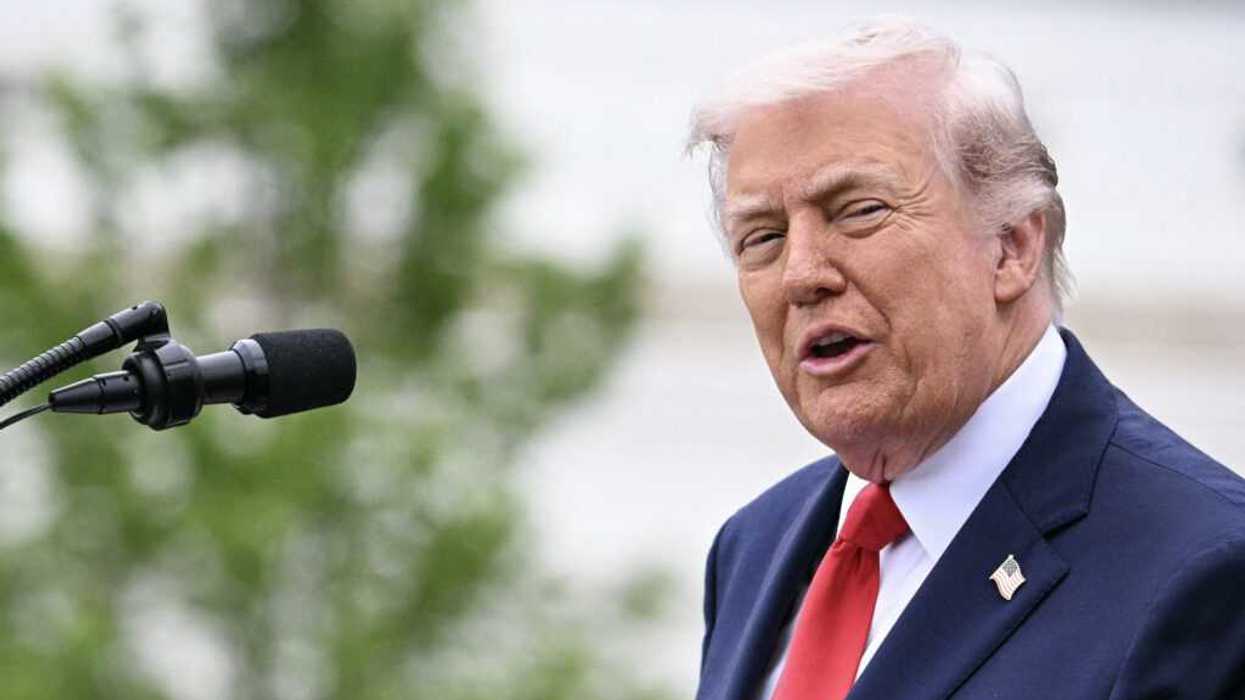


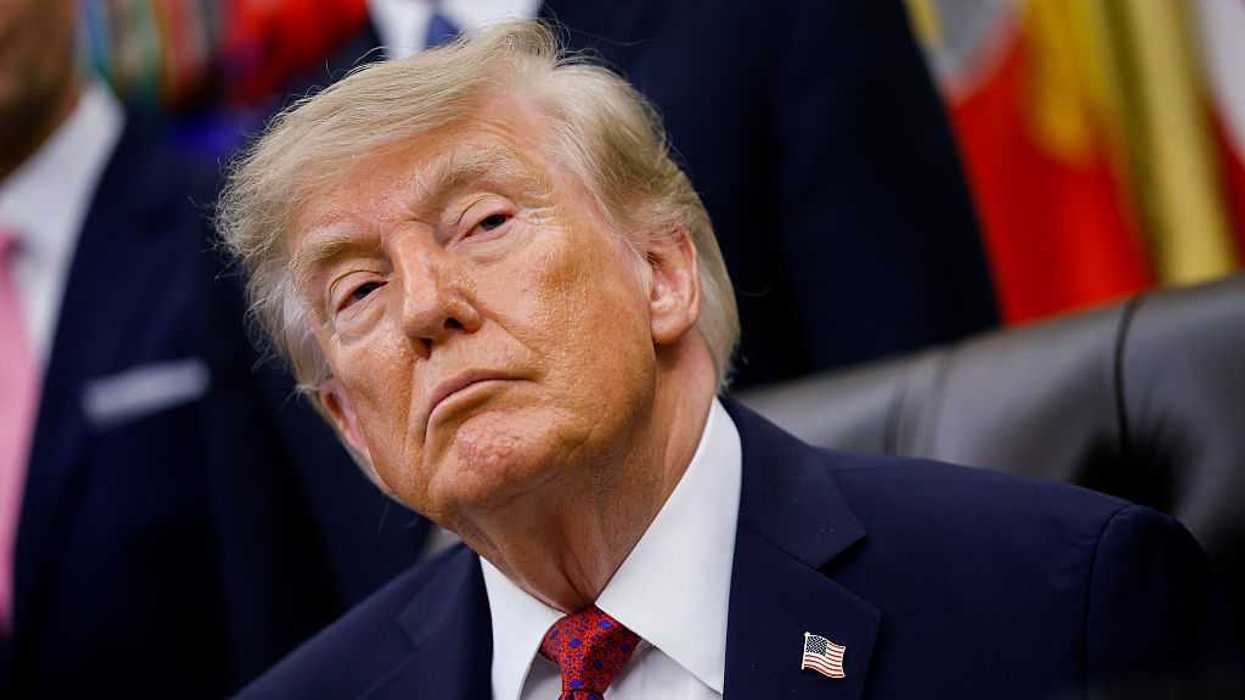
U.S. President Donald Trump speaks during a“ Steel Across America” event ahead of the 25th anniversary of the Sept. 11th attacks on the Ellipse near the White House on Sept. 8, 2026 in Washington, D.C. President Trump welcomed 9/ 11 first responders to the Tunnel to Towers Foundation’ s“ Steel Across America” event featuring a 16,900- pound, 21- foot steel beam recovered.
For Trump, even 9/11 is an opportunity
There was a reason organizers of the 9/11 ceremony in Manhattan told President Trump he could not speak at this year’s memorial service.
A good one, it turns out.
Because in a speech he gave on Tuesday in Washington, he did exactly what they were presumably worried about — he made it about himself.
According to The New York Times, Trump had wanted a speaking role at the service, but the National Sept. 11 Memorial and Museum, which oversees the site, said no, as they’ve maintained for the past decade-plus that the venue and event should be nonpartisan.
Trump has long used awful tragedies to either puff himself up, trash political opponents, or sell lies to the American people.
He blamed a deadly plane crash at Washington National Airport last year on diversity, equity and inclusion policies. He blamed Puerto Ricans for the devastation they endured after Hurricane Maria in 2017. He reportedly considered withholding disaster relief after the California wildfires based on the way affected regions voted. In an interview on Fox News meant to commemorate the 75th anniversary of D-Day in Normandy, he used the occasion to slam former House Speaker Nancy Pelosi…with graves of the dead behind him.
And now, as we approach the 25th anniversary of what many New Yorkers consider the darkest day in modern history, Trump has done it again.
He told a rambling, nonsensical story — one he’s told before — about going to Ground Zero just after terrorists flew two commercial jets into the twin towers. In the story, which no one has been able to verify, despite multiple attempts, he says firefighters had to carry him out of One Liberty Plaza, also known as the U.S. Steel Building, because they thought it was about to collapse.
As CNN fact checker Daniel Dale notes, there’s no evidence Trump went into this building, especially at a time when NYPD and NYFD had locked down the area. There’s no evidence that building was collapsing — in fact, it was deemed structurally sound and reopened within two months of the attacks. There’s no evidence he was carried out of it by firefighters.
But the lie isn’t even the worst part. Pretend it was all true — why would the leader of our country, and a New Yorker, decide to make that tragic day about himself?
Because that’s who Donald Trump is. He’s a malignant narcissist.
He’s also, incidentally, a terrible and ineffectual president, who’s made ill-fated decisions that he has to keep defending, and there’s nothing he won’t do to make himself look and feel better.
Within the first two minutes of his speech, he was cravenly using 9/11 to justify and promote his dumb war in Iran — two events separated by 25 years and 6,000 miles.
“And I will tell you, we’re right now fighting because we have a certain nation that wanted a nuclear weapon, they were very close to getting it, and now they have no chance at getting it. They will never have a nuclear weapon. Iran will not have a nuclear weapon. And they’ve been punished greatly. As you know, we’ve really taken it to them.”
As a New Yorker who lived through 9/11, still one of the worst days of my life, I’m utterly sickened by Trump’s crass, political, and self-promotional framing of that awful day.
And I’m relieved he won’t be given a platform to do it again on Friday’s anniversary in lower Manhattan.
Because for Trump, everything is his for the taking, and absolutely nothing is sacred.
S.E. Cupp is the host of "S.E. Cupp Unfiltered" on CNN.