


Skip to content
Search

Latest Stories

Follow Us:
Top Stories

Jesse Jackson: A Life of Activism, Faith, and Unwavering Pursuit of Justice

News

Jesse Jackson: A Life of Activism, Faith, and Unwavering Pursuit of Justice

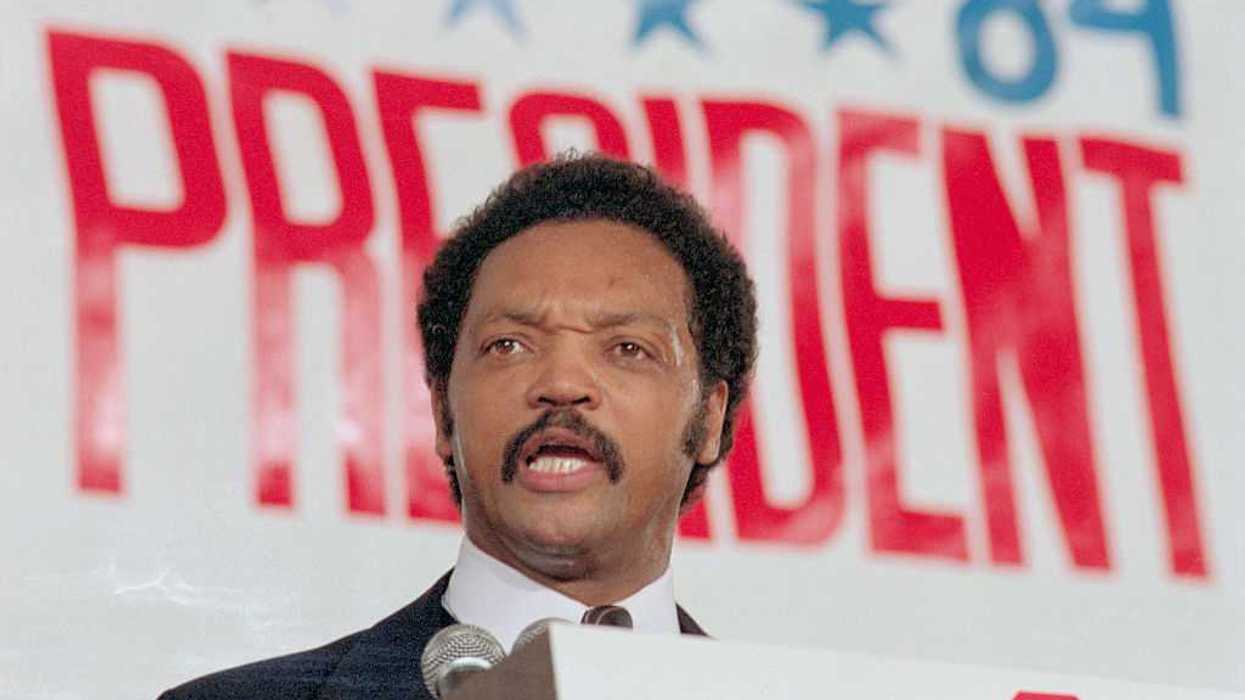
Rev. Jesse Jackson announces his candidacy for the Democratic Presidential nomination, 11/3/83.

Getty Images

The death of Rev.Jesse Jackson is more than the passing of a civil rights leader; it is the closing of a chapter in America’s long, unfinished struggle for justice. For more than six decades, he was a towering figure in the struggle for racial equality, economic justice, and global human rights. His voice—firm, resonant, and morally urgent—became synonymous with the ongoing fight for dignity for marginalized people worldwide.

"Our father was a servant leader — not only to our family, but to the oppressed, the voiceless, and the overlooked around the world,” the Jackson family said in a statement.


Jackson Sr. died on Tuesday at the age of 84. His family announced that he passed peacefully, surrounded by loved ones, after years of declining health linked to progressive supranuclear palsy (PSP), a degenerative neurological disorder he had lived with for more than a decade. Jackson had also publicly disclosed a Parkinson’s diagnosis in 2017.

Born in Greenville, South Carolina, Jackson came of age in the segregated South, where he quickly developed a passion for activism. He attended North Carolina A&T State University, earning a degree in sociology before pursuing divinity studies at the Chicago Theological Seminary. It was during this period that he became deeply involved in the civil rights movement, joining demonstrations and organizing student support for the Rev. Martin Luther King Jr.

Jackson participated in the historic 1965 Selma-to-Montgomery march and soon joined the Southern Christian Leadership Conference (SCLC), working closely with King. He rose rapidly within the organization, eventually leading Operation Breadbasket, the SCLC’s economic empowerment initiative. King praised Jackson’s leadership, noting that he had “done better than a good job” in advancing the program’s mission.

Jackson was present at the Lorraine Motel in Memphis when King was assassinated in 1968—an event that profoundly shaped the rest of his life’s work.

“He taught me that protest must have purpose, that faith must have feet, and that justice is not seasonal, it is daily work,” fellow civil rights activist the Rev. Al Sharpton wrote in a statement.

What made Jackson different from many of his contemporaries was his instinct for building coalitions. He understood that the fight for civil rights could not be waged solely within the Black community. His founding of People United to Save Humanity (PUSH), later known as the Rainbow PUSH Coalition, in 1971was an attempt—radical for its time—to unite the poor, the marginalized, and the politically alienated across racial and ethnic lines.

Jackson’s political influence grew further when he launched two groundbreaking presidential campaigns. In 1984, he became the second Black American to mount a national presidential bid, winning more than 18% of the primary vote. Four years later, he expanded his coalition, winning 11 primaries and caucuses and demonstrating the electoral potential of a multiracial, progressive movement.

His campaigns helped reshape the Democratic Party, pushing issues of poverty, racial justice, and foreign policy into the national spotlight. Jackson proved that a multiracial, progressive coalition was not only possible but powerful.

Rev. Jackson secured the release of Americans detained abroad, including U.S. soldiers held in Yugoslavia in 1999, a U.S. Navy pilot captured in Syria in 1984, and hundreds of women and children trapped in Iraq in 1990. President Bill Clinton awarded him the Presidential Medal of Freedom in 2000 for these efforts.

His humanitarian work reinforced his reputation as a global advocate for peace and justice.

In his later years, Jackson remained outspoken on issues ranging from voting rights to economic inequality. He criticized political leaders across the spectrum and continued to champion progressive causes, endorsing Sen. Bernie Sanders during the 2020 presidential campaign.

His health began to decline significantly in the 2010s and 2020s. PSP limited his mobility and speech, and he spent periods hospitalized before transitioning to outpatient care in Chicago. Despite these challenges, he continued to make public appearances and remained engaged with Rainbow PUSH initiatives.

"His longevity is part of the story," said Rashad Robinson, the former president of the seven-million-member online justice organization Color of Change. "This is someone who had so many chances to do something else. And this is what chose to do with his life."

Rev. Jackson's critics often accused him of being too ambitious, too outspoken, too willing to insert himself into the spotlight. But ambition is not a sin in the fight for justice. Outspokenness is not a flaw when silence is complicity. And visibility is not vanity when the issues at stake are life and death for millions.

Jackson’s life was defined by a simple but profound conviction: that America could and must be better. His voice may be gone, but the movement he helped build continues to echo through the ongoing struggle for equality.

Hugo Balta is the executive editor of The Fulcrum and the publisher of the Latino News Network.


Read More

Hands resting on another.

An op-ed challenging claims of American moral decline and arguing that everyday citizens still uphold shared values of justice and compassion.

Getty Images, PeopleImages

Americans Haven’t Lost Their Moral Compass — Their Leaders Have

When thinking about the American people, columnist David Brooks is a glass-half-full kind of guy, but I, on the contrary, see the glass overflowing with goodness.

In his farewell column to The New York Times readers, Brooks wrote, “The most grievous cultural wound has been the loss of a shared moral order. We told multiple generations to come up with their own individual values. This privatization of morality burdened people with a task they could not possibly do, leaving them morally inarticulate and unformed. It created a naked public square where there was no broad agreement about what was true, beautiful and good. Without shared standards of right and wrong, it’s impossible to settle disputes; it’s impossible to maintain social cohesion and trust. Every healthy society rests on some shared conception of the sacred — sacred heroes, sacred texts, sacred ideals — and when that goes away, anxiety, atomization and a slow descent toward barbarism are the natural results.”

Keep Reading Show less
Collective Punishment Has No Place in A Constitutional Democracy

U.S. Secretary of the Department of Homeland Security Kristi Noem during a meeting of the Cabinet in the Cabinet Room of the White House on January 29, 2026 in Washington, DC.

(Photo by Win McNamee/Getty Images)

Collective Punishment Has No Place in A Constitutional Democracy

On January 8, 2026, one day after the tragic killing of Renee Good in Minneapolis, Minnesota, Kristi Noem, Secretary of the Department of Homeland Security, held a press conference in New York highlighting what she portrayed as the dangerous conditions under which ICE agents are currently working. Referring to the incident in Minneapolis, she said Good died while engaged in “an act of domestic terrorism.”

She compared what Good allegedly tried to do to an ICE agent to what happened last July when an off-duty Customs and Border Protection Officer was shot on the street in Fort Washington Park, New York. Mincing no words, Norm called the alleged perpetrators “scumbags” who “were affiliated with the transnational criminal organization, the notorious Trinitarios gang.”

Keep Reading Show less
Why does the Trump family always get a pass?

Eric Trump, the newly appointed ALT5 board director of World Liberty Financial, walks outside of the NASDAQ in Times Square as they mark the $1.5- billion partnership between World Liberty Financial and ALT5 Sigma with the ringing of the NASDAQ opening bell, on Aug. 13, 2025, in New York City.

(Tribune Content Agency)

Why does the Trump family always get a pass?

Deputy Attorney General Todd Blanche joined ABC’s “This Week” on Sunday to defend or explain a lot of controversies for the Trump administration: the Epstein files release, the events in Minneapolis, etc. He was also asked about possible conflicts of interest between President Trump’s family business and his job. Specifically, Blanche was asked about a very sketchy deal Trump’s son Eric signed with the UAE’s national security adviser, Sheikh Tahnoon.

Shortly before Trump was inaugurated in early 2025, Tahnoon invested $500 million in the Trump-owned World Liberty, a then newly launched cryptocurrency outfit. A few months later, UAE was granted permission to purchase sensitive American AI chips. According to the Wall Street Journal, which broke the story, “the deal marks something unprecedented in American politics: a foreign government official taking a major ownership stake in an incoming U.S. president’s company.”

Keep Reading Show less
Trump taxes

A critical analysis of Trump’s use of power, personality-driven leadership, and the role citizens must play to defend democracy and constitutional balance.

Getty Images

Trump, The Poster Child of a Megalomaniac

There is no question that Trump is a megalomaniac. Look at the definition: "An obsession with grandiose or extravagant things or actions." Whether it's relatively harmless actions like redecorating the White House with gold everywhere or attaching his name to every building and project he's involved in, or his more problematic king-like assertion of control over the world—Trump is a card-carrying megalomaniac.

First, the relatively harmless things. One recent piece of evidence of this is the renaming of the "Invest in America" accounts that the government will be setting up when children are born to "Trump" accounts. Whether this was done at Trump's urging or whether his Republican sycophants did it because they knew it would please him makes no difference; it is emblematic of one aspect of his psyche.

Keep Reading Show less