
Skip to content
Search

Latest Stories

Follow Us:
Top Stories

Trump’s Rob Reiner Post Sparks Rare GOP Backlash

Trump’s remarks on Rob Reiner’s death spark GOP backlash and raise questions of loyalty.

Opinion

Trump’s Rob Reiner Post Sparks Rare GOP Backlash

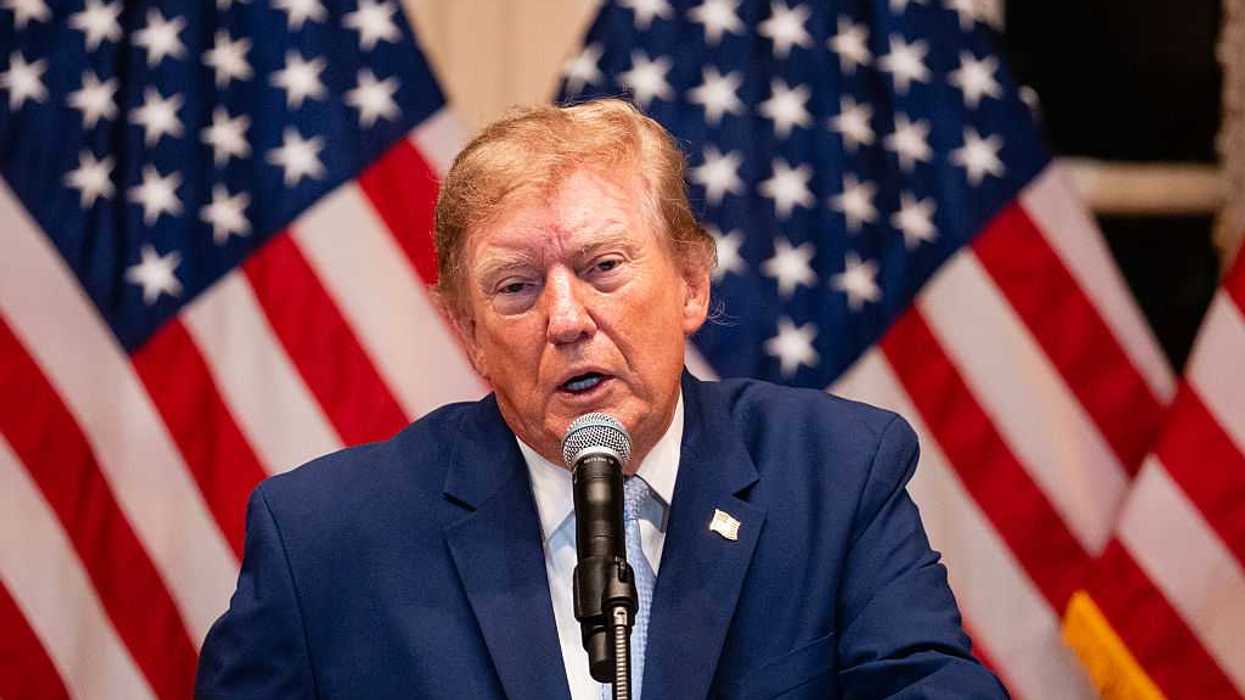
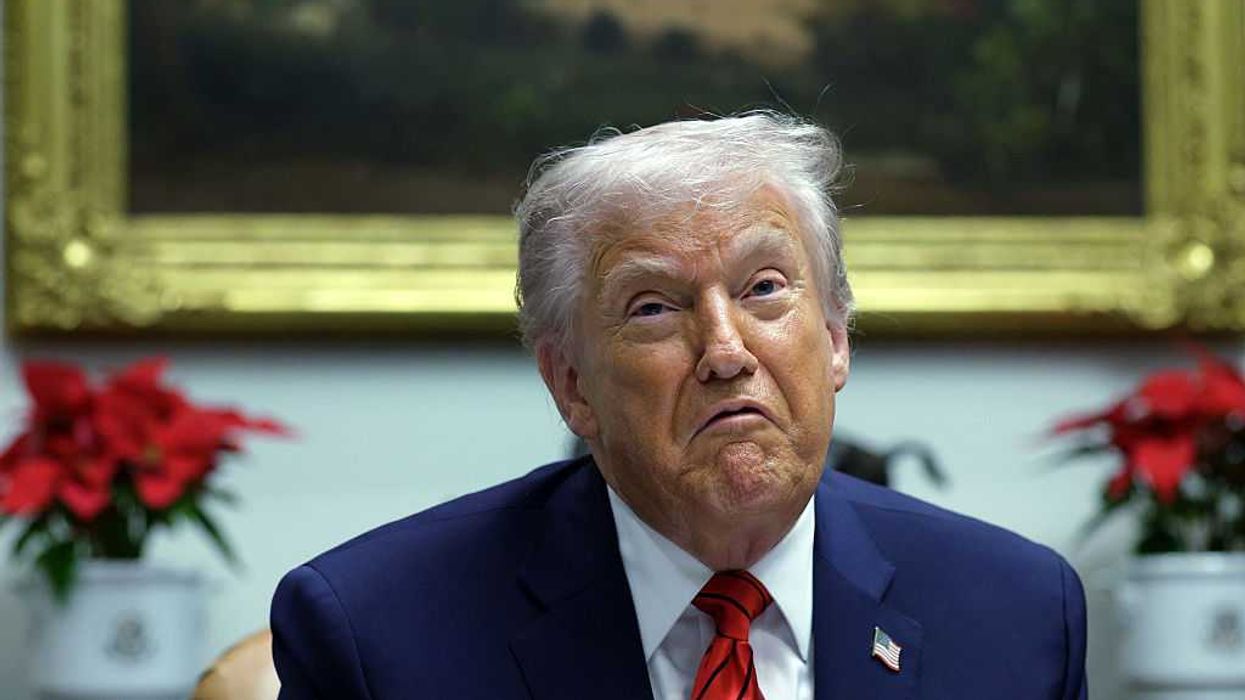
U.S. President Donald Trump at the White House on December 10, 2025 in Washington, DC.

(Photo by Alex Wong/Getty Images)

In October 2024, I wrote a column for The Fulcrum entitled “Was Trump right when he said he could ‘shoot somebody and I wouldn’t lose voters’?”

That headline referred to a Jan. 23, 2016, campaign remark in Iowa when Trump declared: “I could stand in the middle of Fifth Avenue and shoot somebody, and I wouldn't lose any voters, OK?”


Today, that quote comes to mind again. In response to the killing of Rob Reiner and his wife, Michele, by their son, Trump posted the following message on social media:
“A very sad thing happened last night in Hollywood. Rob Reiner, a tortured and struggling, but once very talented movie director and comedy star, has passed away, together with his wife, Michele, reportedly due to the anger he caused others through his massive, unyielding, and incurable affliction with a mind-crippling disease known as TRUMP DERANGEMENT SYNDROME, sometimes referred to as TDS. He was known to have driven people CRAZY by his raging obsession with President Donald J. Trump, with his obvious paranoia reaching new heights as the Trump Administration surpassed all goals and expectations of greatness, and with the Golden Age of America upon us, perhaps like never before. May Rob and Michele rest in peace!”

While a mean-spirited post is not equivalent to shooting someone on Fifth Avenue, the core question is whether there is anything Trump could say or do that would genuinely appall his staunchest supporters.
A handful of Republicans did speak out. Rep. Mike Lawler of New York, who represents one of the most competitive districts in the country, wrote on X:
“This statement is wrong. Regardless of one’s political views, no one should be subjected to violence, let alone at the hands of their own son. It’s a horrible tragedy that should engender sympathy and compassion from everyone in our country, period.”

Marjorie Taylor Greene of Georgia also rebuked Trump, posting:
“Rob Reiner and his wife were tragically killed at the hands of their own son, who reportedly had drug addiction and other issues, and their remaining children are left in serious mourning and heartbreak. This is a family tragedy, not about politics or political enemies. Many families deal with a family member with drug addiction and mental health issues. It’s incredibly difficult and should be met with empathy, especially when it ends in murder.”

And Rep. Thomas Massie of Kentucky added:
“Regardless of how you felt about Rob Reiner, this is inappropriate and disrespectful discourse about a man who was just brutally murdered. I guess my elected GOP colleagues, the VP, and White House staff will just ignore it because they’re afraid? I challenge anyone to defend it.”

Despite these few voices, one must ask: where are the rest of his fellow Republicans?

Beyond the handful of elected Republicans willing to speak out, even conservative faith leaders recoiled at Trump’s words. Russell Moore, theologian and editor at Christianity Today, condemned the post as emblematic of a broader cultural decline: “How this vile, disgusting, and immoral behavior has become normalized in the United States is something our descendants will study in school, to the shame of our generation.” His harsh words underscores that Trump’s rhetoric is not merely testing partisan loyalty but eroding the moral boundaries that once anchored the rough world of politics.

Meanwhile, on X and Truth Social, some supporters expressed shock: “I love you, but this is seriously distasteful,” wrote one. Another added: “I’m struggling to believe this is real or that the greatest President the U.S. will ever have actually wrote these words, much less tapped send.”

And yet, I am certain this moment will pass. Tomorrow, excuses and denials will flow from many in Congress, just as they did in November 2024. This brings me to ask again: is there anything Trump could say or do that would truly change his supporters' minds?

Maggie Haberman of The New York Times captured this dynamic well in 2024, writing:
“Trump is difficult to cover because he challenges news processes daily, for years. The systems were not built to handle someone who says untrue or incoherent things so often. I think the media has actually shown people who he is, what he says, what he does.”
Ultimately, this is what frustrates so many Americans who believe in the ageless values of truth, trust, reason, civility, and the dignity of all people, regardless of background. The painful reality is that, too often, those values are treated as if they no longer matter.

Read More

The interview that could change history

White House Chief of Staff Susie Wiles looks on during a bilateral meeting between U.S. President Donald Trump and Polish President Karol Nawrocki in the Oval Office at the White House on Sept. 3, 2025 in Washington, D.C.

Alex Wong/Getty Images/TCA

The interview that could change history

Susie Wiles has a reputation. Ask anyone in Washington and words like “strategic,” “disciplined,” and “skilled” come up. She’s widely held to be one of the most effective tacticians in modern politics.

She’s also known for her low-key, low-drama energy, preferring to remain behind-the-scenes as opposed to preening for cameras like so many other figures in President Trump’s orbit.

Keep ReadingShow less
After the Ceasefire, the Violence Continues – and Cries for New Words

An Israeli army vehicle moves on the Israeli side, near the border with the Gaza Strip on November 18, 2025 in Southern Israel, Israel.

(Photo by Amir Levy/Getty Images)

After the Ceasefire, the Violence Continues – and Cries for New Words

Since October 10, 2025, the day when the US-brokered ceasefire between Israel and Hamas was announced, Israel has killed at least 401 civilians, including at least 148 children. This has led Palestinian scholar Saree Makdisi to decry a “continuing genocide, albeit one that has shifted gears and has—for now—moved into the slow lane. Rather than hundreds at a time, it is killing by twos and threes” or by twenties and thirties as on November 19 and November 23 – “an obscenity that has coalesced into a new normal.” The Guardian columnist Nesrine Malik describes the post-ceasefire period as nothing more than a “reducefire,” quoting the warning issued by Amnesty International’s secretary general Agnès Callamard that the ”world must not be fooled” into believing that Israel’s genocide is over.

A visual analysis of satellite images conducted by the BBC has established that since the declared ceasefire, “the destruction of buildings in Gaza by the Israeli military has been continuing on a huge scale,” entire neighborhoods “levelled” through “demolitions,” including large swaths of farmland and orchards. The Guardian reported already in March of 2024, that satellite imagery proved the “destruction of about 38-48% of tree cover and farmland” and 23% of Gaza’s greenhouses “completely destroyed.” Writing about the “colossal violence” Israel has wrought on Gaza, Palestinian legal scholar Rabea Eghbariah lists “several variations” on the term “genocide” which researchers found the need to introduce, such as “urbicide” (the systematic destruction of cities), “domicide” (systematic destruction of housing), “sociocide,” “politicide,” and “memoricide.” Others have added the concepts “ecocide,” “scholasticide” (the systematic destruction of Gaza’s schools, universities, libraries), and “medicide” (the deliberate attacks on all aspects of Gaza’s healthcare with the intent to “wipe out” all medical care). It is only the combination of all these “-cides,” all amounting to massive war crimes, that adequately manages to describe the Palestinian condition. Constantine Zurayk introduced the term “Nakba” (“catastrophe” in Arabic) in 1948 to name the unparalleled “magnitude and ramifications of the Zionist conquest of Palestine” and its historical “rupture.” When Eghbariah argues for “Nakba” as a “new legal concept,” he underlines, however, that to understand its magnitude, one needs to go back to the 1917 Balfour Declaration, in which the British colonial power promised “a national home for the Jewish people” in Palestine, even though just 6 % of its population were Jewish. From Nakba as the “constitutive violence of 1948,” we need today to conceptualize “Nakba as a structure,” an “overarching frame.”

Keep ReadingShow less
Ukraine, Russia, and the Dangerous Metaphor of Holding the Cards
a hand holding a deck of cards in front of a christmas tree
Photo by Luca Volpe on Unsplash

Ukraine, Russia, and the Dangerous Metaphor of Holding the Cards

Donald Trump has repeatedly used the phrase “holding the cards” during his tenure as President to signal that he, or sometimes an opponent, has the upper hand. The metaphor projects bravado, leverage, and the inevitability of success or failure, depending on who claims control.

Unfortunately, Trump’s repeated invocation of “holding the cards” embodies a worldview where leverage, bluff, and dominance matter more than duty, morality, or responsibility. In contrast, leadership grounded in duty emphasizes ethical obligations to allies, citizens, and democratic principles—elements strikingly absent from this metaphor.

Keep ReadingShow less
Beyond Apologies: Corporate Contempt and the Call for Real Accountability
campbells chicken noodle soup can

Beyond Apologies: Corporate Contempt and the Call for Real Accountability

Most customers carry a particular image of Campbell's Soup: the red-and-white label stacked on a pantry shelf, a touch of nostalgia, and the promise of a dependable bargain. It's food for snow days, tight budgets, and the middle of the week. For generations, the brand has positioned itself as a companion to working families, offering "good food" for everyday people. The company cultivated that trust so thoroughly that it became almost cliché.

Campbell's episode, now the subject of national headlines and an ongoing high-profile legal complaint, is troubling not only for its blunt language but for what it reveals about the hidden injuries that erode the social contract linking institutions to citizens, workers to workplaces, and brands to buyers. If the response ends with the usual PR maneuvers—rapid firings and the well-rehearsed "this does not reflect our values" statement. Then both the lesson and the opportunity for genuine reform by a company or individual are lost. To grasp what this controversy means for the broader corporate landscape, we first have to examine how leadership reveals its actual beliefs.

Keep ReadingShow less