

“He who saves his Country does not violate any law.”
In February 2025, Donald Trump posted a quote attributed to Napoleon Bonaparte on Truth Social, generating alarm among constitutional experts.
“I am Oz, the Great and Terrible,” the Wizard of Oz declares from behind his curtain.
“In this country everyone must pay for everything he gets.” And, “I never grant favors without some return.” Is this the president speaking? It’s certainly rhetoric we have heard before. No, it is the Wizard in L. Frank Baum’s book, “The Wonderful Wizard of Oz”—which was published in 1900.
Before the 1939 film, “The Wizard of Oz,” starring Judy Garland, and before Gregory Maguire wrote “Wicked”—igniting a phenomenon in the theatre world and now in film, begging the question, was the “Wicked Witch” really wicked—there was Baum’s series of fourteen books about Oz.
So, what of this Wizard? What of this President? Are they as great and powerful as they claim? Or are they both charlatans, great pretenders who claim to have special powers to govern, to grant, to rule?
Yet—and this is a critical point—they have been ordained with this power by their citizens.
President Trump was voted into office a second time, taking the “swing states” to win the Electoral College. And the inhabitants of Oz, seeing a seemingly miraculous flying balloon descend on their city, declared the man in it a wizard.
Of course, there are other players afoot. Oz has witches, Munchkins, and most importantly, Dorothy and her companions, who ultimately challenge and expose the Wizard.
And we have a legislative and judicial branch, and most importantly, our Constitution. In this country, we are governed by a system of checks and balances. It is up to us all to remind each other, and the world, of that fact.
So, what is it that the Scarecrow, the Tin Man, and the Lion want? And what does Dorothy want? They want the same things we do.
The Scarecrow wants a brain. We might wish for a more discerning one lately, one that will not capitulate to fear-mongering and rumor.
And the Tin Man wishes for a heart, presumably an “open” heart, encompassing more than his own small circle. Without such, life in Oz, in the U.S., or anywhere, becomes a cruel, joyless competition, devoid of true meaning.
The Lion needs courage. Don’t we all? Living is not for the faint of heart, in any age. Courage is the difference in every situation. Brains and a heart are essential, but without the courage to use them, they merely fester.
“My life is simply unbearable without courage,” the Lion declares. So are our own.
And of course, Dorothy’s greatest wish is to go home. It is Glinda, the Good Witch, who ultimately grants her wish. “Your silver shoes will carry you…. If you had known their power, you could have gone back the very first day.” (The “ruby” slippers were originally “silver” slippers in the book, but were changed to ruby to take advantage of the new color film in the movie version.)
So, Dorothy had it in her power all along to go home.
As we too, have it in our power to defend and protect our principles, our home. We may begin on the yellow brick road or the wrong road, and we may encounter wicked witches or be imprisoned, but we must keep going on our journey.
Lately, it does seem that our politics are swinging terrifyingly right, and there are those who act as the Winged Monkeys in Oz, willing to “obey any order” they are given. But the pendulum swings, and it will again. It always does.
We have all heard of rose-colored glasses, and there is justification in accusing the MAGA movement of refusing to remove theirs, instead of ordaining all that their “leader” does.
In Oz, the Emerald City was not even green. The Wizard confesses, “I put green spectacles on all the people, so everything they saw was green.”
But we cannot wear rose-colored glasses, or green ones. No distortion of facts, no fairy tales, will work in the end. We must envision our destiny, and live it out in the bright, clear light of day.
“What a world! What a world!” the Wicked Witch of the West screeches in the 1939 film, after Dorothy has thrown a bucket of water on her, and the witch melts.
Many would say the same regarding the state of our country and the world. Others would claim that we are at last approaching justice and common sense.
We must agree to disagree. But we do have a plan that has now stood the test of time, a map that can direct our path. What we cannot ever do is linger long in those intoxicating fields of scarlet poppies. We must not fall asleep.
Amy Lockard is an Iowa resident who regularly contributes to regional newspapers and periodicals. She is working on the second of a four-book fictional series based on Jane Austen’s “Pride and Prejudice."



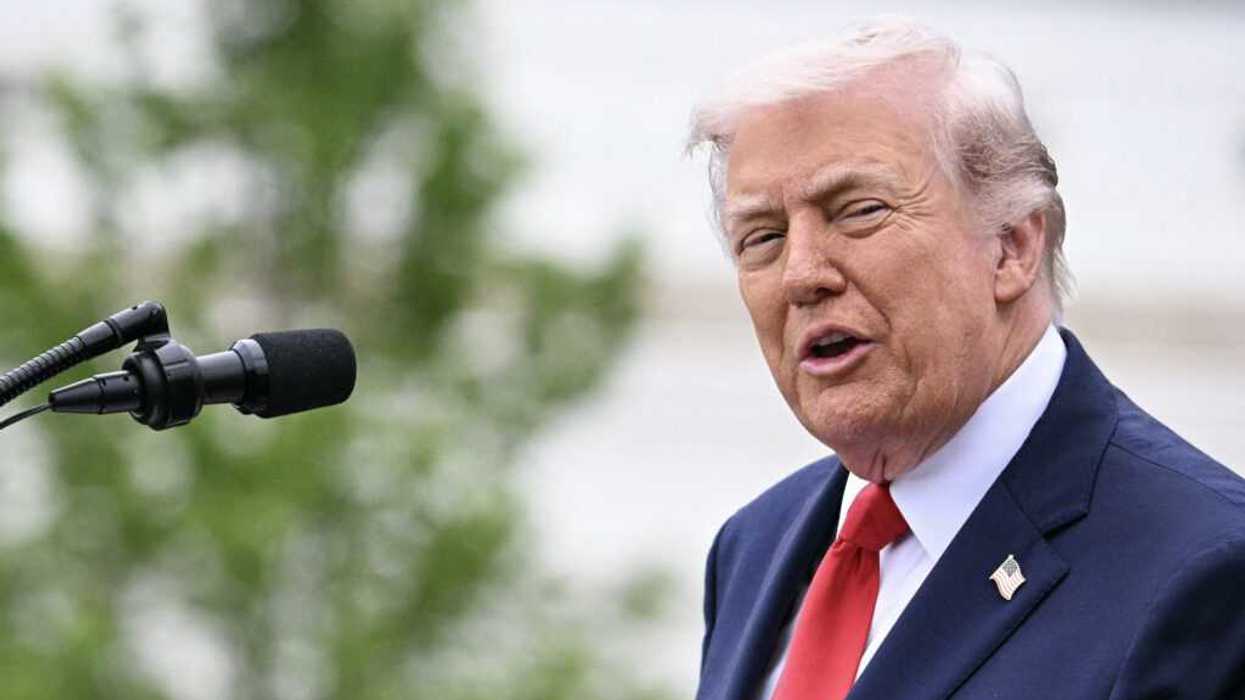


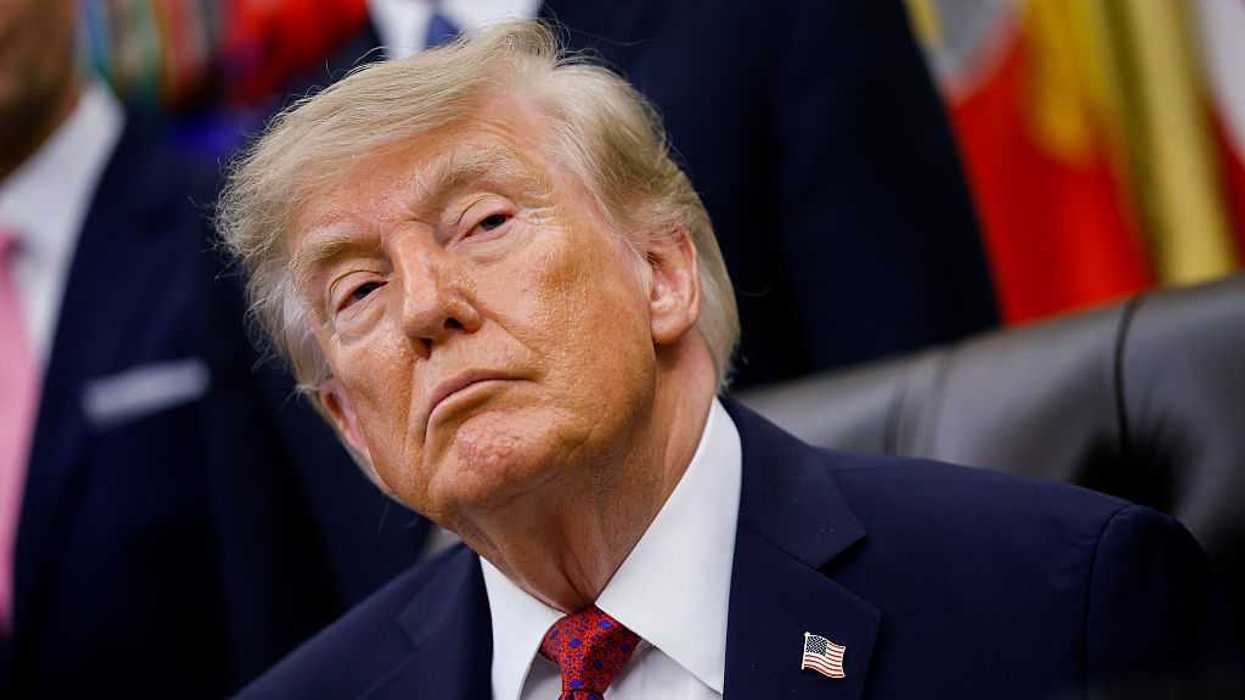
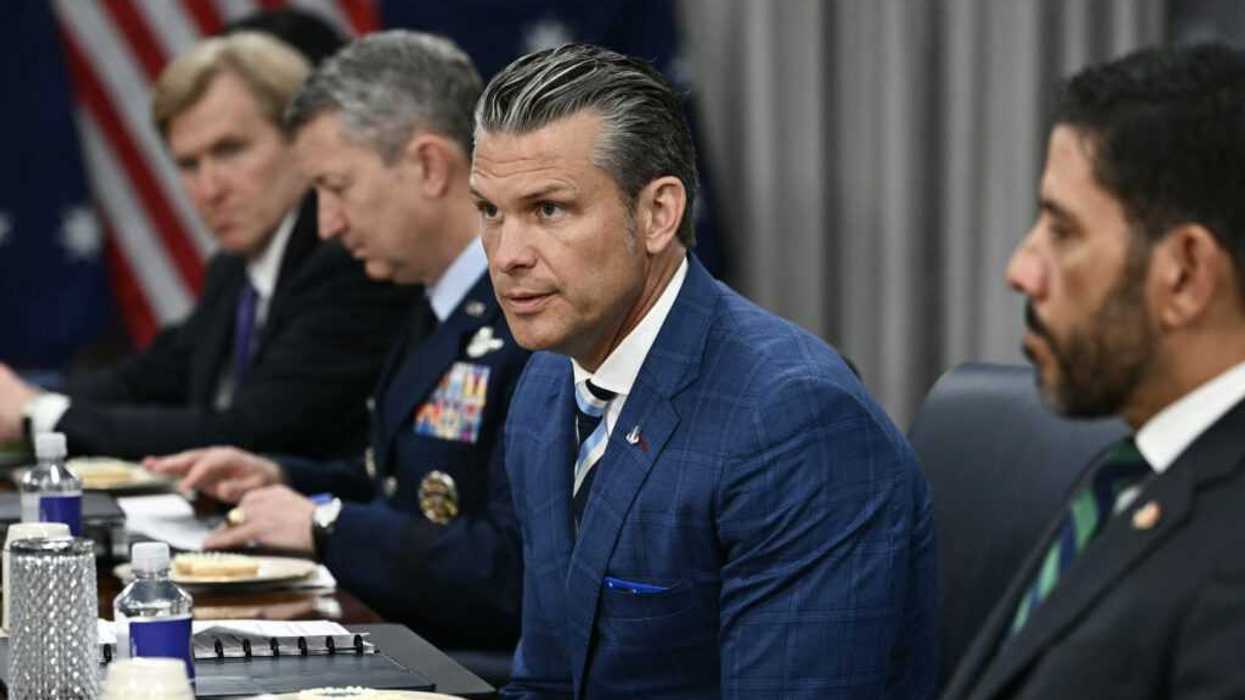
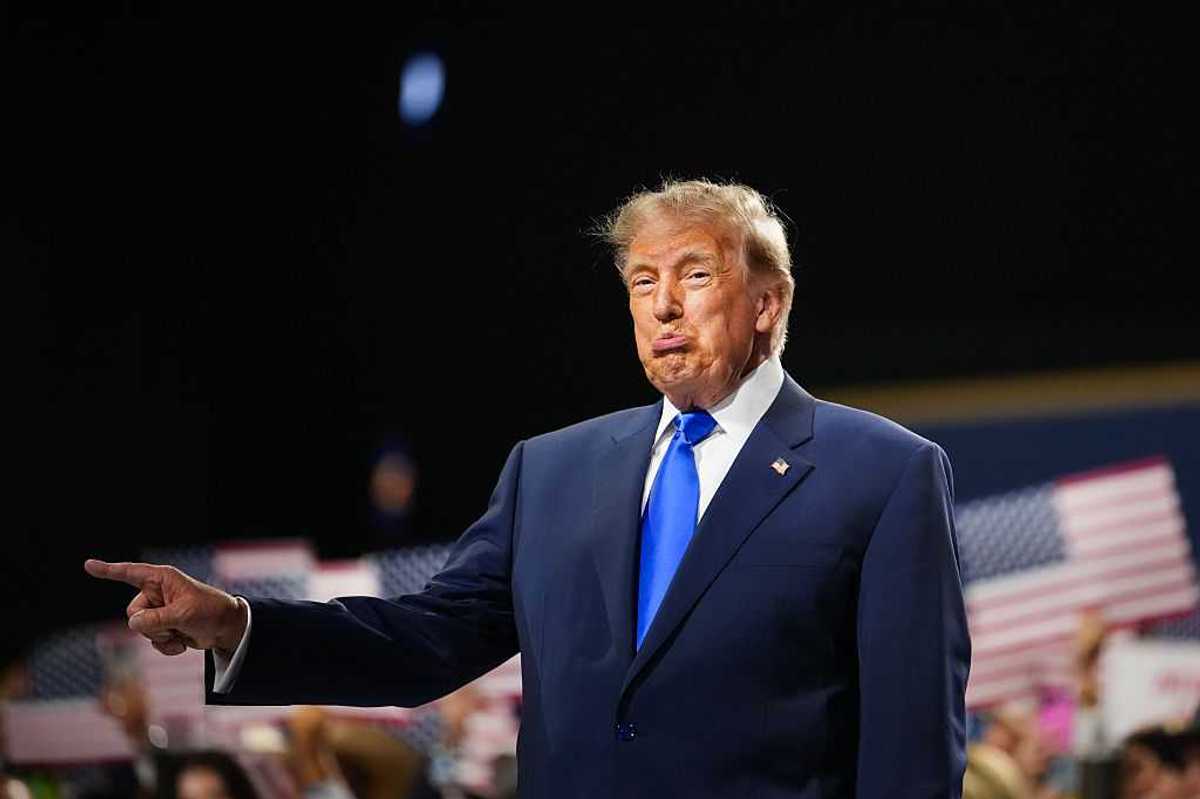
U.S. President Donald Trump speaks during a“ Steel Across America” event ahead of the 25th anniversary of the Sept. 11th attacks on the Ellipse near the White House on Sept. 8, 2026 in Washington, D.C. President Trump welcomed 9/ 11 first responders to the Tunnel to Towers Foundation’ s“ Steel Across America” event featuring a 16,900- pound, 21- foot steel beam recovered.
For Trump, even 9/11 is an opportunity
There was a reason organizers of the 9/11 ceremony in Manhattan told President Trump he could not speak at this year’s memorial service.
A good one, it turns out.
Because in a speech he gave on Tuesday in Washington, he did exactly what they were presumably worried about — he made it about himself.
According to The New York Times, Trump had wanted a speaking role at the service, but the National Sept. 11 Memorial and Museum, which oversees the site, said no, as they’ve maintained for the past decade-plus that the venue and event should be nonpartisan.
Trump has long used awful tragedies to either puff himself up, trash political opponents, or sell lies to the American people.
He blamed a deadly plane crash at Washington National Airport last year on diversity, equity and inclusion policies. He blamed Puerto Ricans for the devastation they endured after Hurricane Maria in 2017. He reportedly considered withholding disaster relief after the California wildfires based on the way affected regions voted. In an interview on Fox News meant to commemorate the 75th anniversary of D-Day in Normandy, he used the occasion to slam former House Speaker Nancy Pelosi…with graves of the dead behind him.
And now, as we approach the 25th anniversary of what many New Yorkers consider the darkest day in modern history, Trump has done it again.
He told a rambling, nonsensical story — one he’s told before — about going to Ground Zero just after terrorists flew two commercial jets into the twin towers. In the story, which no one has been able to verify, despite multiple attempts, he says firefighters had to carry him out of One Liberty Plaza, also known as the U.S. Steel Building, because they thought it was about to collapse.
As CNN fact checker Daniel Dale notes, there’s no evidence Trump went into this building, especially at a time when NYPD and NYFD had locked down the area. There’s no evidence that building was collapsing — in fact, it was deemed structurally sound and reopened within two months of the attacks. There’s no evidence he was carried out of it by firefighters.
But the lie isn’t even the worst part. Pretend it was all true — why would the leader of our country, and a New Yorker, decide to make that tragic day about himself?
Because that’s who Donald Trump is. He’s a malignant narcissist.
He’s also, incidentally, a terrible and ineffectual president, who’s made ill-fated decisions that he has to keep defending, and there’s nothing he won’t do to make himself look and feel better.
Within the first two minutes of his speech, he was cravenly using 9/11 to justify and promote his dumb war in Iran — two events separated by 25 years and 6,000 miles.
“And I will tell you, we’re right now fighting because we have a certain nation that wanted a nuclear weapon, they were very close to getting it, and now they have no chance at getting it. They will never have a nuclear weapon. Iran will not have a nuclear weapon. And they’ve been punished greatly. As you know, we’ve really taken it to them.”
As a New Yorker who lived through 9/11, still one of the worst days of my life, I’m utterly sickened by Trump’s crass, political, and self-promotional framing of that awful day.
And I’m relieved he won’t be given a platform to do it again on Friday’s anniversary in lower Manhattan.
Because for Trump, everything is his for the taking, and absolutely nothing is sacred.
S.E. Cupp is the host of "S.E. Cupp Unfiltered" on CNN.